Use this EUFerry operator guide to understand where CalMac Ferries sails and the practical options
to consider before checking current availability and fares.
CalMac operates lifeline and leisure ferry links across the Clyde and Hebrides.
Scotland’s west-coast island network
A ferry system that is part transport network, part island lifeline
Caledonian MacBrayne — almost universally known as CalMac — is not a single long-distance ferry
route but a dense network of mainland-to-island and island-to-island services. The operator
describes itself as the largest ferry company in the United Kingdom, with 35 vessels serving more
than 50 destinations across around 200 miles of Scotland’s west coast. For visitors, that means
routes to famous islands such as Arran, Mull, Islay, Skye, Harris, Lewis, Barra and the Uists. For
island communities, the same ferries carry commuters, schoolchildren, freight, food, tradespeople,
medical travellers and the everyday traffic that keeps remote communities connected.
The network is best understood by region. The Firth of Clyde includes Arran, Bute, Cumbrae, Cowal
and Kintyre. The Southern Hebrides add Islay, Gigha and Colonsay. Oban is the key hub for much of
the Inner Hebrides, including Mull, Coll, Tiree, Lismore and Colonsay, while Mallaig links the
mainland with Skye, South Uist and the Small Isles. Farther north and west, Ullapool and Uig provide
major gateways into the Outer Hebrides.
CalMac uses two different ticketing concepts. On Bookable routes, buying in advance reserves space on a specific sailing. On Turn Up and Go routes, the advance ticket is open within the relevant timetable season rather than reserving one exact departure. That distinction matters: a five-minute local crossing to Bute or Kerrera is planned differently from a major vehicle sailing to Lewis, Harris, North Uist, Barra or Islay. Vehicle capacity is often the most important constraint. Cars, motorhomes, caravans, motorcycles and commercial traffic share finite deck space, so summer island journeys should be planned early. Foot passengers have more flexibility, but CalMac now strongly encourages advance purchase even when travelling without a vehicle. Bicycles are carried free, although they should still be declared on the booking so capacity can be managed. Weather and vessel availability are especially important on this network. Some routes cross exposed Atlantic or Minch waters, and vessel deployment can change during maintenance or disruption. A CalMac trip therefore benefits from one extra planning habit: check the live service status shortly before setting off for the port, even when you already hold a confirmed reservation.
Planning note: timetable patterns, vessel assignment and disruption can change. The sailing shown on your booking and CalMac’s live service-status information should always be treated as the final authority.
One network, five very different regions
CalMac routes across the Clyde and Hebrides
Rather than searching for one “CalMac route”, start with the island region you need and then choose
the most convenient mainland gateway.
Firth of Clydeshort crossings + major Arran service
Mainland
Ardrossan / Troon
Island
Brodick, Arran
Arran is one of CalMac’s busiest visitor routes, while the wider Clyde network includes Wemyss
Bay–Rothesay, Largs–Cumbrae, Gourock–Dunoon, Colintraive–Rhubodach and links around Kintyre.
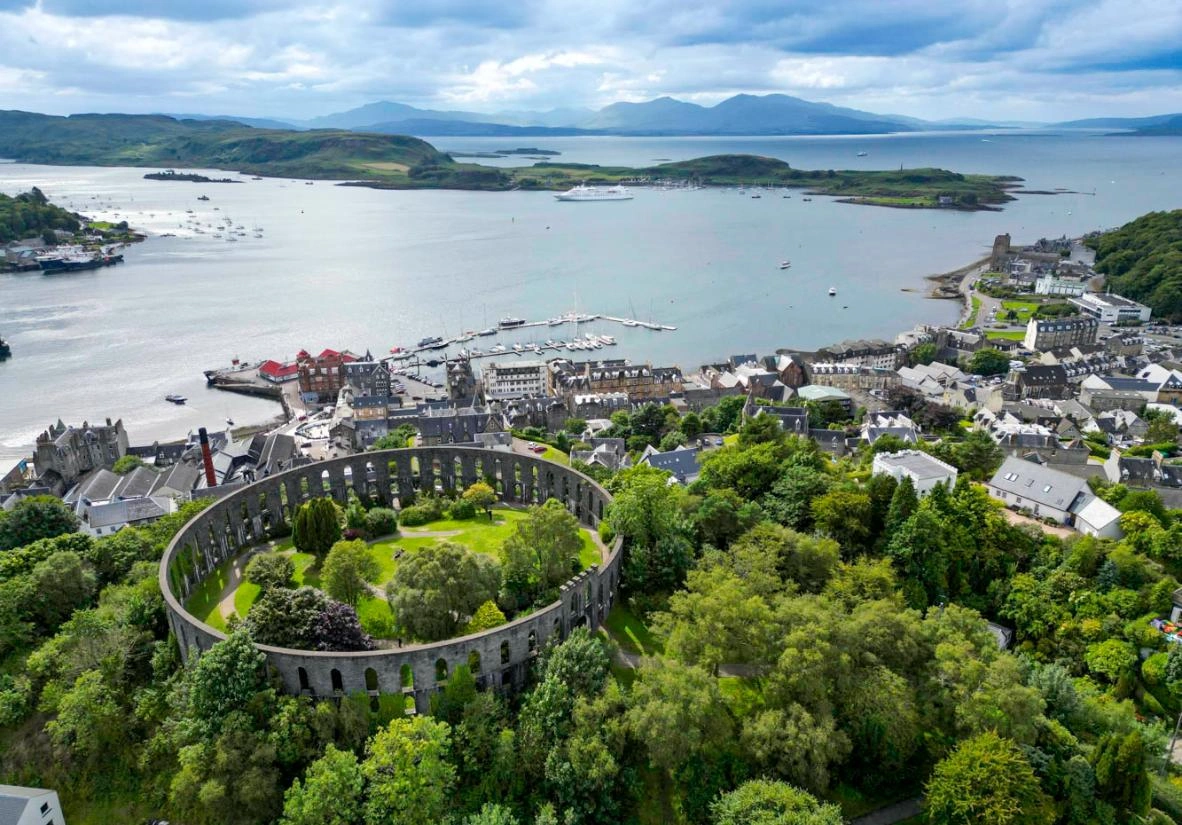
Oban is the classic “Gateway to the Isles”. Craignure on Mull is the busiest nearby island link,
while longer sailings reach Coll, Tiree and other islands farther west.
Ullapool–Stornoway is one of the network’s most important crossings. Uig on Skye serves Tarbert on
Harris and Lochmaddy on North Uist, creating the northern backbone of an Outer Hebrides road trip.
Plan departure from Ardrossan and arrival in Brodick, with links to the reverse crossing and port guidance. Check the timetable for the date you intend to sail.
Plan departure from Mallaig and arrival in Lochboisdale, with links to the reverse crossing and port guidance. Check the timetable for the date you intend to sail.
Plan departure from Oban and arrival in Castlebay, with links to the reverse crossing and port guidance. Check the timetable for the date you intend to sail.
Plan departure from Oban and arrival in Coll, with links to the reverse crossing and port guidance. Check the timetable for the date you intend to sail.
Plan departure from Oban and arrival in Craignure, with links to the reverse crossing and port guidance. Check the timetable for the date you intend to sail.
Plan departure from Oban and arrival in Lismore, with links to the reverse crossing and port guidance. Check the timetable for the date you intend to sail.
Plan departure from Oban and arrival in Lochboisdale, with links to the reverse crossing and port guidance. Check the timetable for the date you intend to sail.
Plan departure from Oban and arrival in Tiree, with links to the reverse crossing and port guidance. Check the timetable for the date you intend to sail.
Plan departure from Troon and arrival in Brodick, with links to the reverse crossing and port guidance. Check the timetable for the date you intend to sail.
Plan departure from Uig and arrival in Lochmaddy, with links to the reverse crossing and port guidance. Check the timetable for the date you intend to sail.
Plan departure from Uig and arrival in Tarbert (Harris), with links to the reverse crossing and port guidance. Check the timetable for the date you intend to sail.
Plan departure from Ullapool and arrival in Stornoway, with links to the reverse crossing and port guidance. Check the timetable for the date you intend to sail.
Plan departure from Brodick and arrival in Ardrossan, with links to the reverse crossing and port guidance. Check the timetable for the date you intend to sail.
Plan departure from Port Askaig and arrival in Kennacraig, with links to the reverse crossing and port guidance. Check the timetable for the date you intend to sail.
Plan departure from Port Ellen and arrival in Kennacraig, with links to the reverse crossing and port guidance. Check the timetable for the date you intend to sail.
Plan departure from Armadale and arrival in Mallaig, with links to the reverse crossing and port guidance. Check the timetable for the date you intend to sail.
Plan departure from Lochboisdale and arrival in Mallaig, with links to the reverse crossing and port guidance. Check the timetable for the date you intend to sail.
Plan departure from Castlebay and arrival in Oban, with links to the reverse crossing and port guidance. Check the timetable for the date you intend to sail.
Plan departure from Coll and arrival in Oban, with links to the reverse crossing and port guidance. Check the timetable for the date you intend to sail.
Plan departure from Craignure and arrival in Oban, with links to the reverse crossing and port guidance. Check the timetable for the date you intend to sail.
Plan departure from Lismore and arrival in Oban, with links to the reverse crossing and port guidance. Check the timetable for the date you intend to sail.
Plan departure from Lochboisdale and arrival in Oban, with links to the reverse crossing and port guidance. Check the timetable for the date you intend to sail.
Plan departure from Tiree and arrival in Oban, with links to the reverse crossing and port guidance. Check the timetable for the date you intend to sail.
Plan departure from Brodick and arrival in Troon, with links to the reverse crossing and port guidance. Check the timetable for the date you intend to sail.
Plan departure from Lochmaddy and arrival in Uig, with links to the reverse crossing and port guidance. Check the timetable for the date you intend to sail.
Plan departure from Tarbert (Harris) and arrival in Uig, with links to the reverse crossing and port guidance. Check the timetable for the date you intend to sail.
Plan departure from Stornoway and arrival in Ullapool, with links to the reverse crossing and port guidance. Check the timetable for the date you intend to sail.
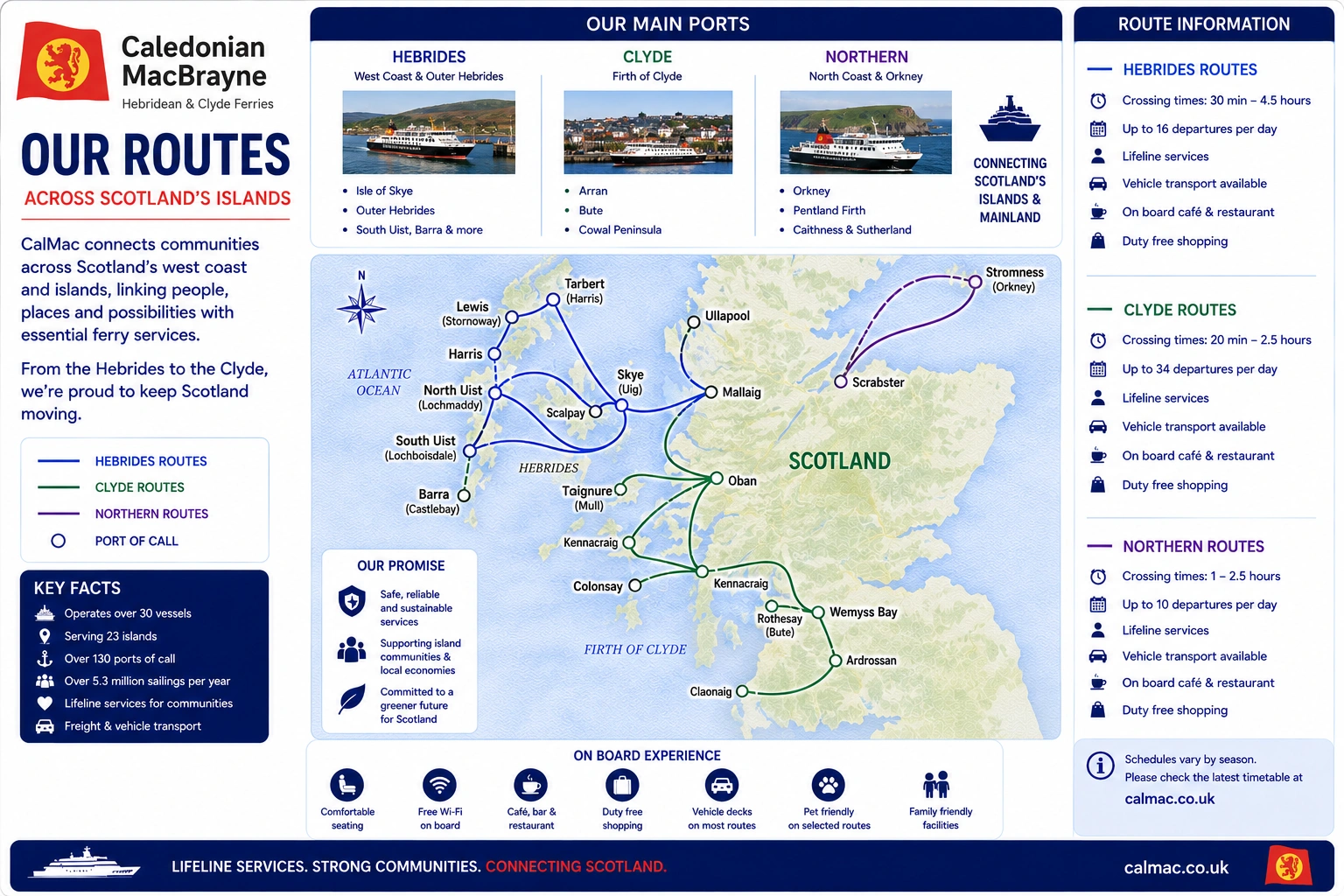
This schematic summarises the three representative current route groups described above. It is not a
complete network map or timetable; the live operator booking result is definitive.
For planning with CalMac Ferries, use the map to compare the representative route groups above,
including Ardrossan / Troon–Brodick, Arran, Oban–Mull / Coll / Tiree / Lismore, Ullapool / Uig–Lewis
/ Harris / North Uist. It is most useful for judging which departure or arrival point best fits the
rest of the journey rather than as a substitute for the live timetable.
After choosing the most practical route, compare the live CalMac Ferries sailing for departure time,
calling pattern, passenger requirements and the facilities or accommodation shown for that service.
The complete itinerary and arrival location can matter more than a small difference in the headline
fare.
CalMac timetables change seasonally and can be altered by weather, maintenance and vessel
deployment. Treat this map as illustrative and always confirm the live sailing for your date.
Illustrative CalMac Ferries route map. Routes and operating patterns can change; check the live timetable for your date.
Three mainland gateways worth understanding
Key CalMac ports for island journeys
Choosing the right mainland gateway can simplify the entire trip, particularly when combining road,
rail and ferry travel.
Argyll
Oban
The classic Gateway to the Isles, serving Mull, Coll, Tiree, Lismore, Colonsay and longer links
toward Barra and Islay. The railway terminus is close to the ferry terminal, making Oban especially
useful for foot passengers.
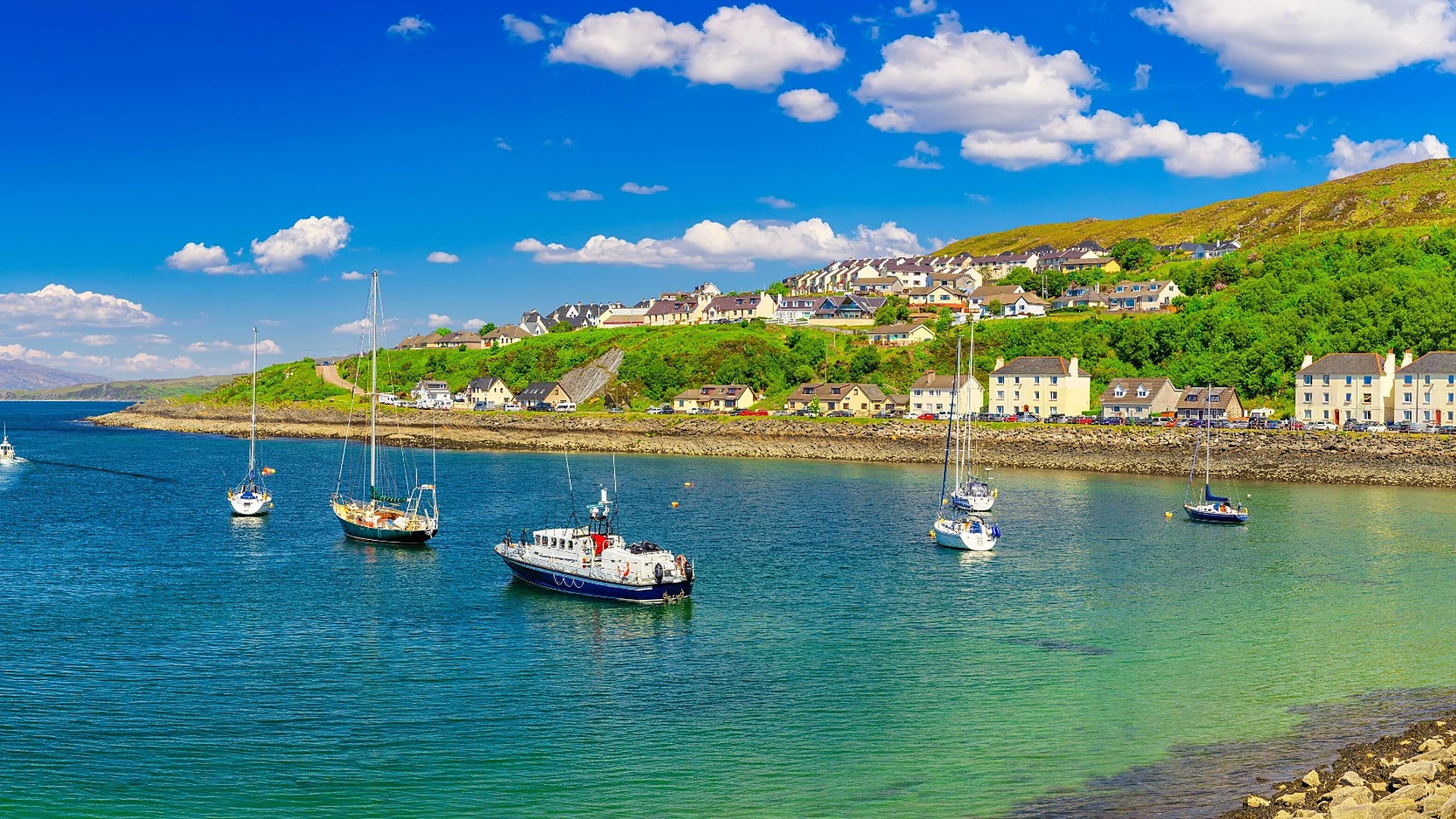
A compact rail-and-road ferry town for Armadale on Skye, the Small Isles and Lochboisdale in South
Uist. Vehicle travellers should pay close attention to the specific route’s capacity and permit
rules.
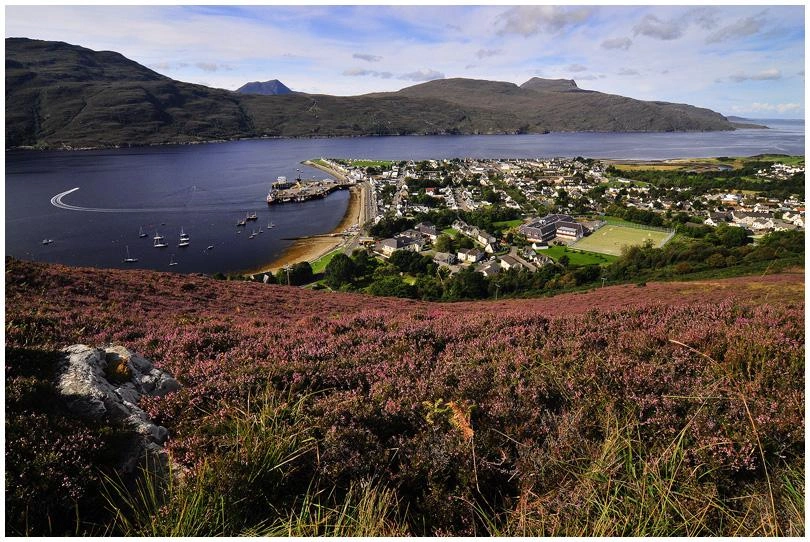
The mainland terminal for Stornoway on Lewis. This strategically important crossing is a key start
or finish point for a road trip through Lewis, Harris and the wider Outer Hebrides.
Compare the complete journey rather than the sea crossing alone. Check the live timetable for your
date, confirm the exact departure and arrival ports, and allow enough time for check-in and onward
travel.
Day-ferry comfort rather than overnight cabins
Lounges, seating and space to enjoy the crossing
CalMac’s network is primarily designed around daytime journeys. Private passenger cabins are not the
standard product; comfort comes from lounges, cafés, observation areas, outdoor decks and, on some
larger ships, recliner or TV lounges.
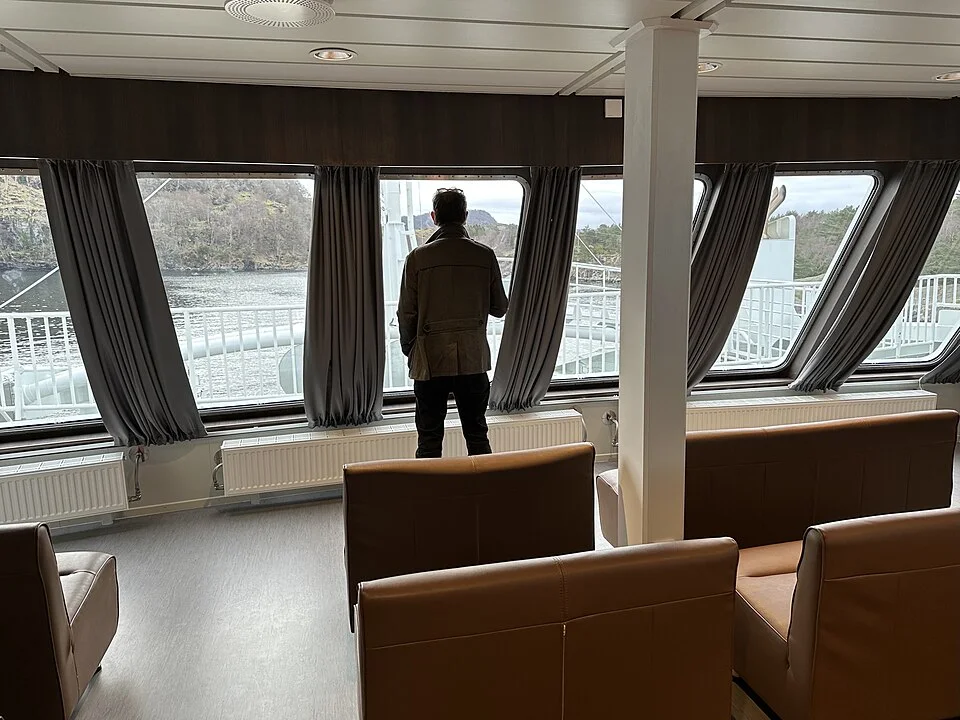
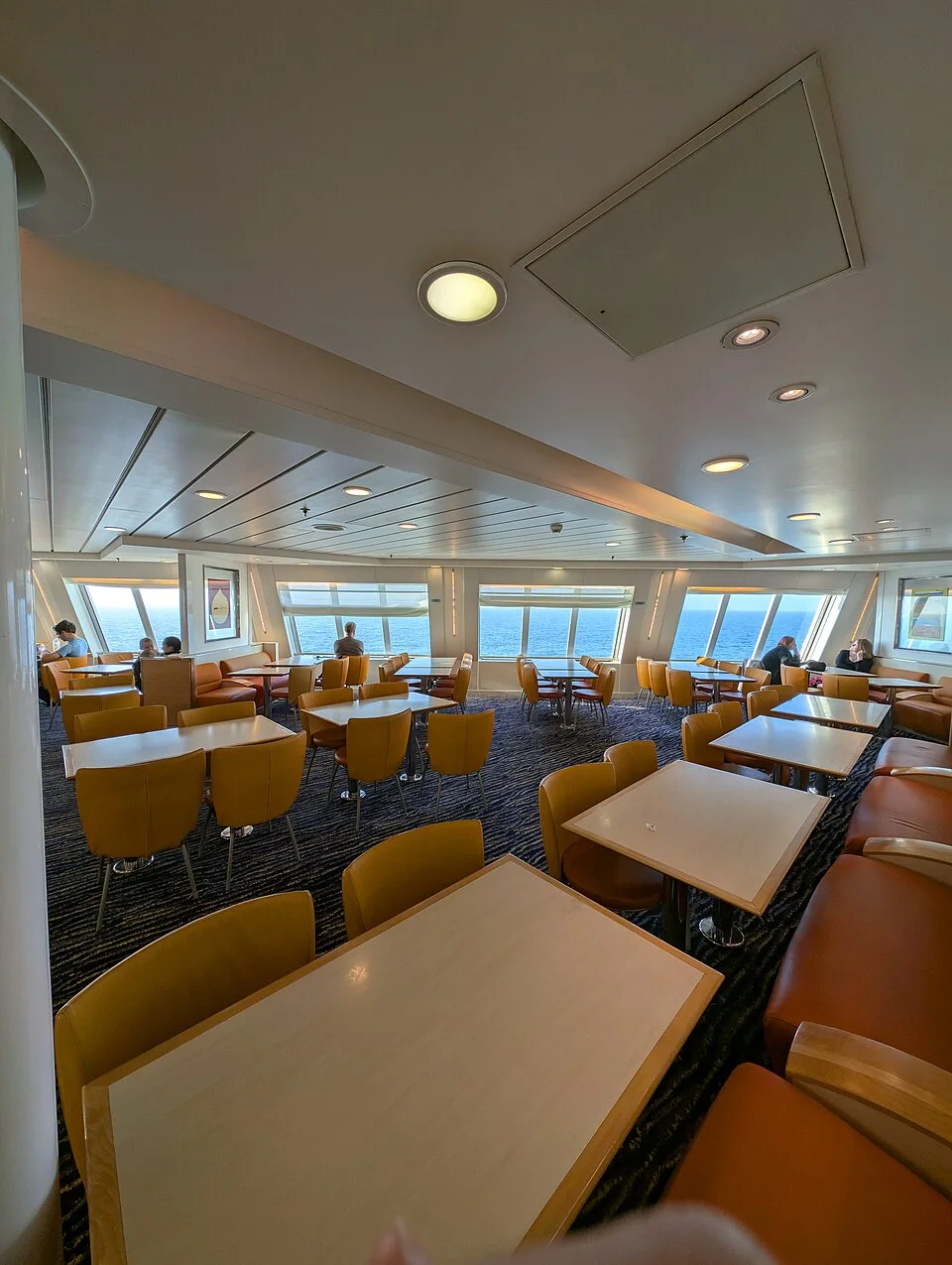
Larger CalMac ships offer comfortable indoor lounges for the longer crossings. Coffee Cabins and café areas make longer west-coast journeys more relaxed.
Passenger lounges
Even relatively small CalMac ferries provide sheltered seating. Larger ships add multiple lounge
areas for longer crossings.
Best considered forMost foot and vehicle passengers
Recliner & TV lounges
Ships such as Loch Seaforth, Lord of the Isles, Isle of Mull and other major vessels provide
additional lounge choices for longer routes.
Best considered forMinch and longer Hebridean crossings
Observation areas
Several larger vessels offer observation lounges or broad windows, useful for enjoying the sea
lochs, mountains and wildlife.
Best considered forScenic daytime travel
No standard cabin product
Unlike overnight North Sea or Spain ferries, CalMac does not generally sell private passenger
cabins. Plan overnight accommodation ashore.
Best considered forSetting the right expectation before booking
Standard seating
A comfortable reserved or public seating option is available on applicable passenger sailings. Exact
seat types depend on the vessel shown for your departure.
Best considered forDaytime journeys and budget-conscious travel
Additional lounge seating
Larger vessels can provide more than one lounge or seating area, but facilities are ship-specific
and should not be assumed to be a separately bookable premium product.
Best considered forLonger daytime crossings on larger vessels
Booking tip
Bookable vehicle routes can fill quickly on summer weekends and island-event dates. Reserve ahead
where advance booking is offered and keep checking service status before travel.
Scottish produce with a changing sea view
Food, coffee, Wi-Fi and island views
Facilities depend heavily on the vessel: a five-minute shuttle is deliberately simple, while the
major Hebridean ships offer cafés, shops, family areas and several places to sit.
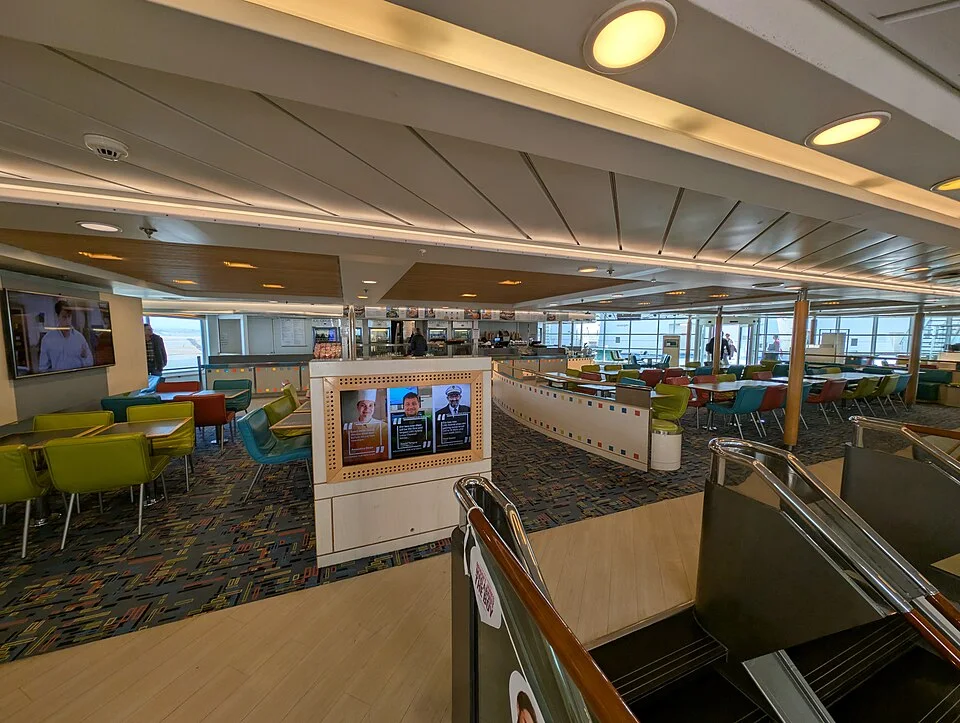
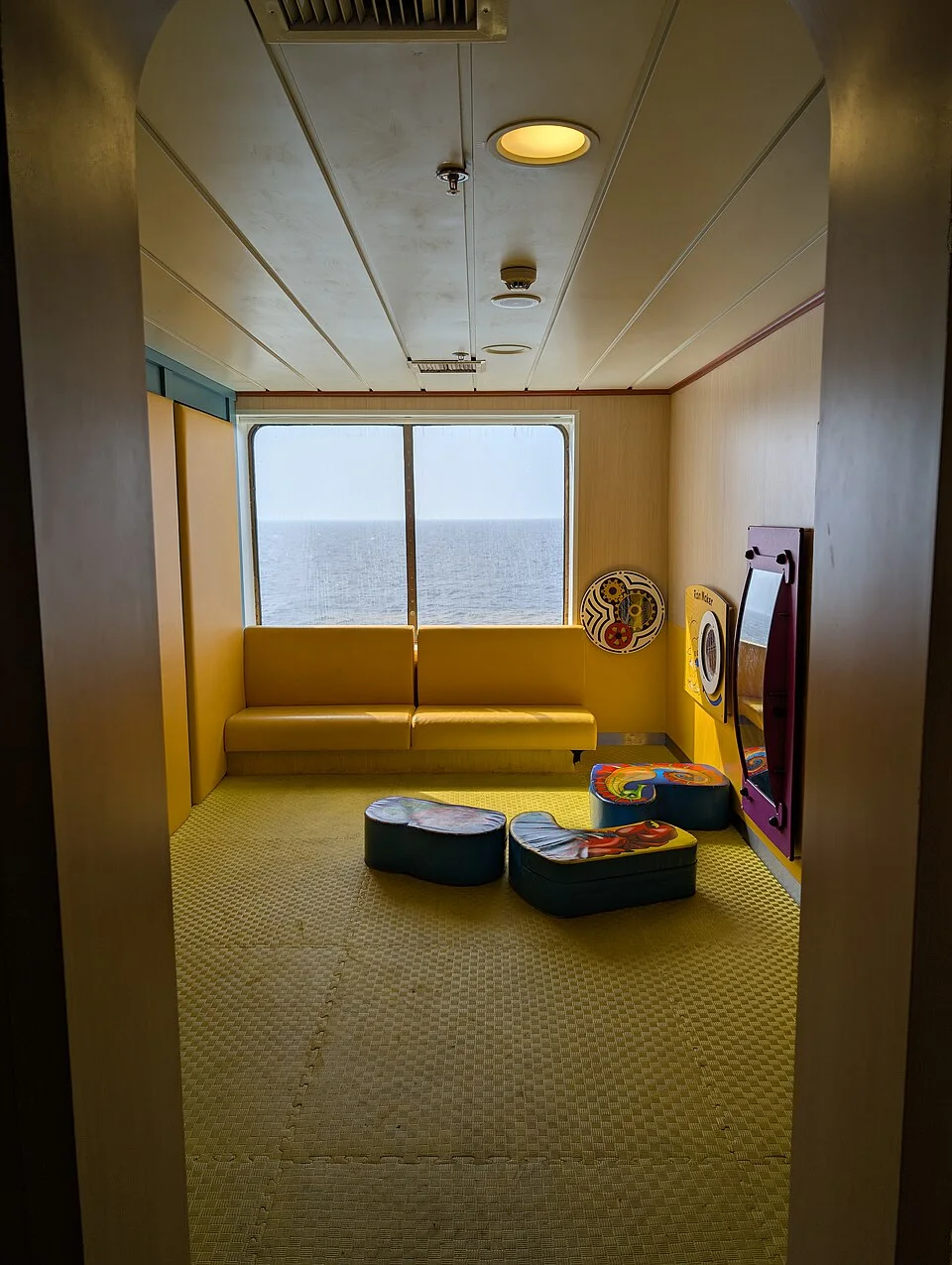
Larger vessels feature Mariners Café service with hot meals and Scottish produce. Selected ships have Coffee Cabin facilities for drinks, snacks and a quieter break. Kids areas are available on several major vessels, including newer ships. Open decks provide sea air and views when weather and operating conditions permit.
Mariners Café
Many larger ships serve freshly prepared meals, breakfasts and snacks, often highlighting locally
sourced Scottish ingredients.
Wi-Fi
Free Wi-Fi is offered on many vessels, but remote west-coast geography means connectivity should
never be treated as guaranteed throughout the crossing.
Shop@CalMac
Selected larger vessels sell snacks, travel essentials, souvenirs and products sourced from island businesses.
Family facilities
Baby-changing areas and children’s spaces are available on several major ships, while shorter
shuttle ferries have simpler facilities.
Outdoor decks
Open decks are one of the pleasures of CalMac travel, offering views across sea lochs, mountains,
islands and sometimes marine wildlife.
Accessibility varies by ship
Major vessels may have lifts and accessible toilets; smaller ferries can require vehicle-deck
boarding. Check the actual vessel when accessibility is important.
This section combines genuine operator imagery with selected images from EUFerry's general
ferry-travel library. Facilities and layouts vary by ship and sailing.
The vehicle can be part of the island holiday
Cars, motorhomes, bicycles, pets and accessibility
Capacity and procedures vary more across CalMac than on almost any single-brand ferry network,
because its vessels range from tiny local ferries to large ro-pax ships.
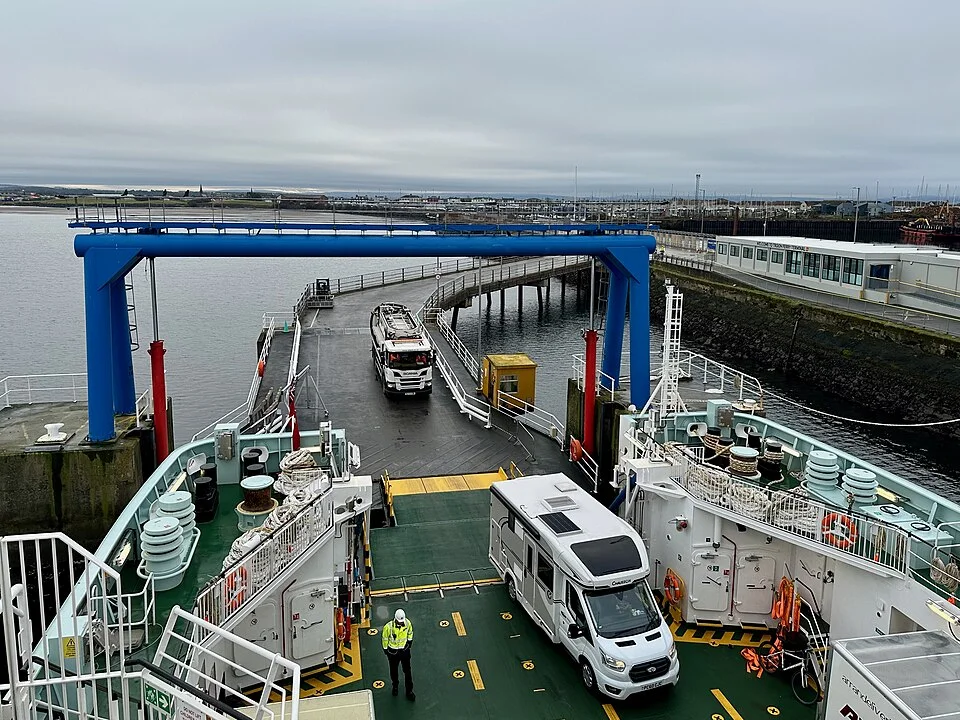
Motorhomes and caravans are common on island routes, but accurate length and height are essential. Bicycles travel free, but should still be added to the booking to manage capacity. Pets travel free but require a pet ticket and must use the booked onboard or vehicle arrangement.
Cars & vans
Most major island routes carry cars, but deck space is limited and can sell out long before
passenger space. Enter the correct vehicle size and registration where requested.
Reserve early on bookable routes
Check exact check-in closure
Expect close vehicle-deck parking
Motorhomes & caravans
Touring vehicles are supported throughout the network, with pricing based on vehicle and trailer
length bands. Larger or heavier vehicles may be treated as commercial traffic.
Declare full length accurately
Book peak-season island travel early
Check overnight parking rules separately
Bicycles & equipment
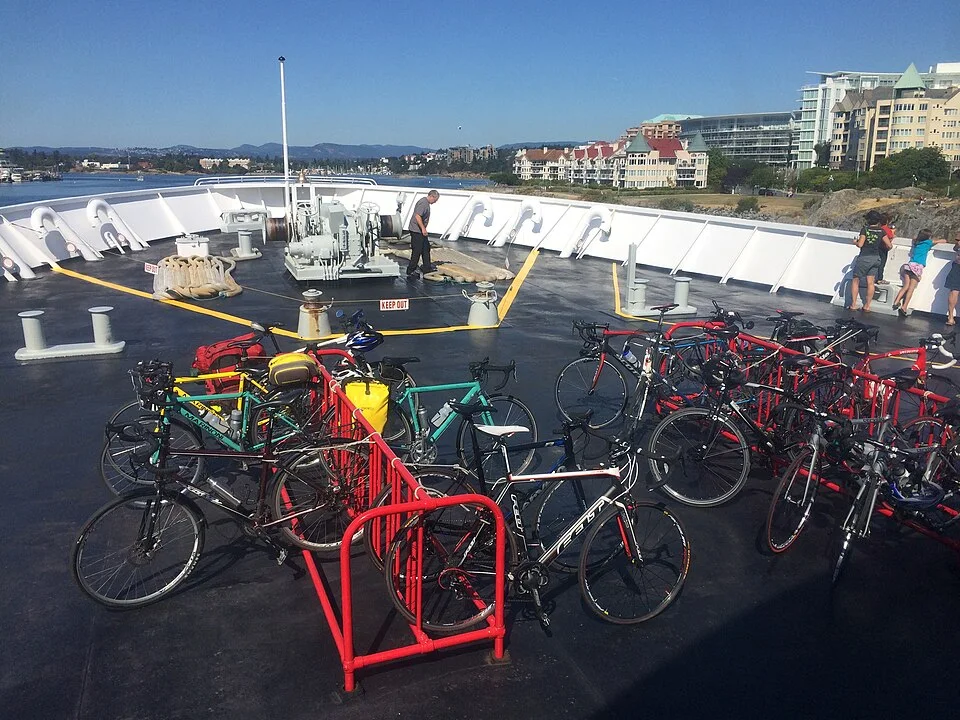
Bicycles, kayaks, paddleboards and similar equipment are carried free, but CalMac asks passengers to
declare them so capacity can be managed.
Bikes are free
Groups of cyclists should plan ahead
E-bikes must travel on vehicle decks
Electric vehicles
Battery-electric and hybrid vehicles can travel, provided there is no suspected battery-compartment
damage. Charging any electric vehicle or e-bike onboard is prohibited.
No onboard charging
Some ports have chargers
Damaged batteries can prevent shipment
The important number is the check-in closure on your ticket
Check-in, luggage and boarding
CalMac check-in times are route-specific and can range from roughly 5 to 60 minutes before
departure. Do not copy a check-in time from another route: use the one shown on your eTicket,
booking confirmation or current timetable.
Download your eTicket before reaching remote ports where mobile reception may be inconsistent. Vehicle and foot-passenger procedures differ by port, vessel and route length.
A practical travel timeline
When planning
Decide whether the route is Bookable or Turn Up and Go
On a Bookable route, reserve the sailing you actually intend to use. On a Turn Up and Go route, your
ticket works differently and does not reserve one particular departure.
48+ hours
Confirm assistance requirements
If you need wheelchair assistance, lift access, extra vehicle-deck space or other support, tell
CalMac as early as possible and ideally at least 48 hours before travel.
Before leaving
Check live service status
West-coast weather and vessel availability can change quickly. Check the route status before
starting a long drive to the terminal.
5–60 minutes
Meet the exact route check-in
Published check-in closure varies by route and passenger type. Missing it can result in vehicle
space being reallocated.
Before boarding
Have the QR-code eTicket ready
CalMac recommends downloading your eTicket to your device before arriving at the port so it can be
scanned quickly.
Build the road trip around the ferry network
How to plan a CalMac island journey
Start with the mainland gateway rather than the island name alone. Oban is ideal for Mull and many
Inner Hebrides routes; Mallaig works for Skye, the Small Isles and South Uist; Ullapool is the
direct gateway to Stornoway; Uig on Skye reaches Harris and North Uist; Kennacraig is the main
mainland terminal for Islay. Choosing the correct gateway can save hours of Highland driving.
Next decide whether you are travelling with a vehicle. A foot passenger may be able to travel on a
sailing that has no vehicle deck space left. A motorhome or caravan needs much more capacity than a
car, and roof boxes, bike racks and trailers can alter the booked dimensions. During summer, reserve
key vehicle legs before committing to non-refundable accommodation.
For an Outer Hebrides road trip, think in one direction. A classic itinerary enters through Barra or
South Uist, drives north through the causeway-connected islands, uses the short inter-island
ferries, and leaves via Harris or Lewis. This can be far more efficient than repeatedly returning to
the mainland.
Finally, protect the itinerary from disruption. CalMac operates lifeline services in exposed waters
and has a complex maintenance programme. Avoid scheduling an international flight or other
inflexible connection immediately after a long Hebridean ferry if the journey can reasonably allow
more margin.
Connect CalMac with the rest of your journey
The linked EUFerry guides for CalMac involve United Kingdom. Start with the port pair you need and then compare the dated service: passenger categories, accommodation and check-in arrangements can differ within the same operator’s network.
Before choosing a CalMac fare, write down the departure terminal, reporting time, arrival port and the first onward connection. Compare each item with the booking result. A cabin, pet space or assistance request should appear in the selected arrangements rather than being inferred from a general ship description.
Open the directional route guides for both halves of a return journey. If the comparison search does not show a sailing, check the operator information on this page before concluding that the service has stopped; some local services and ticket categories are outside the comparison provider’s inventory.
Common planning questions
CalMac Ferries FAQs
How many destinations does CalMac serve?
Caledonian MacBrayne states that it operates 35 vessels serving more than 50 destinations across
around 200 miles of Scotland’s west coast, including the Clyde, Inner Hebrides and Outer Hebrides.
Do I need to book CalMac ferries in advance?
CalMac has both Bookable and Turn Up and Go routes. On Bookable routes a reservation secures space
on a specific sailing. On Turn Up and Go routes an advance ticket is open within the relevant
timetable season rather than tied to one departure. Advance purchase is recommended, especially for
vehicles and busy island routes.
How early should I arrive for a CalMac ferry?
CalMac check-in times vary by route and can range from about 5 to 60 minutes before departure. The
exact check-in closure shown on your eTicket, booking confirmation or route timetable takes
priority.
Can I take my car or motorhome on CalMac?
Yes, vehicle ferries across the network carry cars, motorcycles, motorhomes, caravans and trailers,
subject to route and vessel capacity. Accurate vehicle dimensions should be declared when booking.
Can I travel as a foot passenger with CalMac?
Yes. Foot passengers are accepted widely across the network. CalMac strongly advises advance
purchase or reservation, particularly on busy routes, even where a service also operates on a Turn
Up and Go basis.
Are cabins available on CalMac ferries?
CalMac is primarily a day-ferry network rather than an overnight cabin service. Larger vessels
provide lounges, cafés, observation areas and on some ships recliner lounges, but travellers should
not plan on private passenger cabins as a standard CalMac product.
Can pets travel on CalMac ferries?
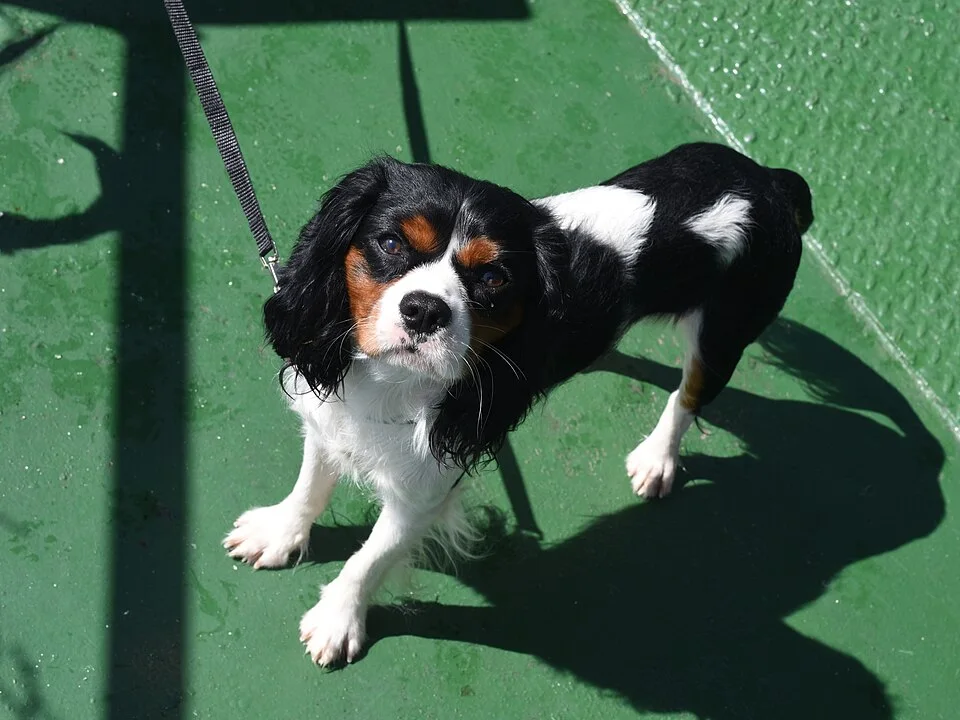
Yes. Pets travel free but need a ticket. Depending on the vessel and booking choice, pets may use
designated indoor pet areas, remain in the vehicle, or stay outside. Assistance dogs have broader
access.
Can bicycles travel on CalMac?
Yes. Bicycles and similar equipment are carried free of charge, but cyclists should add the bicycle
or equipment to the booking so capacity can be managed, especially on busy sailings.
Can I charge an electric vehicle on a CalMac ferry?
No. CalMac does not permit charging of electric vehicles, e-bikes, e-scooters or other electric
mobility devices on board. Some ports provide charging facilities ashore.
Does CalMac provide assistance for reduced mobility?
Yes. CalMac asks passengers who need assistance to describe their requirements when booking or
contact the assistance team at least 48 hours before travel where possible. Vessel access varies, so
advance notice helps staff plan boarding and car-deck positioning.
Continue comparing
Related ferry companies around Britain and Ireland
Facility photographs are examples; the vessels shown are identified below. Facilities vary by ship.
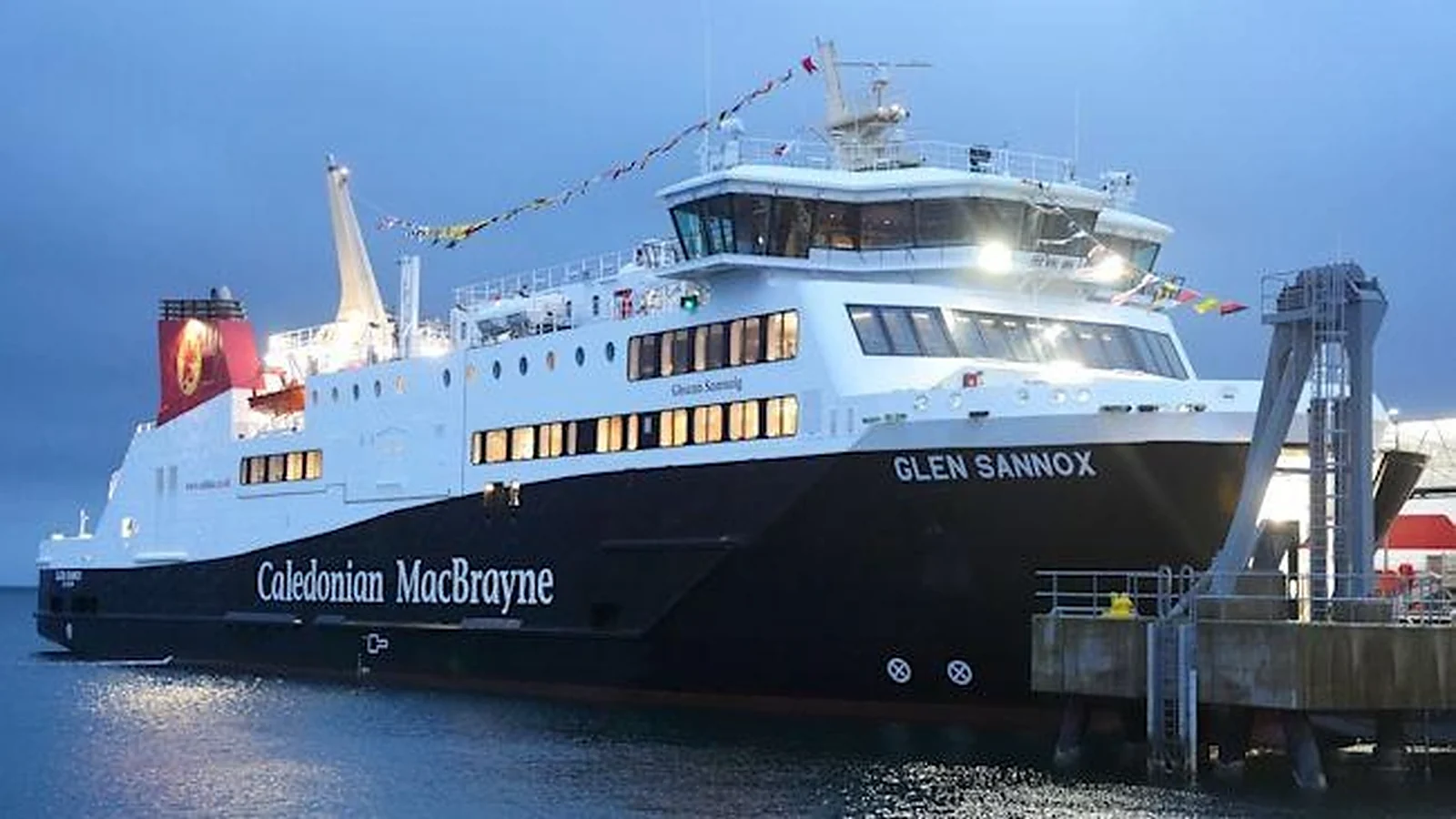
250120 1029 MV Glen Sannox loading, Port of Troon ferry terminal.jpg — Dave souza; CC BY-SA 4.0. Source: https://commons.wikimedia.org/wiki/File:250120_1029_MV_Glen_Sannox_loading,_Port_of_Troon_ferry_terminal.jpg. Licence: https://creativecommons.org/licenses/by-sa/4.0. Resized for display.
Bikes on MV Coho.jpg — Loneshieling; CC BY-SA 4.0. Source: https://commons.wikimedia.org/wiki/File:Bikes_on_MV_Coho.jpg. Licence: https://creativecommons.org/licenses/by-sa/4.0. Resized for display.
Cavalier King Charles Spaniel (49687542022).jpg — Chris Hunkeler from Carlsbad, California, USA; CC BY-SA 2.0. Source: https://commons.wikimedia.org/wiki/File:Cavalier_King_Charles_Spaniel_(49687542022).jpg. Licence: https://creativecommons.org/licenses/by-sa/2.0. Resized for display.
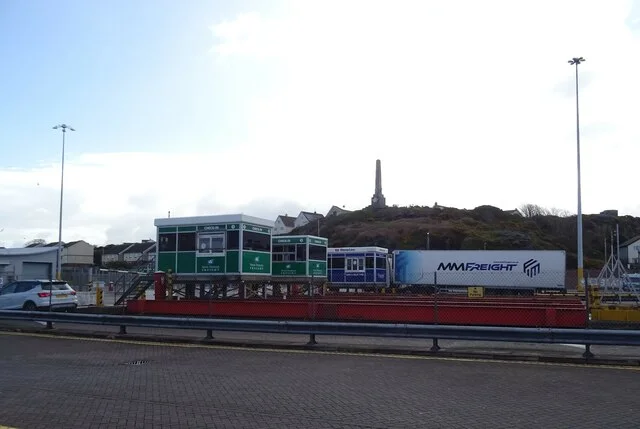
Check-in, Holyhead Ferry Terminal - geograph.org.uk - 7757104.jpg — JThomas; CC BY-SA 2.0. Source: https://commons.wikimedia.org/wiki/File:Check-in,_Holyhead_Ferry_Terminal_-_geograph.org.uk_-_7757104.jpg. Licence: https://creativecommons.org/licenses/by-sa/2.0. Resized for display.



 50+ destinations
 35-vessel network
 Cars, bikes, motorhomes & pets