Use this EUFerry operator guide to understand where Polferries sails and the practical options to
consider before checking current availability and fares.
Polish passenger and vehicle ferry service across the Baltic
About the operator
A Polish Baltic ferry brand now inside the POLSCA network
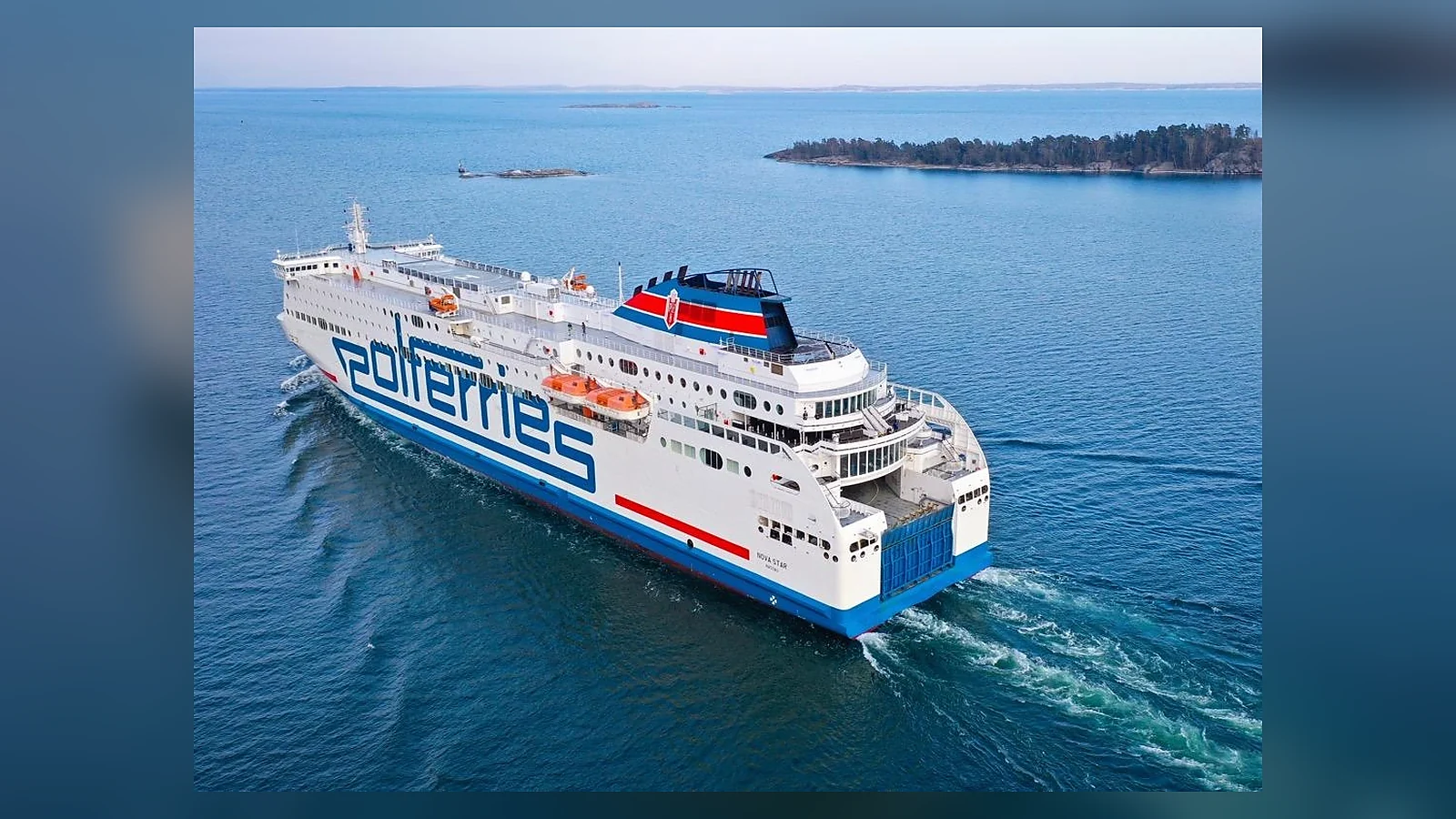
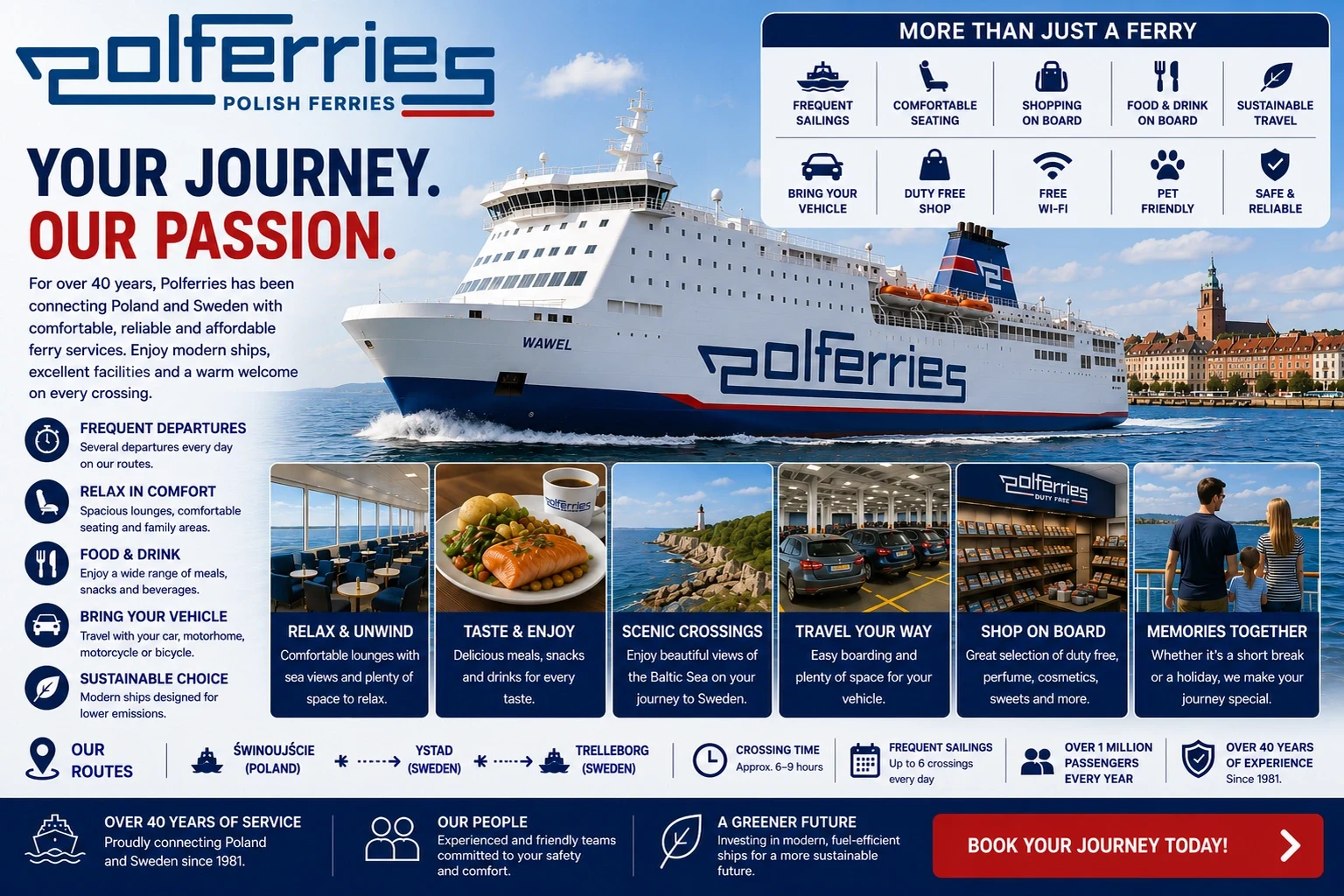
Polferries has long been one of the principal ferry brands linking Poland and Sweden, carrying
passengers, cars, motorcycles and freight across the Baltic from Gdańsk and Świnoujście.
On 30 March 2026, the Polish ferry sector entered a new phase when Polferries, Unity Line and Euroafrica were integrated under the new POLSCA Baltic Ferries brand and common sales network. Polferries remains a useful and recognisable search term, while current booking and customer-service activity increasingly uses the POLSCA identity.
The 2026 network includes established services to Ystad, Trelleborg and Nynäshamn as well as the new
Gdańsk–Karlshamn connection introduced in July. That gives road travellers multiple ways to reach
southern and central Sweden without driving through Denmark.
EUFerry travel note: use “Polferries” to identify the familiar route, then rely on the current booking result for the actual POLSCA ship, timetable and conditions.
Poland to Sweden
Polferries routes
The current network includes several Baltic corridors. These three representative routes show the
mix of frequent southern-Sweden services and longer overnight crossings.
Day & overnightSouthern Sweden
Poland
Świnoujście
Sweden
Ystad
Świnoujście–Ystad is one of the main Poland–Sweden routes, with several departure patterns. Current
August 2026 timetables show crossings generally ranging from about six to eight hours.
Frequent route with both day and night options
Useful for Malmö, Copenhagen and southern Sweden
Motorised passengers can add an Öresund Bridge option on eligible bookings
Gdańsk–Nynäshamn is a long overnight crossing that places travellers south of Stockholm. A common
2026 timetable pattern is 18:00 departure and 12:00 arrival the following day.
Convenient for Stockholm and central-eastern Sweden
Cabin accommodation is important on the long crossing
Vehicle carriage makes it attractive for Scandinavian road trips
The new Gdańsk–Karlshamn route started in July 2026. Overnight sailings generally take around 13 to
14.5 hours and provide direct access to Blekinge and the E22 corridor.
New 2026 alternative to the established Nynäshamn route
Useful for southern Sweden, Denmark and onward travel towards Norway
Passenger facilities differ between Skania and the more freight-oriented Copernicus
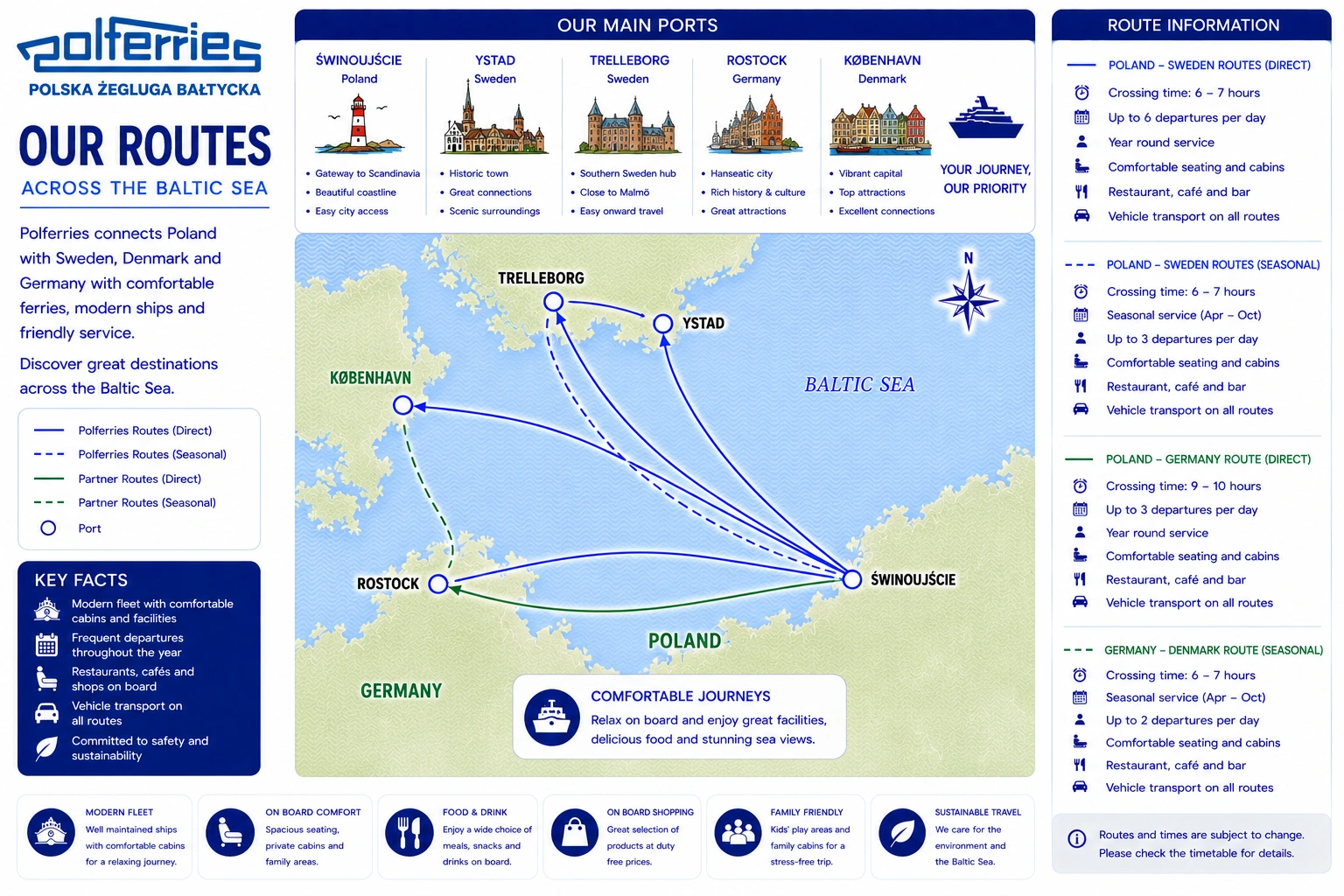
The EUFerry map illustrates the principal Polferries corridors, including Świnoujście–Ystad,
Świnoujście–Trelleborg, Gdańsk–Nynäshamn and the newer Gdańsk–Karlshamn connection.
The map remains a planning aid rather than a live timetable. POLSCA integration can also mean ships
historically associated with different Polish brands appear on the same route network.
After choosing the most practical route, compare the live Polferries sailing for departure time,
calling pattern, passenger requirements and the facilities or accommodation shown for that service.
The complete itinerary and arrival location can matter more than a small difference in the headline
fare.
Check the ship named on the booking. Passenger facilities can differ substantially between a full
passenger ferry and a vessel designed primarily around freight capacity.
Illustrative Polferries route map — verify the live POLSCA timetable for your selected date.
Ports and places
Three Baltic gateways
Gdańsk and Świnoujście are the principal Polish departure ports, while Ystad is one of the most
convenient Swedish gateways for road travel across southern Scandinavia.
Northern Poland gateway
Gdańsk
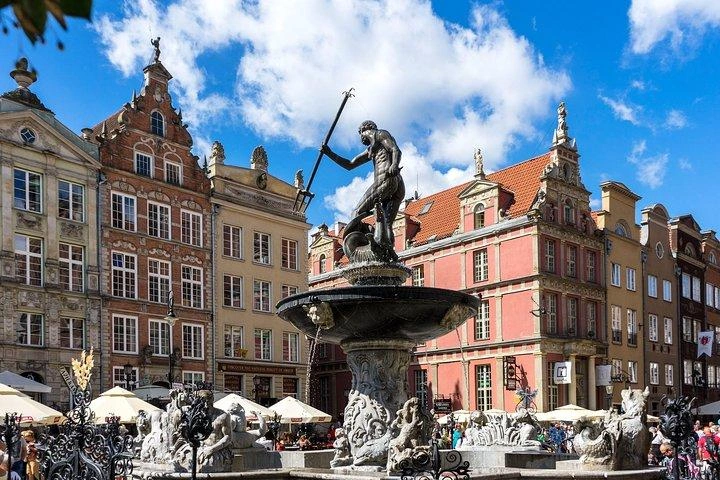
Gdańsk combines a major Baltic ferry port with one of Poland's most attractive historic cities. From
here, Polferries/POLSCA services run towards Nynäshamn and Karlshamn.
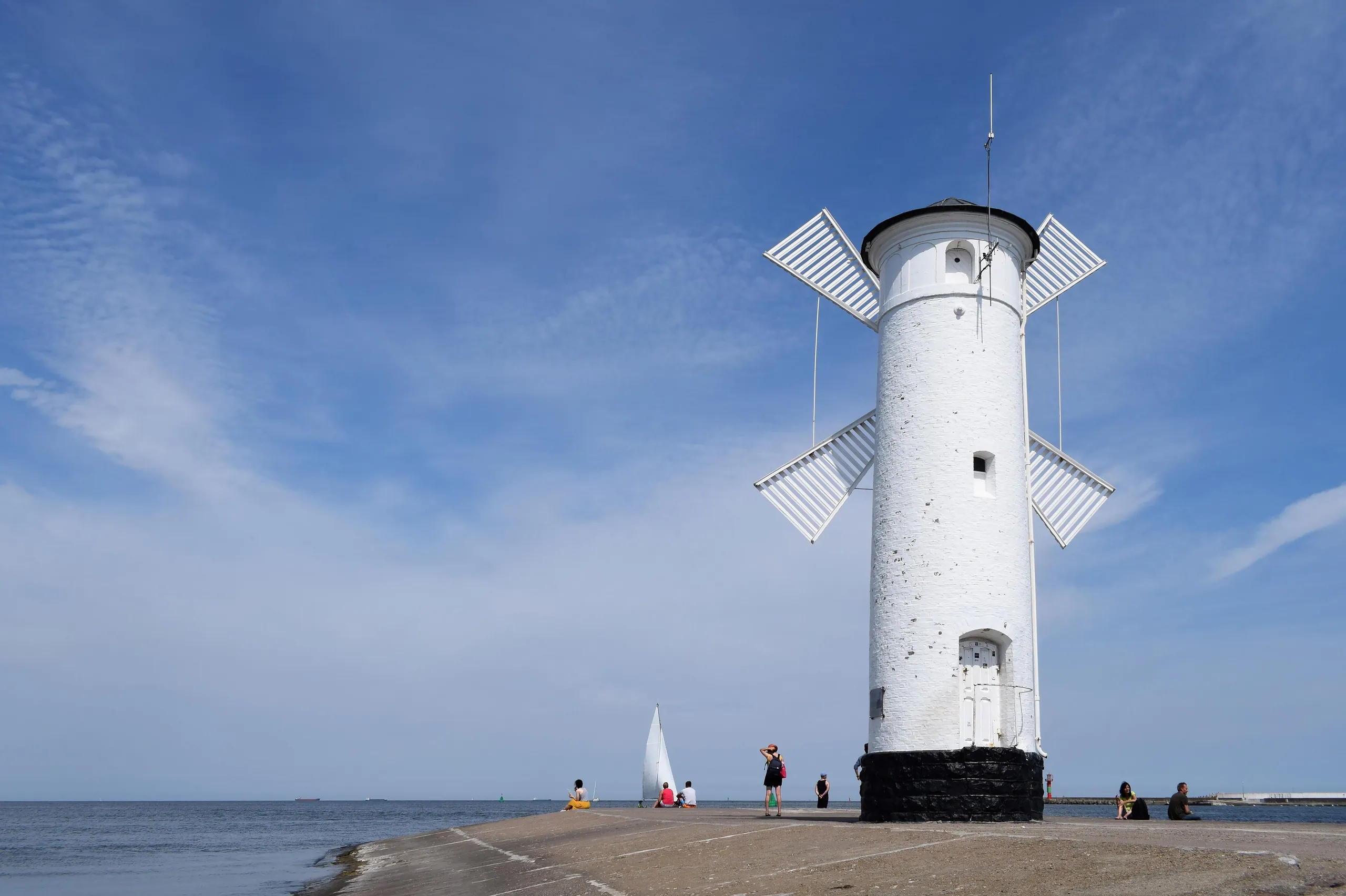
Świnoujście is Poland's principal western Baltic ferry gateway, with frequent connections towards
Ystad and Trelleborg and good road access from Germany and western Poland.
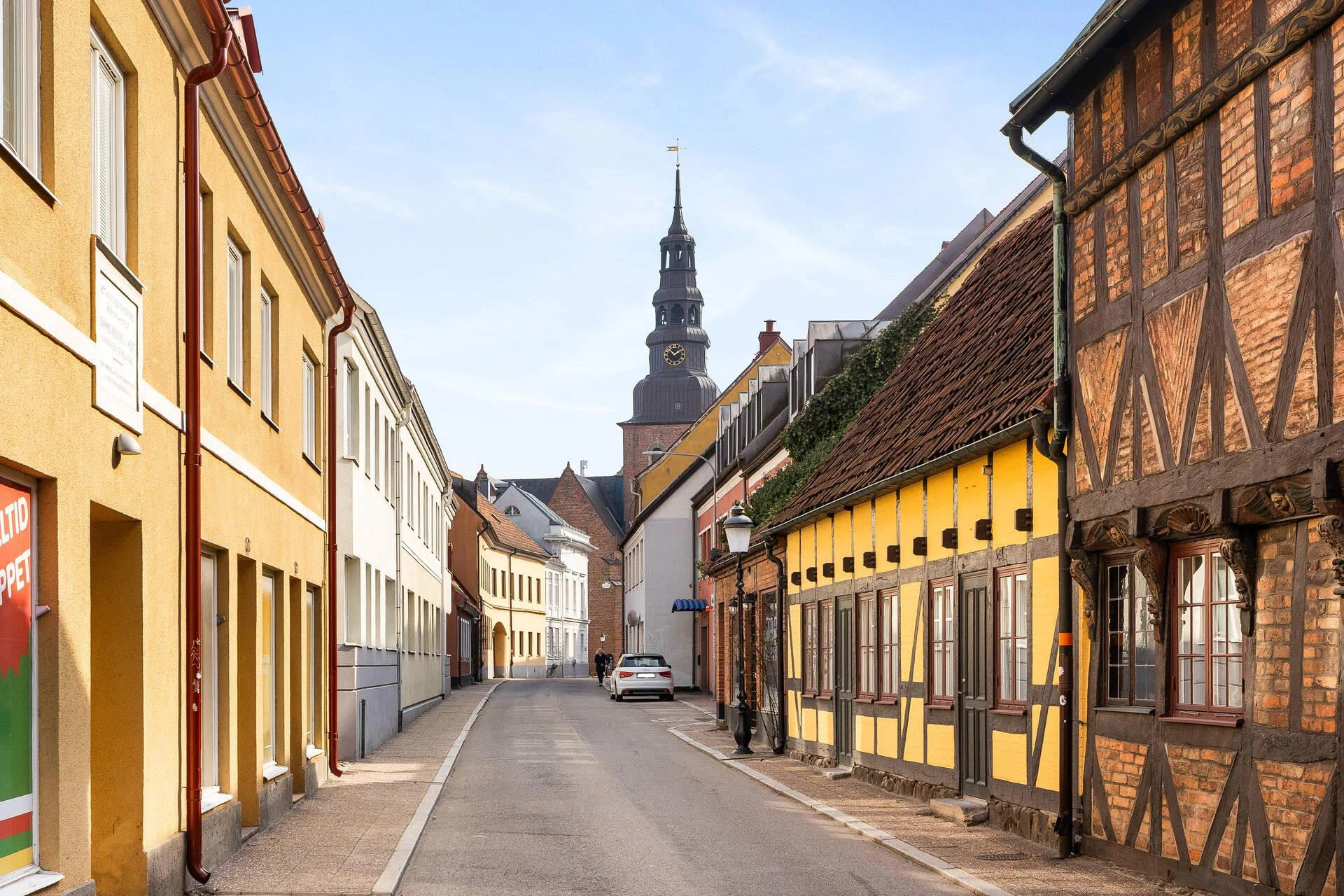
Ystad is well positioned for Skåne, Malmö and Copenhagen. Motorised passengers can also combine
selected ferry tickets with onward Öresund Bridge travel.
Ystad and Trelleborg suit southern Scandinavia, Karlshamn is useful for Blekinge and the E22
corridor, while Nynäshamn is much better positioned for Stockholm and central Sweden.
Several hours or a full night at sea
Cabins and passenger accommodation
Most Poland–Sweden crossings are long enough for a cabin to add real value, especially on overnight
departures and the Gdańsk routes.
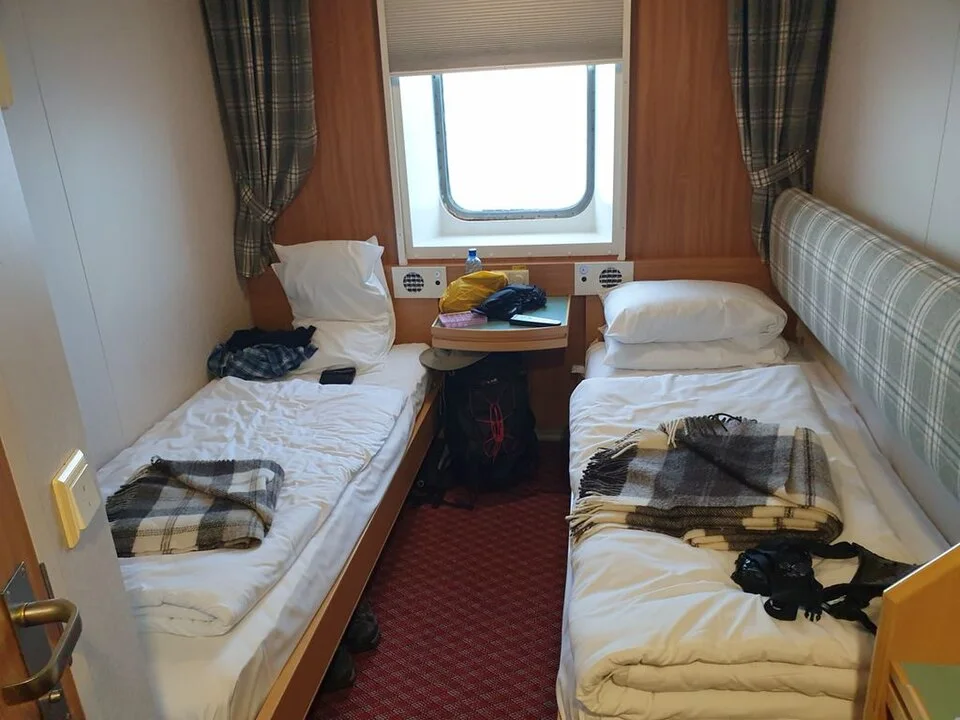
Multi-berth cabins suit families and groups on longer Baltic crossings. Higher cabin categories can add more space, privacy and comfort on overnight journeys.
Airline-style seating
Reserved Pullman or airline-style seats are available on relevant ferries as a lower-cost
alternative to a private cabin.
Best considered forDay sailings and budget-conscious travel
Two-berth cabins
Two-person cabins are widely available and suit couples or solo travellers wanting privacy and proper rest.
Best considered forCouples and overnight travel
Three- and four-berth cabins
Larger cabins allow families and groups to share private accommodation and are especially useful on
the longer Gdańsk routes.
Best considered forFamilies and small groups
Higher-category cabins
Selected ferries offer upgraded cabin categories with additional space and amenities such as
televisions or refrigerators.
Best considered forPassengers wanting more comfort
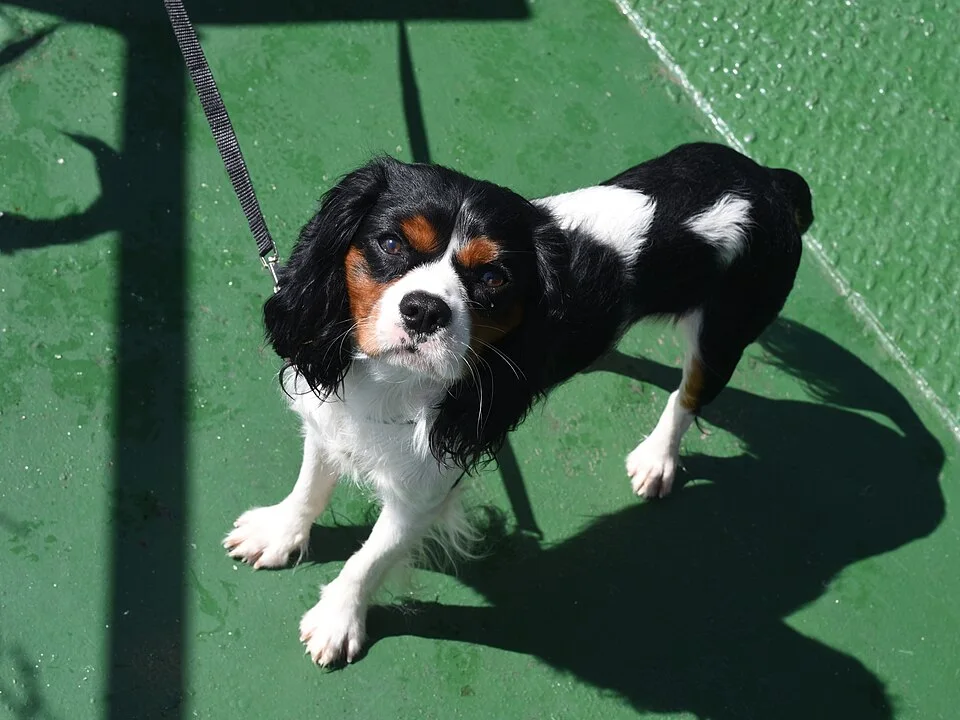
Pet-friendly cabins
Travelling with a pet normally requires a designated Special cabin, which must be arranged through
the operator and is limited in number.
Best considered forPassengers travelling with dogs, cats or other permitted pets
Accessible cabins
Cabins adapted for passengers with disabilities are available on relevant ships. Facilities differ
by vessel and should be confirmed before booking.
Best considered forPassengers requiring adapted accommodation
Cabin tip
On the new Gdańsk–Karlshamn route, check the assigned ferry before booking accommodation: passenger
facilities on Skania are broader than on the more freight-focused Copernicus.
A Baltic journey rather than a short shuttle
Restaurants, bars, shops and family facilities
Polferries passenger ships provide the practical facilities needed for several hours at sea, with
the exact mix depending on the ferry assigned to the route.
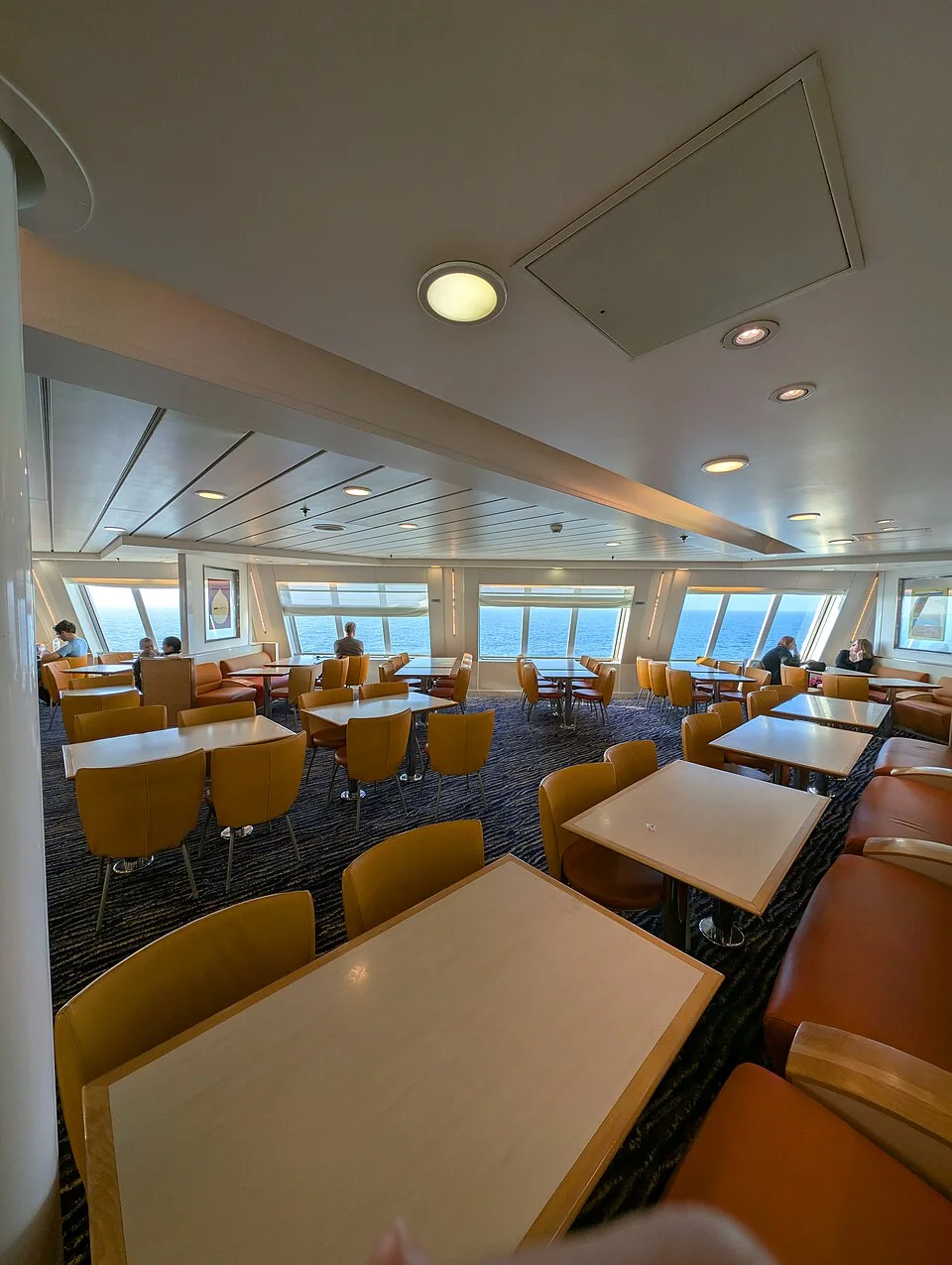
Restaurants and cafeterias allow passengers to have a full meal during longer Baltic crossings. Passenger lounges provide comfortable seating outside cabins. Onboard shops are available on selected passenger ferries. Family zones and children's areas are available on suitable ships.
Restaurants and cafeterias
Passenger ferries offer dining options ranging from cafeterias and snack bars to full restaurants,
depending on the ship.
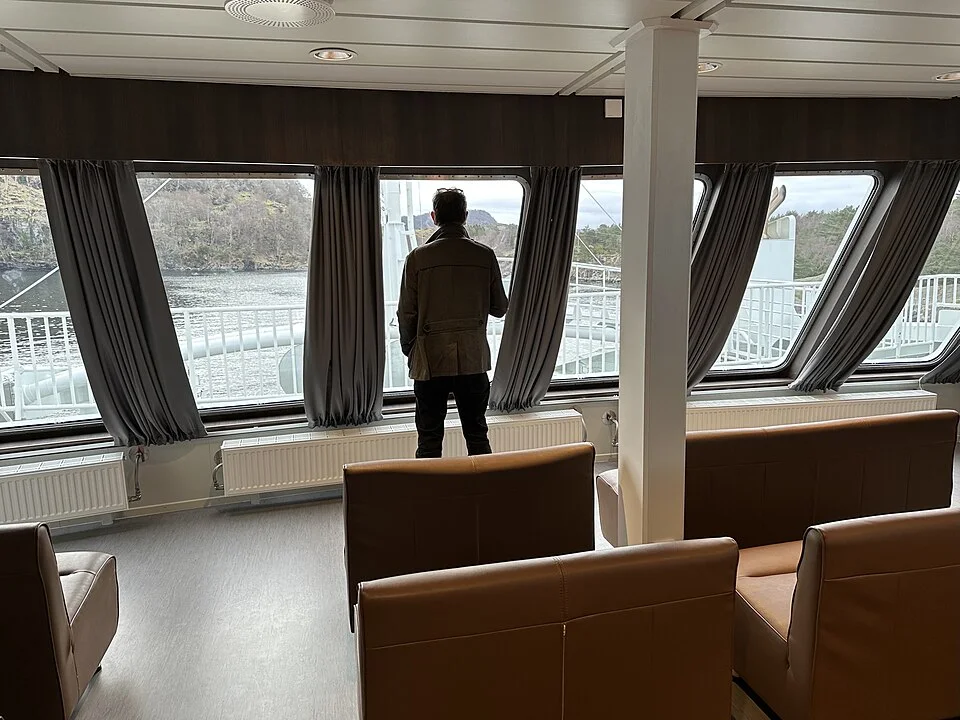
Bars and lounges
Indoor passenger spaces provide places to relax between meals and before retiring to a cabin on
overnight sailings.
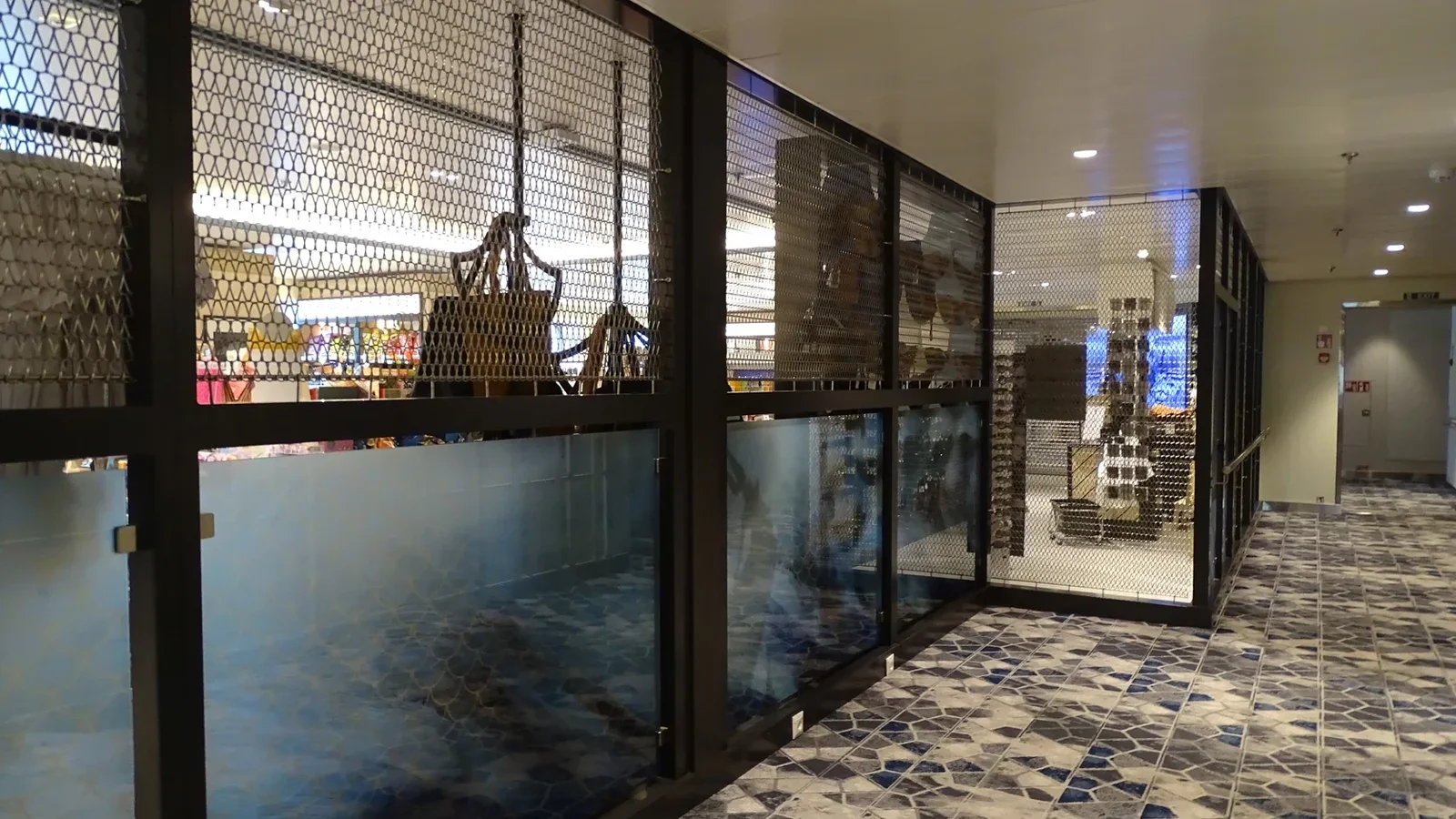
Onboard shopping
Selected ferries include shops for travel essentials, gifts and leisure purchases.
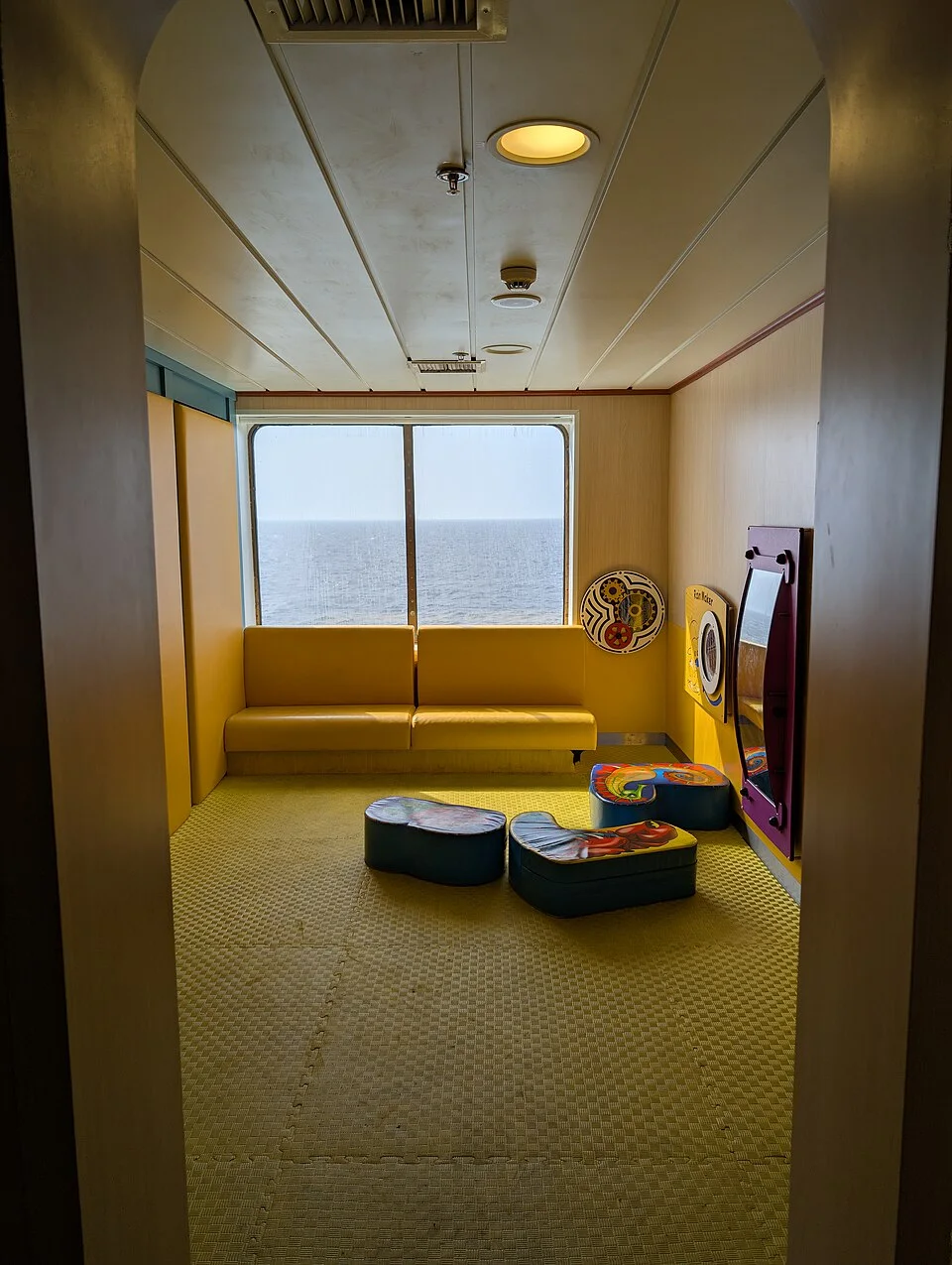
Family areas
Modern vessels such as Jantar Unity include family zones and children's areas designed to make
longer journeys easier.
Open decks
Weather permitting, outside decks offer views across the Baltic and a break from indoor passenger areas.
Ship-specific facilities
The combined POLSCA network means different ships can appear on familiar routes, so check the
assigned vessel if a particular facility matters.
Images in this section are from EUFerry's general ferry-travel library and illustrate facility
types. The operator-specific hero and overview images use Polferries imagery.
Take your own transport to Scandinavia
Vehicles, pets and accessibility
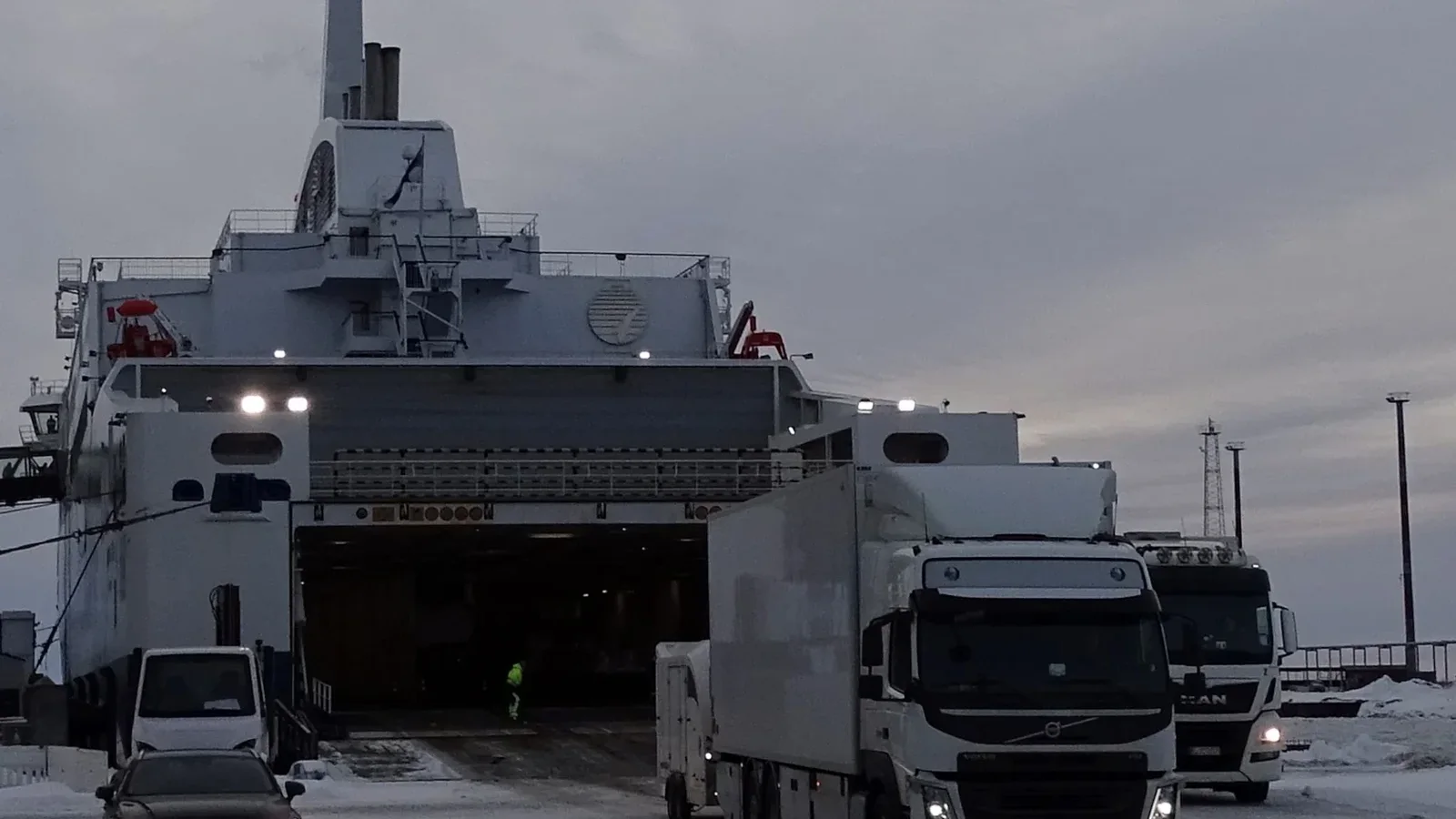
The Baltic routes are particularly useful for self-drive holidays, letting travellers bring a car,
motorcycle, motorhome or bicycle directly into Sweden.
Motorhomes and caravans should be booked using their complete dimensions. Electric-vehicle passengers currently have an earlier check-in requirement. Pets are accepted but normally need a designated pet-friendly cabin.
Cars and motorcycles
Cars and motorcycles can be booked on passenger ferries. Vehicle information should match the actual
vehicle presented at check-in.
Enter the correct registration and dimensions
Follow terminal lane instructions
Keep voyage essentials out of the vehicle after boarding
Motorhomes, caravans and EVs
Touring vehicles are accepted subject to deck space. Electric-vehicle passengers must currently
arrive for check-in no later than 120 minutes before departure.
Measure complete vehicle length and height
Include trailers and external equipment
EVs have a significantly earlier arrival requirement
Travelling with pets
Pets are welcome, but a Special pet cabin is normally required and must be arranged by phone. Up to
two pets may travel per booking in the designated cabin.
Carry all veterinary documents required by Sweden
Book early because pet cabins are limited
Temporary summer 2026 daytime exceptions apply on some southern routes
Reduced mobility and assistance
Accessible cabins and lifts are available on suitable passenger ships, but the combined network
includes vessels with different layouts.
Confirm the assigned ferry before travel
Request an accessible cabin where needed
Ask about assistance if boarding independently may be difficult
Arrive before the minimum cut-off
Check-in, documents and boarding
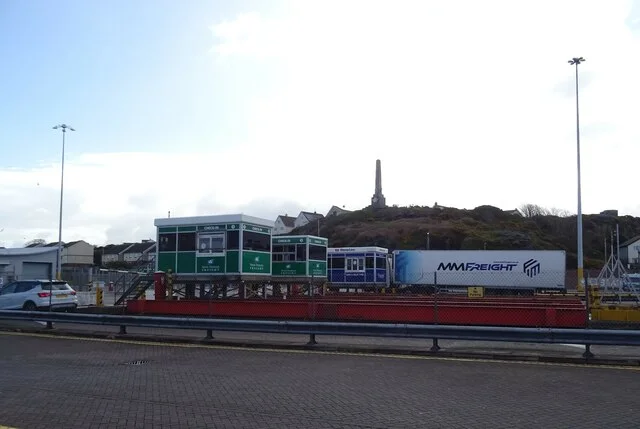
Polferries currently opens passenger and vehicle check-in 120 minutes before departure. The
published closing times are minimum cut-offs, not ideal arrival targets.
Have a valid identity document and ticket ready for check-in. Vehicle passengers should allow enough time for lane processing before the published closing time.
Current check-in sequence
120 minutes before
Check-in opens
Passenger and vehicle check-in begins two hours before the scheduled ferry departure.
120 minutes before
Latest arrival for electric vehicles
Passengers travelling with an electric vehicle must currently be ready for check-in no later than
two hours before departure.
30 minutes before
Vehicle check-in closes
Passengers travelling with a vehicle must complete check-in before the 30-minute cut-off.
15 minutes before
Foot-passenger check-in closes
Foot passengers have a later published closing time, but EUFerry recommends arriving much earlier
than this minimum.
At boarding
Keep ticket and boarding card
Passengers must retain both documents throughout the journey until leaving the ship.
Choose the Swedish port around the road trip
When Polferries can be the practical choice
For southern Sweden, Ystad and Trelleborg are logical arrival points with quick access to Skåne,
Malmö and Denmark. Karlshamn opens Blekinge and the E22, while Nynäshamn substantially reduces the
onward drive towards Stockholm.
That makes the route choice more important than the simple sea distance. A longer ferry to Nynäshamn
can be preferable to a shorter southern crossing if Stockholm or central Sweden is the real
destination.
The POLSCA integration also creates a broader combined network. This can improve choice, but it
makes the assigned ship more important because passenger accommodation and onboard facilities can
vary between vessels.
Common planning questions
Polferries FAQs
Is Polferries still operating under its own brand in 2026?
Polferries remains a recognised ferry brand, but since 30 March 2026 passenger sales and the
combined Polish ferry network have been brought together under the POLSCA Baltic Ferries brand
alongside Unity Line and Euroafrica.
Which routes are associated with Polferries in 2026?
Current services include Świnoujście–Ystad, Świnoujście–Trelleborg, Gdańsk–Nynäshamn and the new
Gdańsk–Karlshamn route. The exact ship and branding should be checked for the selected departure.
How long is the Świnoujście to Ystad ferry?
Current August 2026 schedules show daytime crossings of roughly 6 to 8 hours and overnight sailings
of around 7 to 8 hours, depending on the ship and departure.
How long is the Gdańsk to Nynäshamn ferry?
Current schedules commonly show an 18:00 departure arriving at 12:00 the following day, which is
about 18 hours. Some departures use different times.
How long is the Gdańsk to Karlshamn ferry?
The new 2026 route generally takes around 13 to 14.5 hours on overnight sailings, depending on the
ship and timetable.
How early should I check in for Polferries?
Passenger and vehicle check-in begins 120 minutes before departure. Check-in closes 15 minutes
before departure for foot passengers and 30 minutes before departure for vehicle passengers.
Electric-vehicle passengers must arrive no later than 120 minutes before departure.
Can I take a car or motorhome?
Yes. Cars, motorcycles, motorhomes, caravans, trailers and other suitable vehicles can be carried
subject to the correct booking category and available space.
Can I travel with a pet?
Yes. Pets are accepted, but a special pet-friendly cabin is normally required and availability is
limited. Up to two pets can travel on one booking in a designated pet cabin. Temporary 2026
exceptions apply on certain daytime Świnoujście–Ystad and Świnoujście–Trelleborg sailings.
Are cabins available?
Yes. Polferries offers several cabin categories on its passenger ferries, including two-, three- and
four-berth cabins, pet-friendly cabins and cabins adapted for passengers with disabilities.
Are accessible facilities available?
Yes on suitable passenger ferries. Accessible cabins and lifts are available on relevant vessels,
but facilities vary by ship, so passengers requiring specific assistance should confirm the assigned
ferry before travel.
Facility photographs are examples; the vessels shown are identified below. Facilities vary by ship.
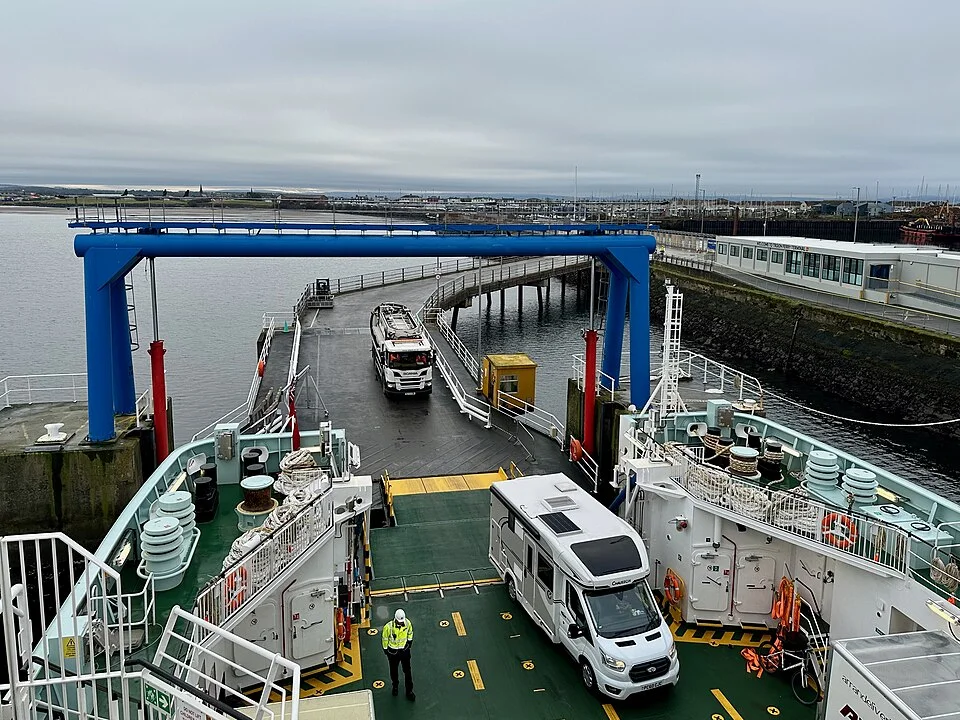
250120 1029 MV Glen Sannox loading, Port of Troon ferry terminal.jpg — Dave souza; CC BY-SA 4.0. Source: https://commons.wikimedia.org/wiki/File:250120_1029_MV_Glen_Sannox_loading,_Port_of_Troon_ferry_terminal.jpg. Licence: https://creativecommons.org/licenses/by-sa/4.0. Resized for display.
Cabin on MV Hrossey - geograph.org.uk - 7254252.jpg — Oliver Dixon; CC BY-SA 2.0. Source: https://commons.wikimedia.org/wiki/File:Cabin_on_MV_Hrossey_-_geograph.org.uk_-_7254252.jpg. Licence: https://creativecommons.org/licenses/by-sa/2.0. Resized for display.
Cavalier King Charles Spaniel (49687542022).jpg — Chris Hunkeler from Carlsbad, California, USA; CC BY-SA 2.0. Source: https://commons.wikimedia.org/wiki/File:Cavalier_King_Charles_Spaniel_(49687542022).jpg. Licence: https://creativecommons.org/licenses/by-sa/2.0. Resized for display.
Check-in, Holyhead Ferry Terminal - geograph.org.uk - 7757104.jpg — JThomas; CC BY-SA 2.0. Source: https://commons.wikimedia.org/wiki/File:Check-in,_Holyhead_Ferry_Terminal_-_geograph.org.uk_-_7757104.jpg. Licence: https://creativecommons.org/licenses/by-sa/2.0. Resized for display.
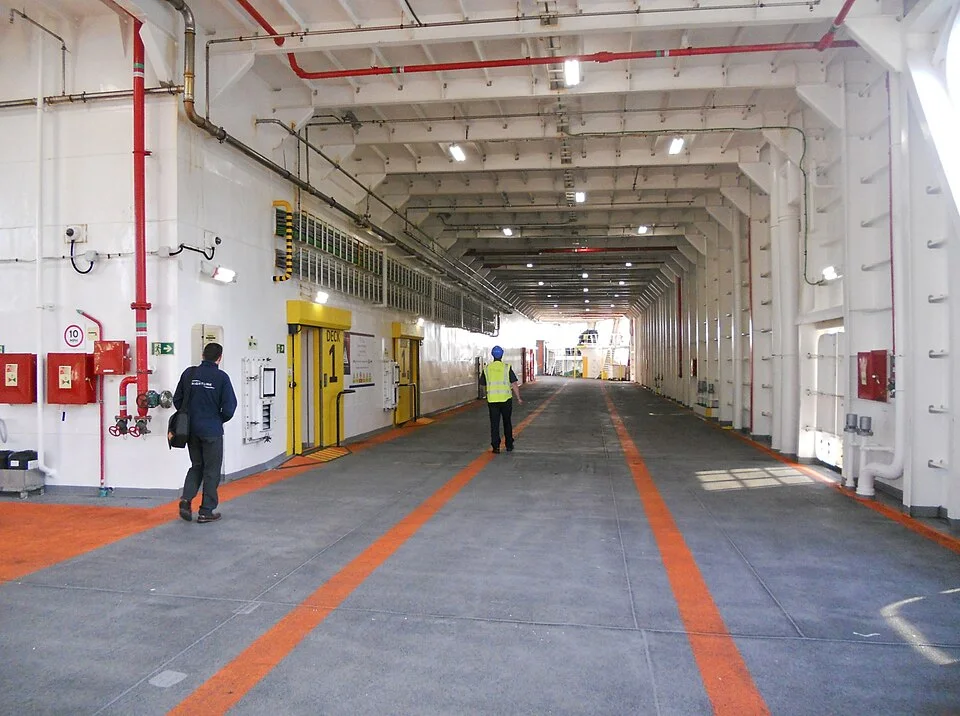
Vehicle deck on the Victoria of Wight (Wightlink ferry).jpg — ITookSomePhotos; CC BY-SA 4.0. Source: https://commons.wikimedia.org/wiki/File:Vehicle_deck_on_the_Victoria_of_Wight_(Wightlink_ferry).jpg. Licence: https://creativecommons.org/licenses/by-sa/4.0. Resized for display.



 Poland
 Sweden
 Day & overnight sailings