Plan your Fred. Olsen Express journey with EUFerry by reviewing routes and passenger information
first, then compare current sailings and ticket choices for your dates.
Canary Islands network Fast inter-island crossings Cars & touring vehicles
Fast passenger and vehicle ferry services across the Canary Islands
About the operator
Fast ferry travel across the Canary Islands
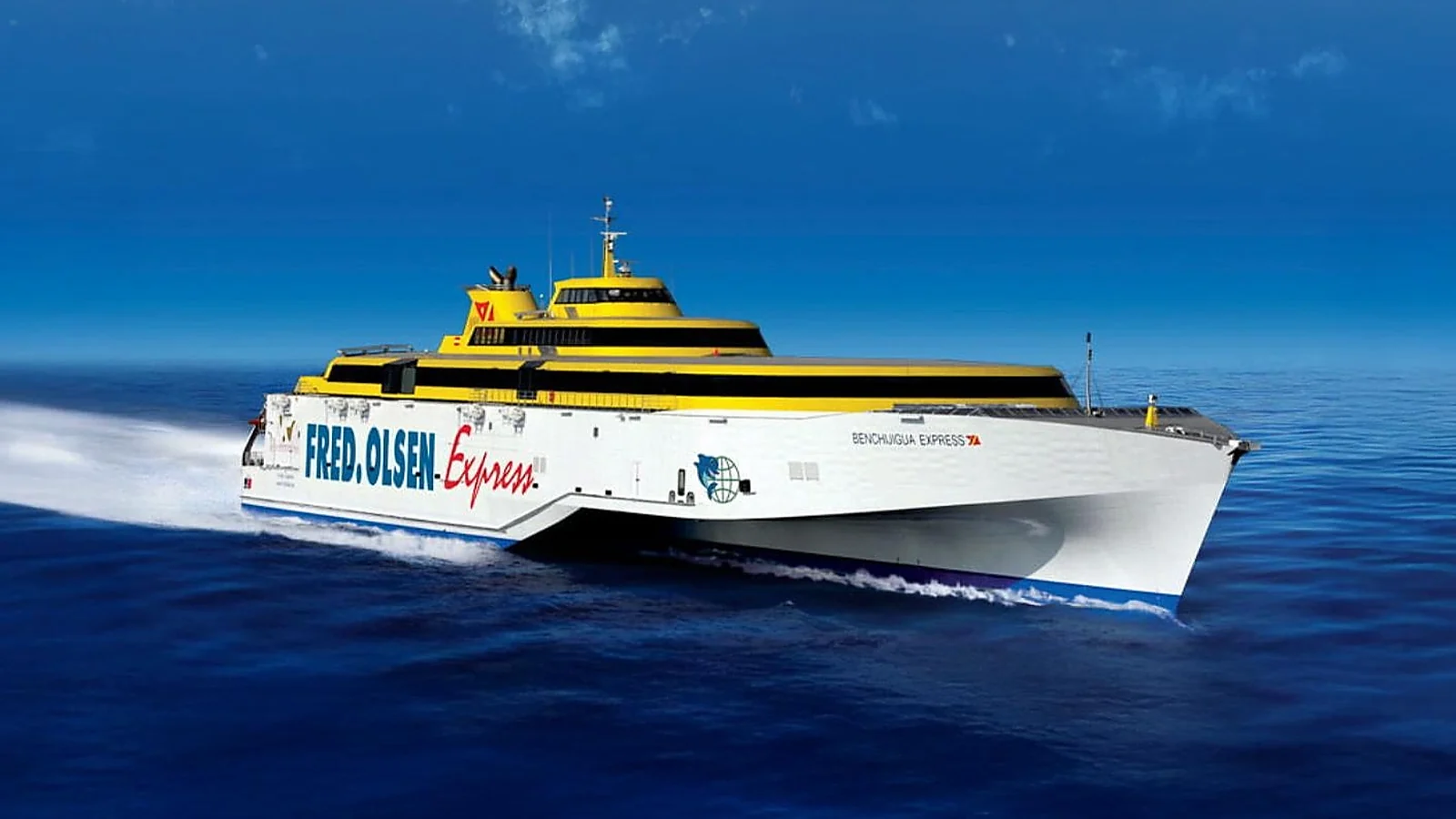
Fred. Olsen Express operates one of the Canary Islands' best-known inter-island ferry networks,
linking Tenerife, Gran Canaria, Fuerteventura, Lanzarote, La Gomera, La Palma and El Hierro with
high-speed passenger and vehicle services. It also links the archipelago with Huelva on mainland
Spain.
The network is strongly vehicle-friendly, with fast inter-island services and a longer Huelva–Canary
Islands connection. Fred. Olsen Express began operating the Huelva–Las Palmas–Tenerife route
independently on 1 June 2026 using Buenavista Express, replacing the earlier joint operation with
Baleària. Current route information shows direct or one-stop itineraries depending on the date.
Fast-ferry services focus on comfortable seating, cafés, Wi-Fi and island-to-island frequency. The
longer mainland route adds cabins, Sleep Lounge accommodation, more extensive dining and
pet-friendly cabin options.
Planning note: Fred. Olsen Express serves several ports on the same island. Check the exact departure and arrival ports shown on your ticket, especially on Tenerife and Gran Canaria, and allow for any onward Ferry Bus or road transfer separately.
Fast ferries across the archipelago
Fred. Olsen Express routes
The network spans short neighbouring-island hops, major inter-island corridors and the long-distance
link between the Canary Islands and Huelva. These representative routes show the range of journeys
available.
Core inter-island routeTenerife & Gran Canaria
Tenerife
Santa Cruz
Gran Canaria
Agaete
The Santa Cruz de Tenerife–Agaete service is one of the operator’s busiest links and is advertised
at around 80 minutes, with multiple departures on many dates.
Around 80 minutes
Up to eight daily departures may operate on busy schedules
Vehicles can travel when booked in the correct category
This short crossing links the north of Fuerteventura with the south of Lanzarote and is one of the
quickest ways to move a vehicle between neighbouring Canary Islands.
The Huelva service connects mainland Spain with Gran Canaria and Tenerife. Depending on the
departure, the voyage may be direct or include a call at the other Canary Island port.
From about 34 hours
Long-distance route with cabins and Sleep Lounge
Vehicle passengers should allow substantial time for security checks
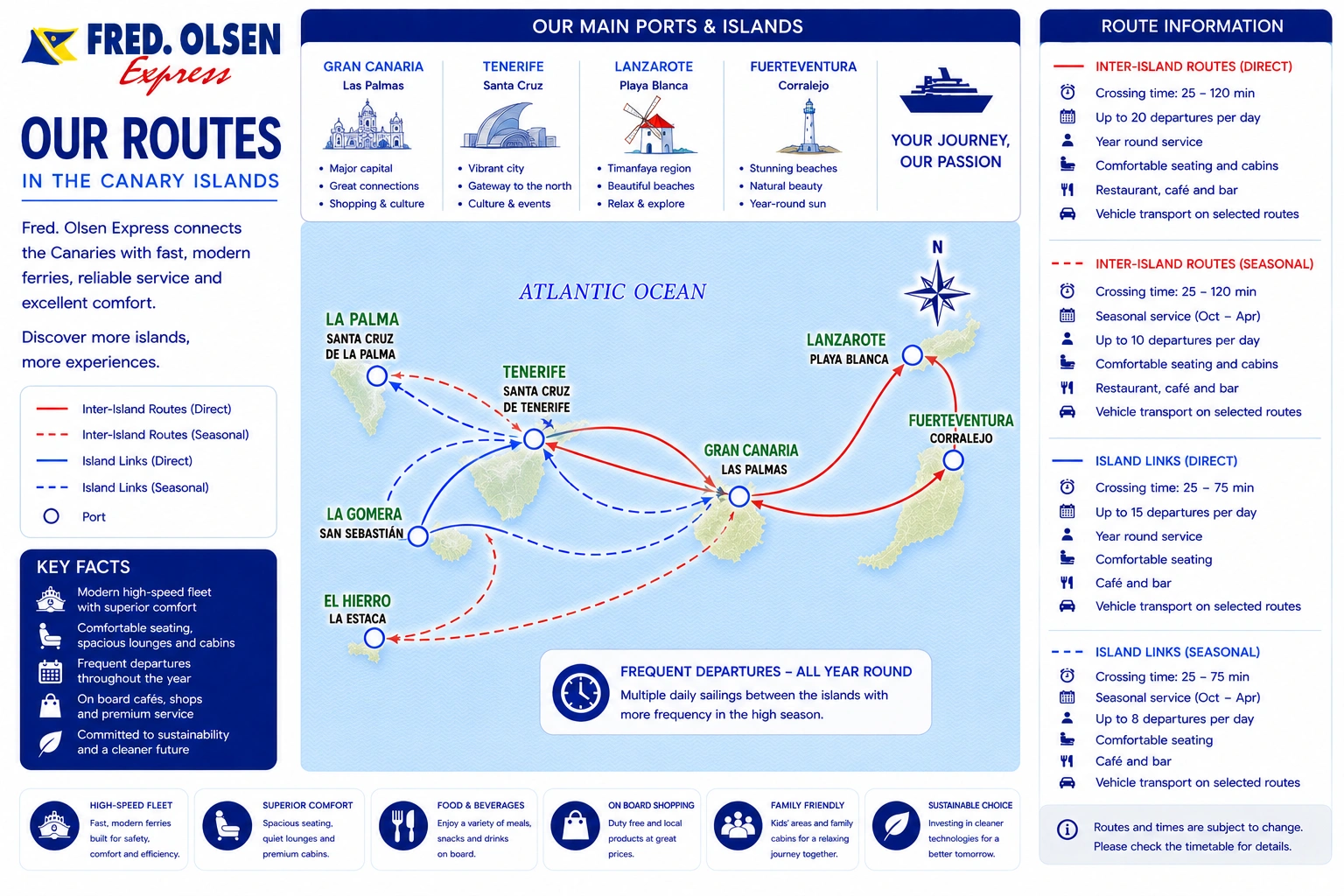
This schematic summarises the three representative current route groups described above. It is not a
complete network map or timetable; the live operator booking result is definitive.
For planning with Fred. Olsen Express, use the map to compare the representative route groups above,
including Santa Cruz–Agaete, Corralejo–Playa Blanca, Las Palmas–Huelva. It is most useful for
judging which departure or arrival point best fits the rest of the journey rather than as a
substitute for the live timetable.
After choosing the most practical route, compare the live Fred. Olsen Express sailing for departure
time, calling pattern, passenger requirements and the facilities or accommodation shown for that
service. The complete itinerary and arrival location can matter more than a small difference in the
headline fare.
Some journeys can be sold as through connections that involve more than one ferry or a transfer
between ports. The booking confirmation is the definitive source for the itinerary you purchase.
Illustrative Fred. Olsen Express route map. Routes and operating patterns can change; check the live timetable for your date.
Ports and island gateways
Useful gateways for a Fred. Olsen Express journey
The operator serves several ports around the archipelago. These three gateways illustrate the main
decisions travellers make when combining ferry travel with roads, buses and onward island
itineraries.
Major island hub
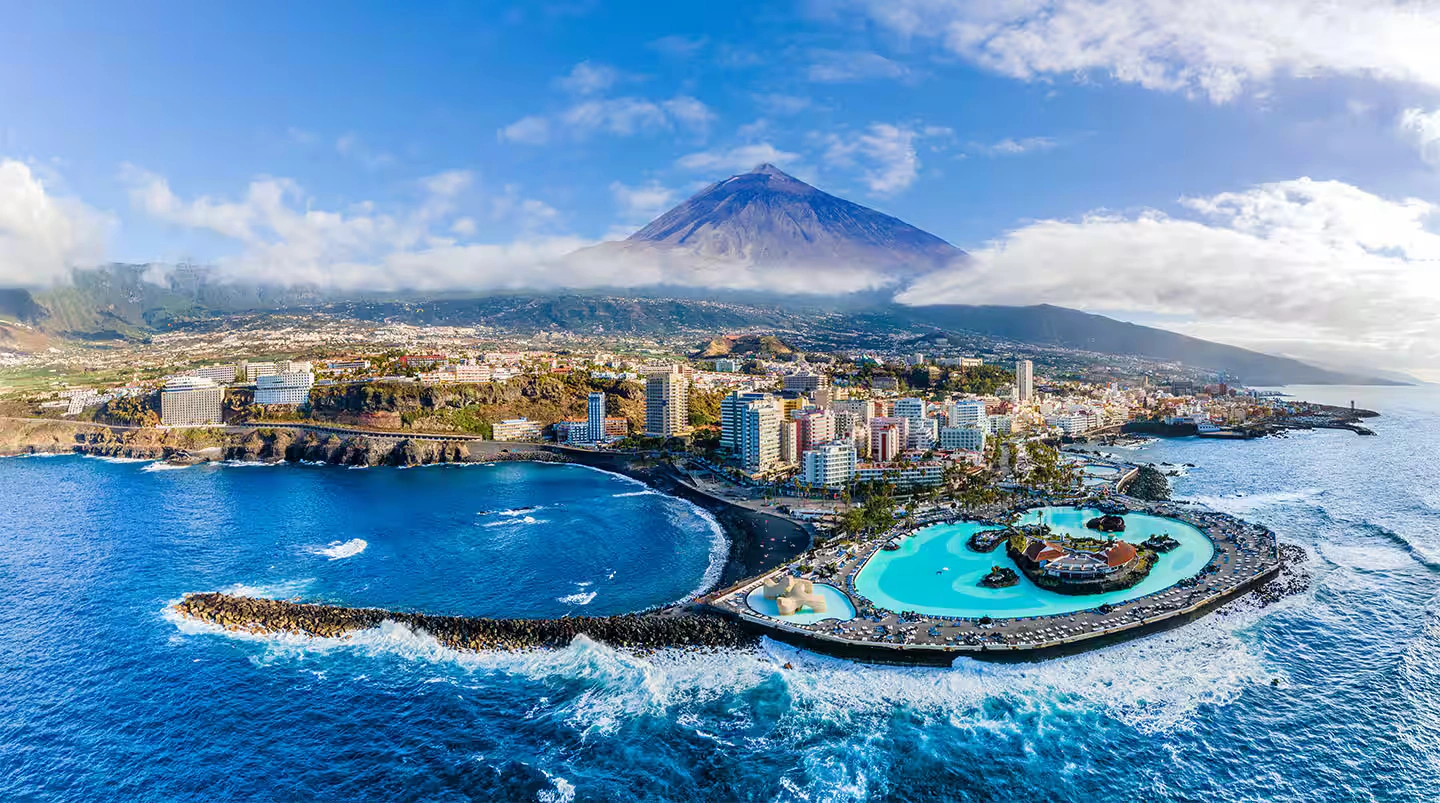
Santa Cruz de Tenerife
Santa Cruz is the departure point for the fast ferry to Agaete on Gran Canaria and also forms part
of the longer mainland Spain network. Check whether your Tenerife itinerary uses Santa Cruz or Los
Cristianos.
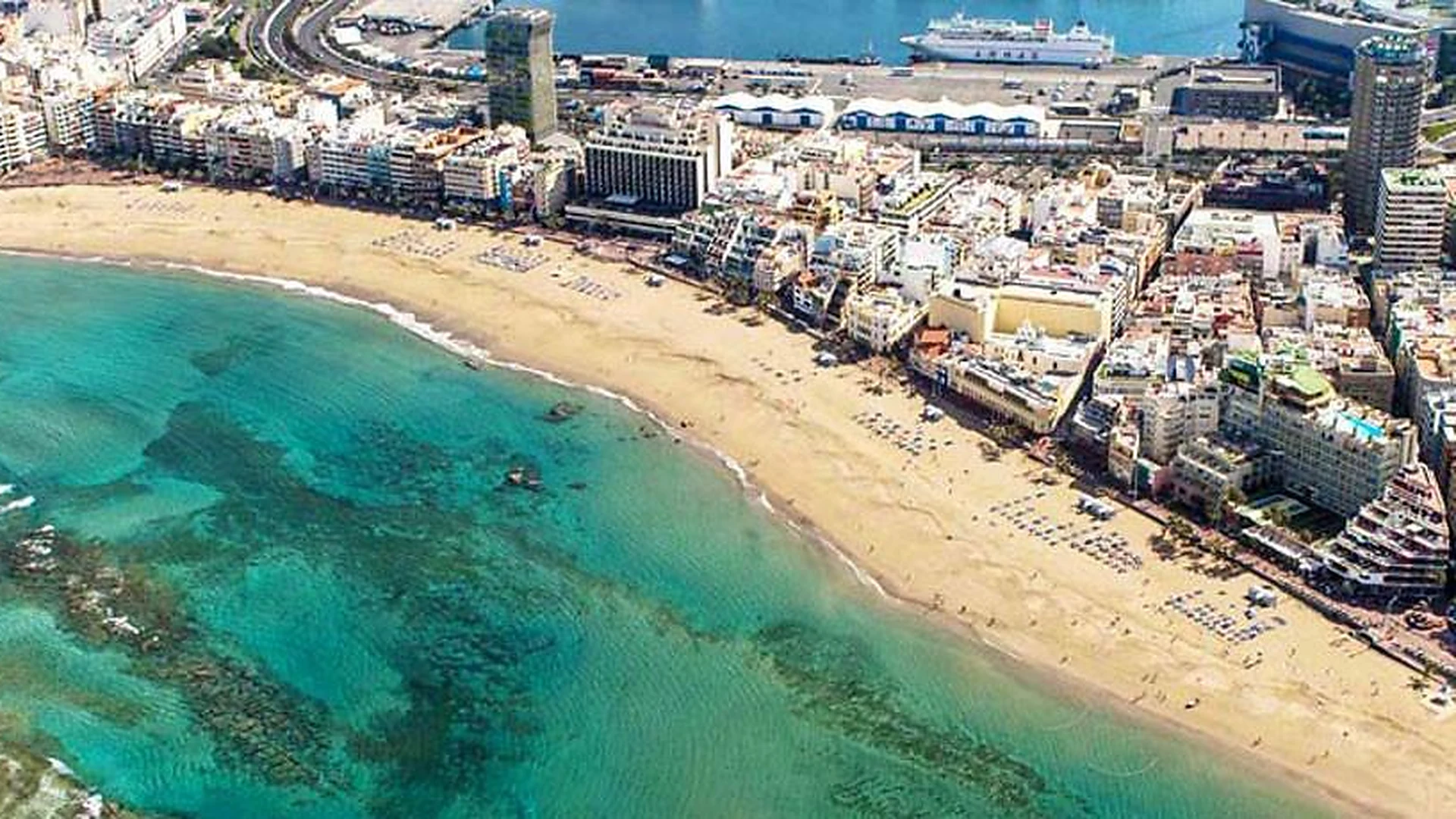
Las Palmas is used by services from Fuerteventura and the mainland Spain route. Travellers using the
Tenerife–Gran Canaria fast ferry normally arrive at Agaete instead, so allow for the road or Ferry
Bus transfer when relevant.
Huelva is the mainland gateway for the long-distance Canary Islands service. Vehicle passengers
should build in generous time for security controls, especially because boarding closes earlier than
on inter-island fast ferries.
Tenerife and Gran Canaria each use more than one ferry gateway. The port named on your ticket—not
simply the island name—should guide your road transfer and arrival planning.
Choose your comfort level
Seats, Clase Oro and mainland-route cabins
Inter-island fast ferries are primarily seated services, while the Huelva route adds longer-distance
accommodation such as Sleep Lounge berths and private cabins.
Inter-island crossings use comfortable lounge seating, with premium Clase Oro options on relevant ferries. Private cabins are a key comfort option on the long Canary Islands–Huelva route.
Standard seating
Basic and Optimal inter-island fares provide access to unnumbered passenger seating in lounges, café
areas and other designated spaces.
Best considered forShort fast-ferry crossings where a cabin is unnecessary
Clase Oro
Clase Oro provides a more exclusive lounge with extra-comfortable seating, more space, refreshments,
charging points and work tables on relevant vessels.
Best considered forPassengers wanting a quieter premium inter-island experience
Superior seats
The Huelva service includes upgraded seat categories for travellers who prefer a reserved or more
comfortable place without booking a private cabin.
Best considered forBudget-conscious mainland-route travellers
Sleep Lounge
Shared Sleep Lounge accommodation uses individual bunk-style sleeping spaces with curtains and
personal storage for the long mainland crossing.
Best considered forTravellers who want to sleep without paying for a private cabin
Private cabins
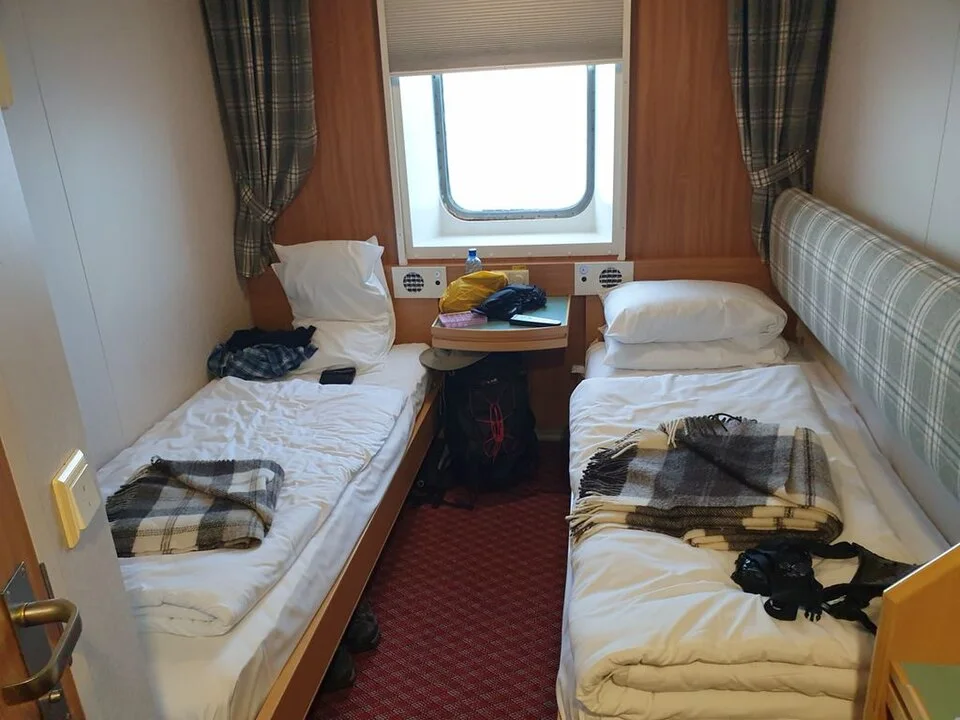
Interior, exterior and superior cabins on the Huelva route include private bathroom facilities and
are reserved for passengers within the same booking.
Best considered forOvernight comfort and privacy on the mainland voyage
Accessible and pet-friendly cabins
The Huelva route includes adapted cabins and pet-friendly cabins on the relevant vessel, subject to
limited availability and advance reservation.
Best considered forPassengers needing adapted accommodation or travelling with pets
Booking tip
Popular high-speed departures and upgraded seating can fill early on peak Canary Islands travel
dates. Book ahead when you need a particular sailing.
During the crossing
Cafés, Wi-Fi, entertainment and family facilities
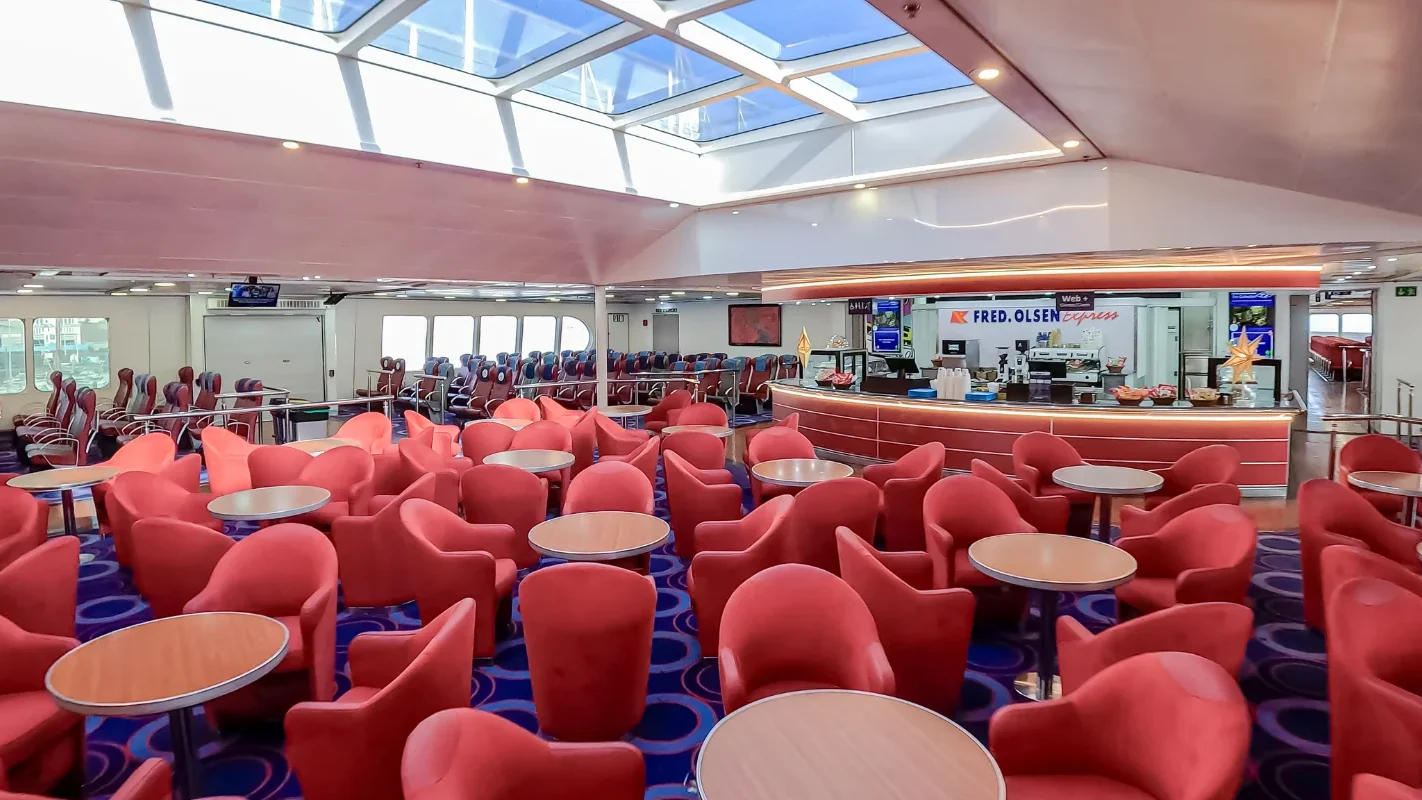
Fred. Olsen Express combines practical fast-ferry services with cafés, digital entertainment, shops
and family facilities, while the Huelva route offers a broader long-distance onboard product.
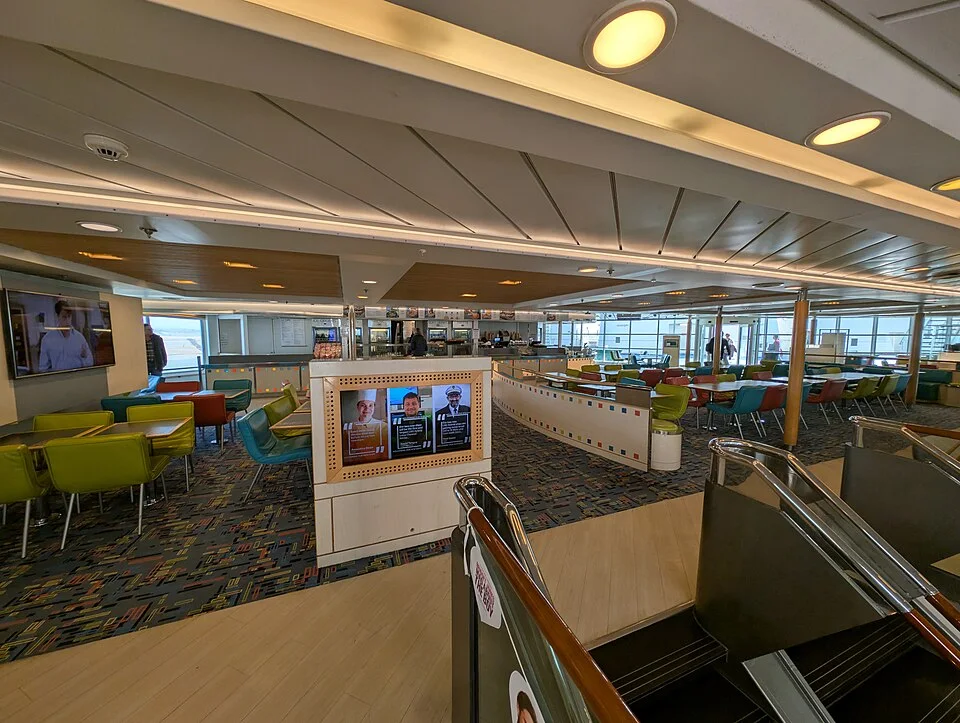
Cafés and restaurants serve meals, snacks and Canarian products depending on the route and vessel. Passenger lounges provide spaces to relax, work or enjoy the sea view during fast crossings. Family facilities and digital entertainment help make island travel easier with children. Onboard shops carry gifts, snacks, reading material and selected Fred. Olsen products.
Cafés and gastronomy
Fast ferries offer café service with local products and snacks, while the Huelva crossing adds
restaurants and more extensive meal choices.
Free Wi-Fi
Fred. Olsen Express promotes free onboard Wi-Fi using satellite connectivity on its inter-island
fleet, subject to operational availability.
Digital entertainment
The On Board Club service provides films, series, games and music on passengers' own devices on
relevant ferries.
Onboard shop
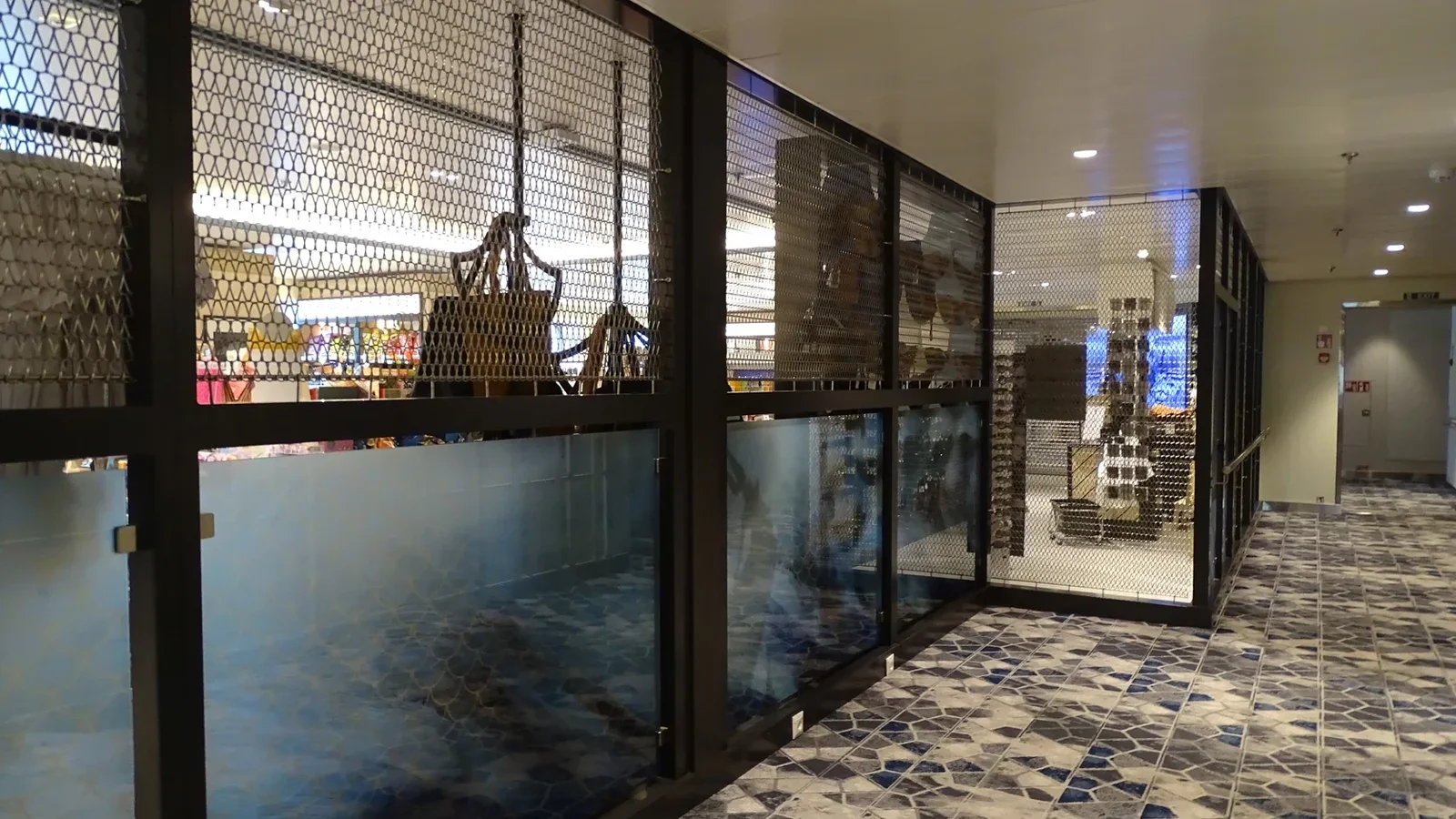
Shops sell gifts, snacks, books, magazines and branded products, with a broader retail offer on the
mainland route.
Children's areas
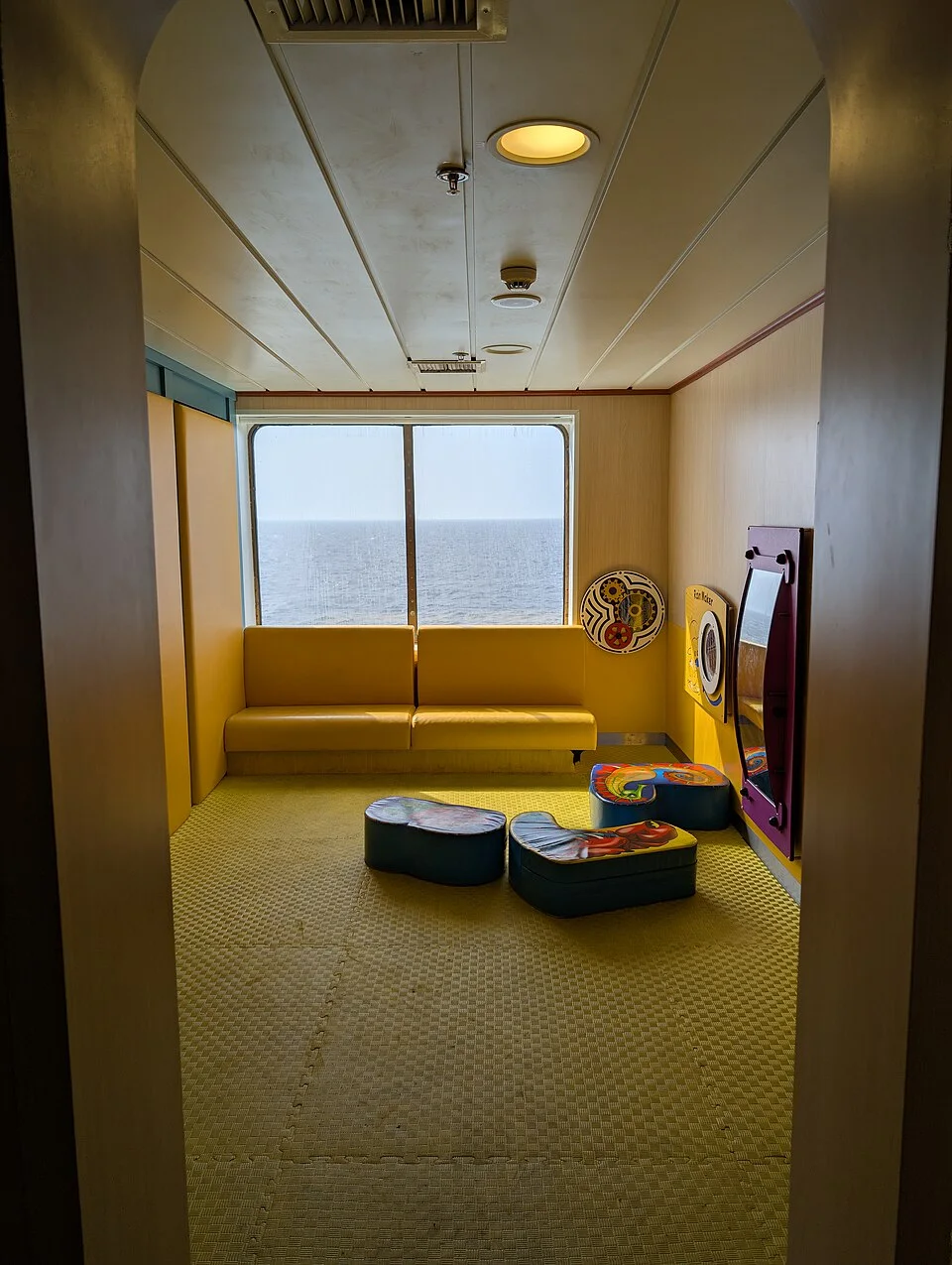
Relevant vessels provide spaces and entertainment designed for younger passengers and families.
Mainland-route dining
The Huelva service includes bar-cafeterias, restaurant options and the ability to add prepaid
onboard meals to certain bookings.
This section combines genuine operator imagery with selected images from EUFerry's general
ferry-travel library. Facilities and layouts vary by ship and sailing.
Travel with your own transport
Vehicles, bicycles, pets and accessibility
Fred. Olsen Express is especially useful for island-hopping with your own transport, with vehicle
categories for cars, vans, motorcycles, mopeds and bicycles plus dedicated pet and accessibility
arrangements.
Touring vehicles can travel when the correct size and category are declared in the booking. Motorcycles and mopeds are secured on the vehicle deck according to crew instructions. Pets can use booked Pet Carrier, Pet Room or Pet Sofa accommodation depending on the service.
Cars, vans and touring vehicles
Book the real vehicle type and dimensions. Fred. Olsen Express distinguishes medium vehicles from
larger vehicles based on height and length.
Keep booking details aligned with the actual vehicle
Follow crew instructions during loading and parking
Vehicle-deck access is restricted during high-speed crossings
Bicycles and motorcycles
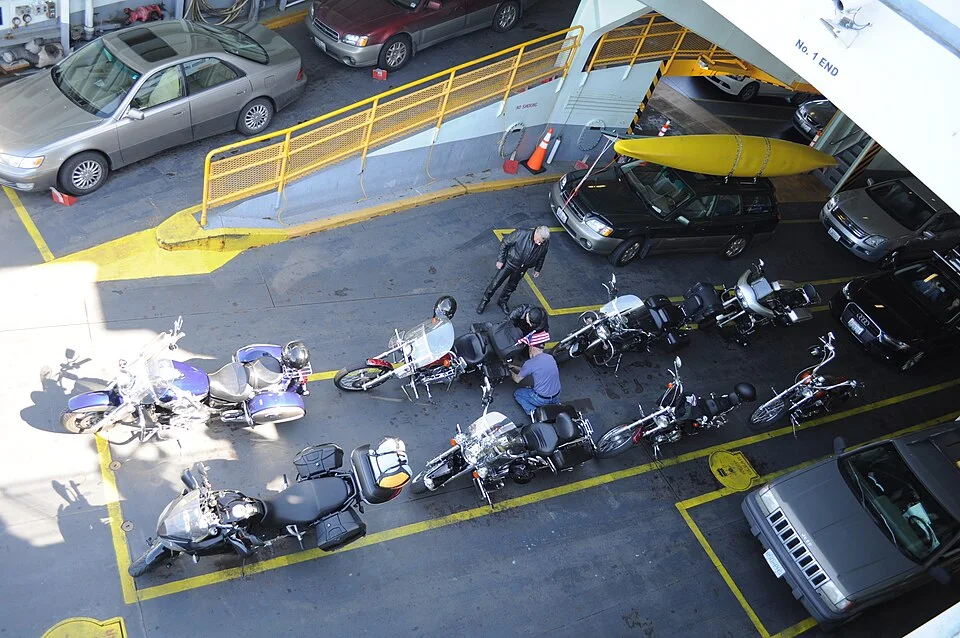
Bicycles, mopeds and motorcycles are recognised booking categories. Motorcycles and mopeds are
lashed to the car deck for the voyage.
Book the correct two-wheel category
Arrive within the vehicle boarding deadline
Follow crew directions for securing the vehicle
Travelling with pets
Pets need their own booking and available accommodation. Depending on route and ship, options
include Pet Carrier, Pet Room, Pet Sofa and pet-friendly cabins.
Reserve pet accommodation before travel
Keep dogs leashed and use a muzzle where legally required
The Ferry Bus does not carry pets
Reduced mobility and assistance
Accessible facilities include barrier-free routes, adapted toilets and seating on relevant ships.
Boarding assistance should normally be requested 48 hours ahead.
Request assistance during booking where possible
Arrive earlier than the normal boarding time
Accessible vehicle-deck parking requires the relevant permit
Before you reach the ferry
Boarding times, documents and luggage
Fred. Olsen Express uses different boarding deadlines for inter-island and Huelva services. Treat
the time shown on your ticket as definitive and allow extra margin when travelling with a vehicle or
requesting assistance.
Digital tickets and identity documents should be ready before you join the boarding queue. Vehicle passengers have earlier cut-offs than foot passengers on inter-island services.
Recommended travel sequence
When booking
Check the exact ports and vehicle category
Make sure the departure port, arrival port, passenger names and vehicle dimensions match the journey
you intend to make.
Before travel
Save your digital ticket and documents
Fred. Olsen Express supports paperless boarding, but identification or supporting discount
documentation may still be required.
Inter-island foot passengers
Board before the 20-minute cut-off
Unless another time is shown on the ticket, boarding closes 20 minutes before departure for
passengers without a vehicle.
Inter-island vehicles
Board before the 40-minute cut-off
Passengers travelling with a vehicle must be at the dock before vehicle boarding closes 40 minutes
before departure.
Huelva route
Allow substantially more time
Boarding closes one hour before departure, and vehicle passengers are strongly advised to arrive up
to three hours early because of security checks.
Island-hopping by sea
When Fred. Olsen Express is the practical choice
Fred. Olsen Express is especially useful when you want to move between Canary Islands without
leaving your vehicle behind. Short routes such as Fuerteventura–Lanzarote or Tenerife–La Gomera make
the ferry a practical part of a multi-island road trip, while the high-frequency Tenerife–Gran
Canaria link can be competitive with flying once airport transfers and vehicle hire are considered.
The network also rewards careful port planning. Tenerife services use both Santa Cruz and Los
Cristianos, while Gran Canaria services can involve Agaete or Las Palmas. The island name alone is
not enough to plan your road transfer, so always work from the exact ports shown on the booking.
For travellers driving from mainland Europe, the Huelva connection can bring a car, van, motorcycle,
caravan or motorhome directly to the archipelago. It is a much longer journey, but cabins and Sleep
Lounge accommodation make it a fundamentally different product from the inter-island fast ferries.
Common planning questions
Fred. Olsen Express FAQs
Where does Fred. Olsen Express sail?
Fred. Olsen Express links Tenerife, Gran Canaria, Fuerteventura, Lanzarote, La Gomera, La Palma and
El Hierro, and also operates mainland Spain services between the Canary Islands and Huelva. The
exact schedule varies by route and date.
How long is the Tenerife to Gran Canaria ferry?
Fred. Olsen Express advertises the Santa Cruz de Tenerife to Agaete crossing at around 80 minutes,
with multiple daily departures on the core fast-ferry route.
How long is the Tenerife to La Gomera ferry?
The Los Cristianos to San Sebastián de La Gomera crossing is around 50 minutes and can operate
several times a day depending on the timetable.
Can I take a car or motorhome on Fred. Olsen Express?
Yes. Cars, motorcycles, vans, bicycles and larger vehicles can be booked when the correct vehicle
type and dimensions are declared. Vehicle capacity is limited by sailing.
When does boarding close on Canary Islands routes?
Unless the ticket states otherwise, Fred. Olsen Express says boarding closes 20 minutes before
departure for passengers without a vehicle and 40 minutes before departure for passengers travelling
with a vehicle on inter-island routes.
When should I arrive for the Huelva ferry?
For the Canary Islands to Huelva service, boarding closes one hour before departure for both foot
and vehicle passengers. Vehicle travellers are strongly advised to arrive much earlier because
security controls can take additional time.
Can pets travel with Fred. Olsen Express?
Yes. Pets must be included in the booking. Depending on the service, options can include Pet
Carrier, Pet Room and Pet Sofa, while the Huelva route also offers pet-friendly cabins on the
relevant ship.
Does Fred. Olsen Express have cabins?
Inter-island fast ferries focus mainly on standard seating and Clase Oro comfort. Cabins and Sleep
Lounge accommodation are offered on the long-distance Canary Islands to Huelva service.
Is Fred. Olsen Express accessible for passengers with reduced mobility?
Fred. Olsen Express provides accessible boarding routes, seating, toilets and assistance on relevant
vessels. Assistance should normally be requested at least 48 hours before travel.
How much luggage can I take?
Fred. Olsen Express transport conditions include personal luggage up to 20 kg per passenger. Larger
or unusual items should be checked against the booked route and current conditions before travel.
Continue comparing
Related Canary Islands and Spanish ferry companies
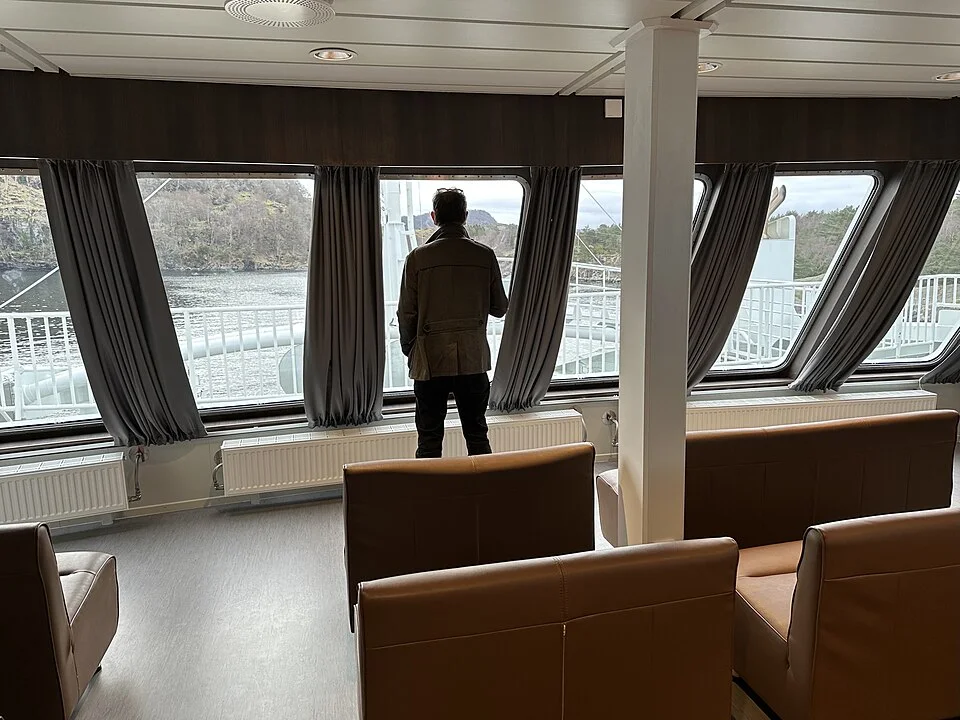
Facility photographs are examples; the vessels shown are identified below. Facilities vary by ship.
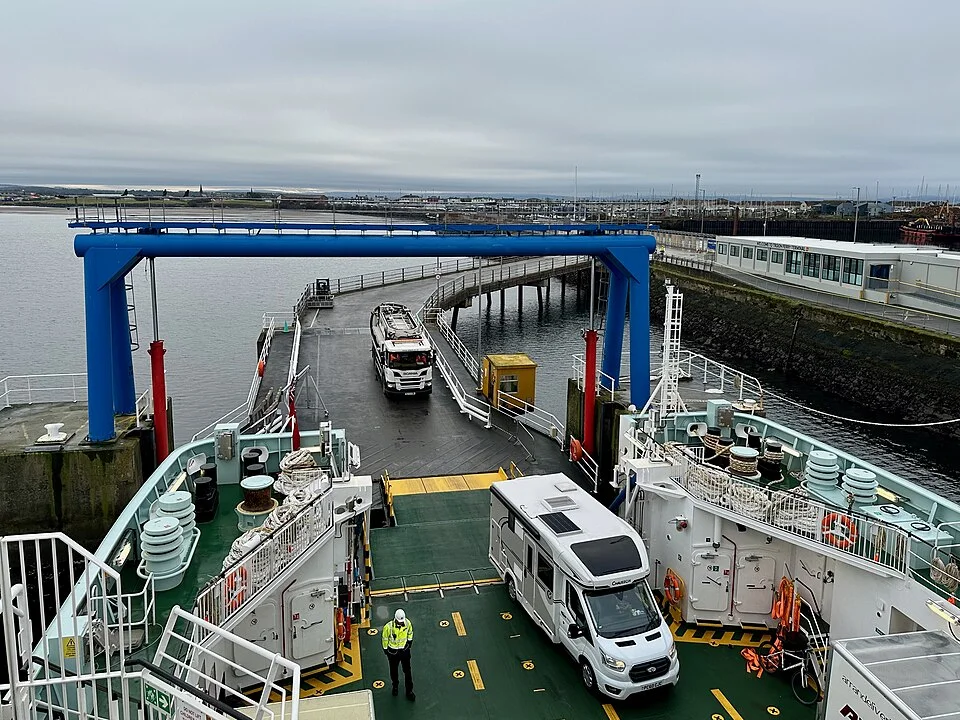
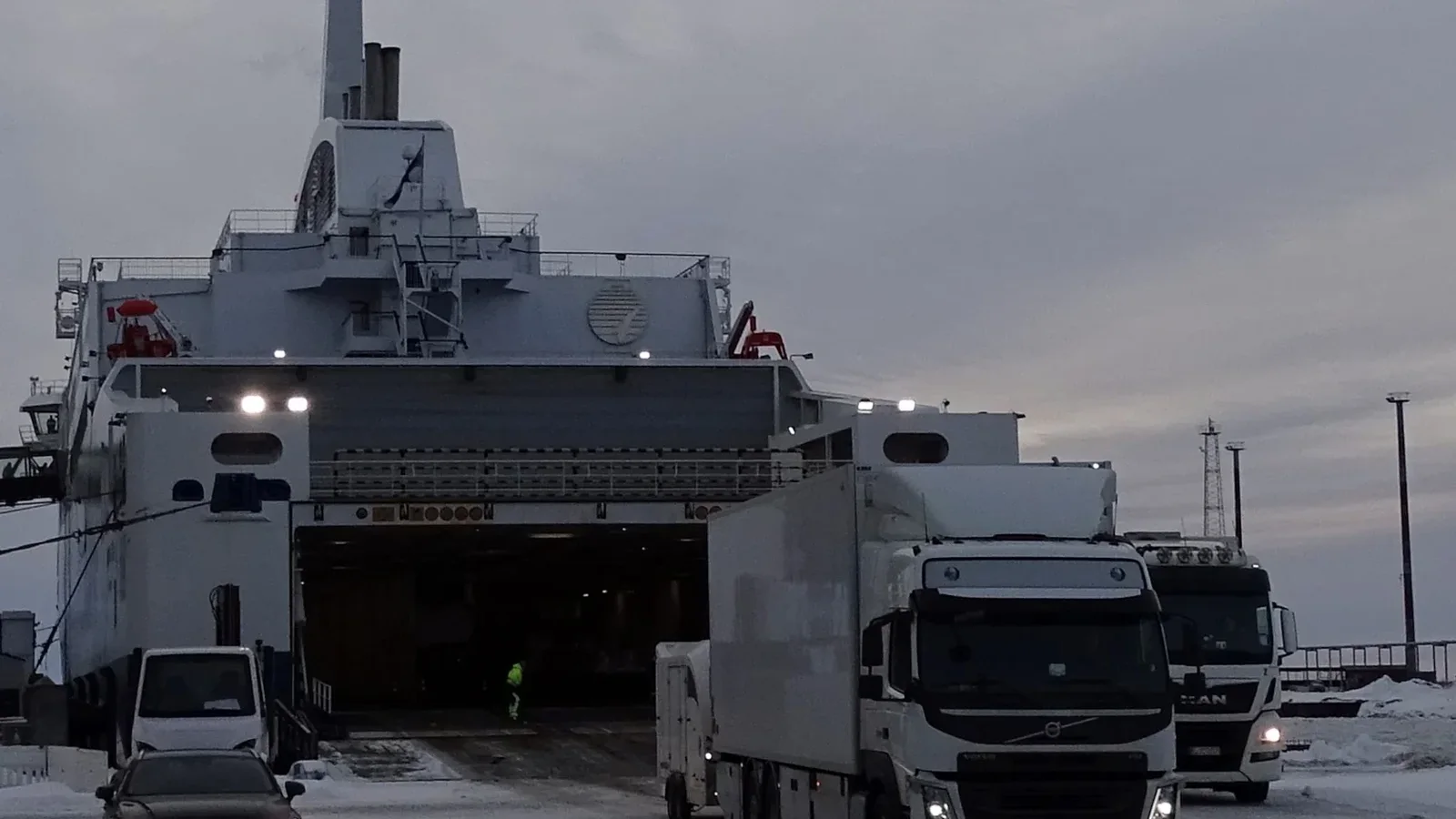
250120 1029 MV Glen Sannox loading, Port of Troon ferry terminal.jpg — Dave souza; CC BY-SA 4.0. Source: https://commons.wikimedia.org/wiki/File:250120_1029_MV_Glen_Sannox_loading,_Port_of_Troon_ferry_terminal.jpg. Licence: https://creativecommons.org/licenses/by-sa/4.0. Resized for display.
Cabin on MV Hrossey - geograph.org.uk - 7254252.jpg — Oliver Dixon; CC BY-SA 2.0. Source: https://commons.wikimedia.org/wiki/File:Cabin_on_MV_Hrossey_-_geograph.org.uk_-_7254252.jpg. Licence: https://creativecommons.org/licenses/by-sa/2.0. Resized for display.
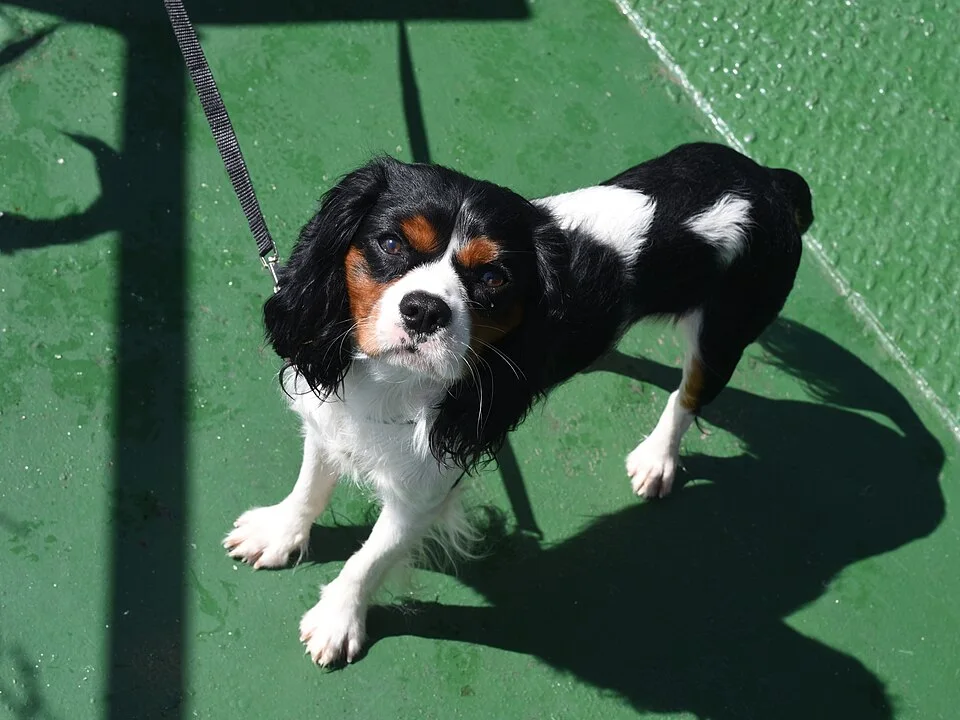
Cavalier King Charles Spaniel (49687542022).jpg — Chris Hunkeler from Carlsbad, California, USA; CC BY-SA 2.0. Source: https://commons.wikimedia.org/wiki/File:Cavalier_King_Charles_Spaniel_(49687542022).jpg. Licence: https://creativecommons.org/licenses/by-sa/2.0. Resized for display.
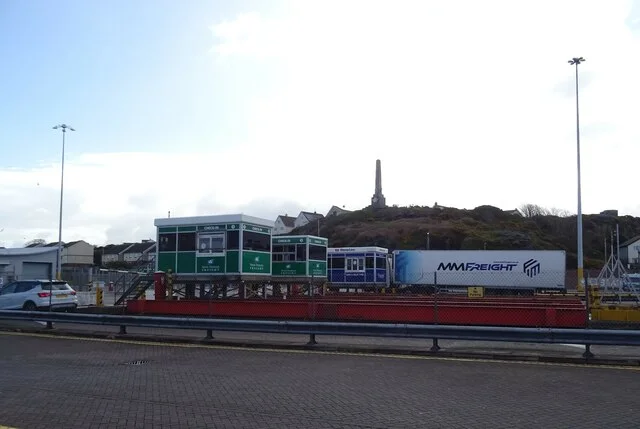
Check-in, Holyhead Ferry Terminal - geograph.org.uk - 7757104.jpg — JThomas; CC BY-SA 2.0. Source: https://commons.wikimedia.org/wiki/File:Check-in,_Holyhead_Ferry_Terminal_-_geograph.org.uk_-_7757104.jpg. Licence: https://creativecommons.org/licenses/by-sa/2.0. Resized for display.
Motorcycles on board Washington State Ferry MV Cathlamet.jpg — Joe Mabel; CC BY-SA 3.0. Source: https://commons.wikimedia.org/wiki/File:Motorcycles_on_board_Washington_State_Ferry_MV_Cathlamet.jpg. Licence: https://creativecommons.org/licenses/by-sa/3.0. Resized for display.



 Canary Islands network
 Fast inter-island crossings
 Cars & touring vehicles