Plan your Baleària journey with EUFerry by reviewing routes and passenger information first, then
compare current sailings and ticket choices for your dates.
Passenger, vehicle and freight ferry operations across several regions
About the operator
From Dénia ferry company to a major European operator
Baleària was founded in Dénia on 20 June 1998 by a group led by Adolfo Utor after the collapse of
predecessor ferry company Flebasa. From its original focus on connections between mainland Spain and
the Balearic Islands, the company expanded into fast ferries, conventional overnight ferries,
freight transport and international routes.
By 2026 the scale of the group changed again. Baleària took effective control of Armas Trasmediterránea’s Canary Islands assets in May and completed the acquisition of Strait of Gibraltar and Alborán assets in July. The enlarged group describes itself as Spain’s leading maritime group, with more than 50 vessels, more than 40 routes and about 4,500 employees. In the Canary Islands, services are being developed under the Baleària Canarias identity.
The result is an unusually diverse network. A Baleària booking can mean a very short inter-island
shuttle, a high-speed catamaran between major Balearic ports, an overnight cabin crossing from the
peninsula, a vehicle ferry to Ceuta or Melilla, an international sailing to Morocco or Algeria, or a
Caribbean trip between Florida and the Bahamas.
2026 network note: the Canary Islands and parts of the Strait/Alborán network are newly integrated. EUFerry therefore treats the live booking result as the definitive source for operator brand, ship and timetable on a particular date.
Six major operating zones
Baleària routes from island hops to international crossings
Baleària’s own route directory groups services into the Balearic Islands, Canary Islands, Morocco,
Algeria, Melilla and USA–Caribbean. Ceuta and other Strait services sit within the wider Spain–North
Africa operation.
Balearic IslandsCore market
Mainland
Barcelona / Dénia / València
Islands
Mallorca / Ibiza / Menorca / Formentera
The Balearics remain Baleària’s historic heartland. Mainland departures connect with the main
islands, while inter-island services allow travellers to combine Mallorca, Ibiza, Menorca and
Formentera without flying.
Fast and conventional ferry choices on selected routes
Vehicle carriage on many services
Barcelona–Mallorca high-speed operation features the Margarita Salas
Following the 2026 Armas integration, Baleària Canarias operates across the seven principal Canary
Islands and connects the archipelago with mainland Spain. The network combines fast inter-island
services with longer conventional-ferry journeys.
New Mercedes Pinto fast ferry introduced for the islands
Acquired fleet undergoing upgrades and digitalisation
Spain–Morocco traffic is one of Baleària’s major international markets. Summer demand is especially
intense: for the 2026 Strait Crossing Operation the company planned up to 37 daily services across
eight Spain–North Africa routes using 12 vessels.
Allow substantially more time for border formalities
Vehicle demand is high during summer peak travel
Check the exact terminal: Tangier Ville and Tangier Med are different ports
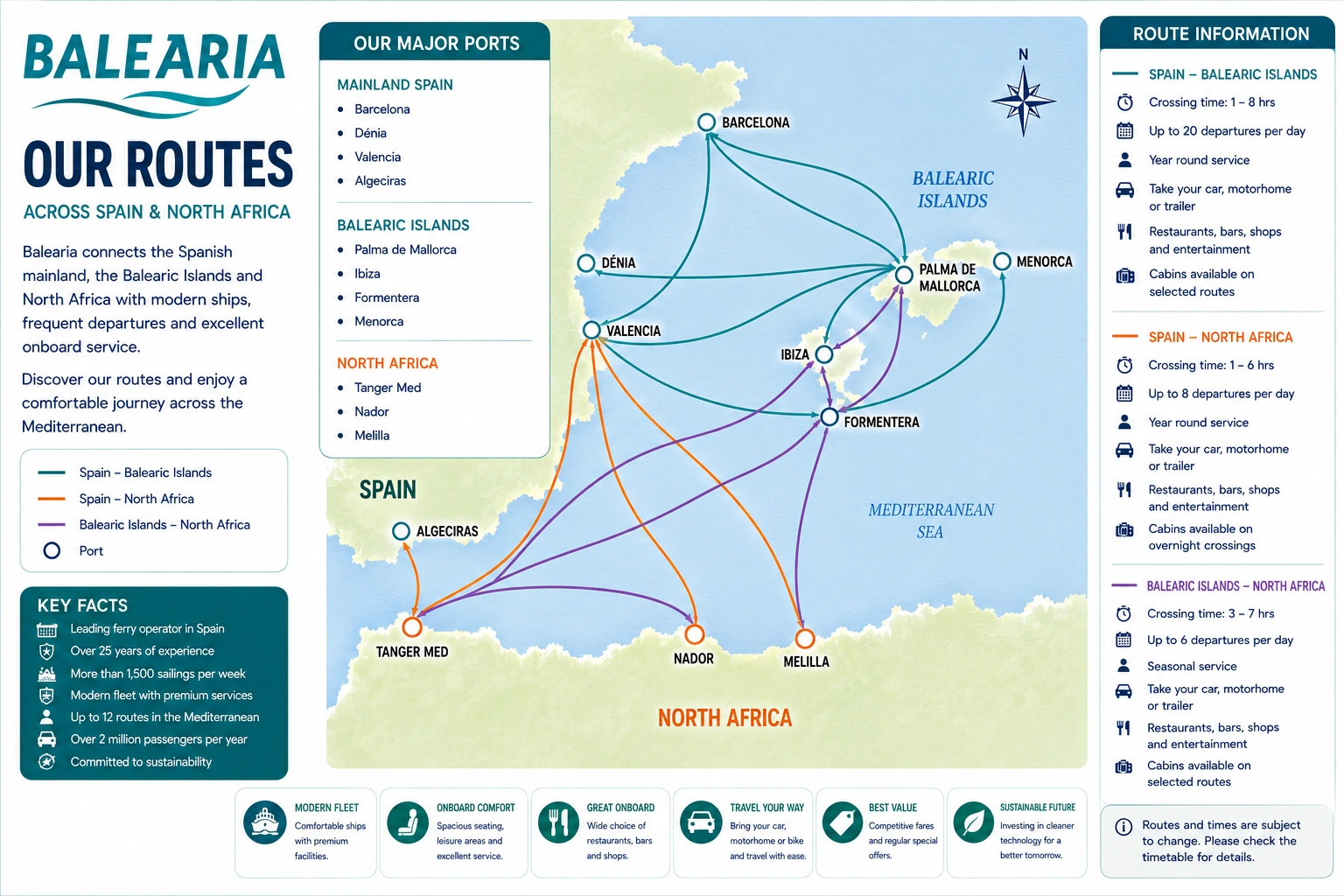
This schematic summarises the three representative current route groups described above. It is not a
complete network map or timetable; the live operator booking result is definitive.
For planning with Baleària, use the map to compare the representative route groups above, including
Barcelona / Dénia / València–Mallorca / Ibiza / Menorca / Formentera, All 7 Canary Islands–Cádiz /
Huelva links, Algeciras / Tarifa / Almería / Motril–Tangier / Nador / Al Hoceima. It is most useful
for judging which departure or arrival point best fits the rest of the journey rather than as a
substitute for the live timetable.
After choosing the most practical route, compare the live Baleària sailing for departure time,
calling pattern, passenger requirements and the facilities or accommodation shown for that service.
The complete itinerary and arrival location can matter more than a small difference in the headline
fare.
Route frequency can be seasonal and an itinerary may use a fast ferry, conventional ferry or
connecting service depending on the day.
Illustrative Baleària route map. Routes and operating patterns can change; check the live timetable for your date.
Ports worth building a trip around
From Mediterranean cities to island capitals
Baleària’s scale means the ferry is often more than a simple transfer: it can be the link between a
mainland road trip and an island holiday, or between several islands on the same itinerary.
Mainland gateway
Barcelona
A major starting point for Mallorca, Menorca and other Balearic travel. High-speed services can make
the ferry competitive with airport time once vehicles and baggage are considered.
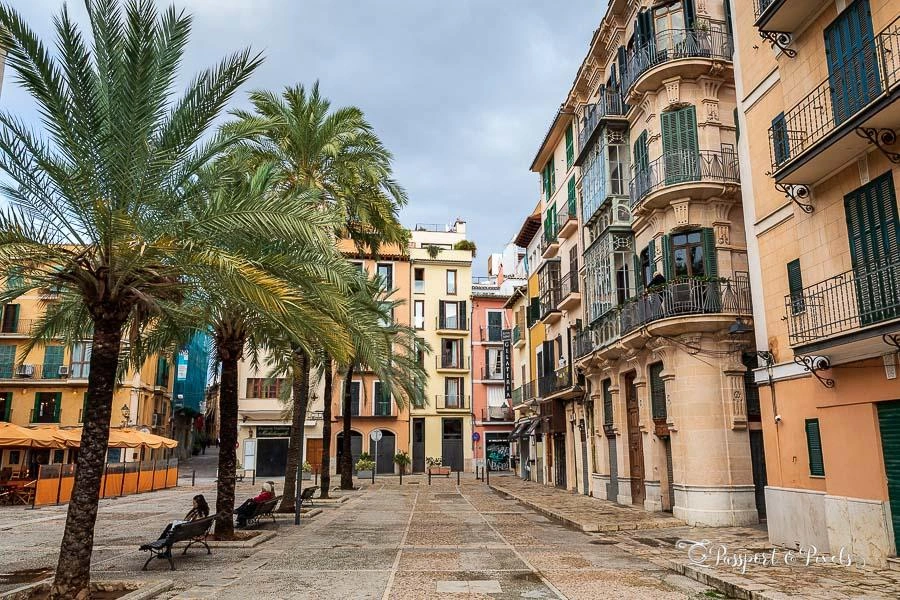
Mallorca’s capital combines a large ferry port with excellent onward road connections, making it a
practical arrival point for travellers bringing a car or motorhome.
Ibiza is both a destination and an interchange for Formentera. Frequent short crossings make it
straightforward to travel between the Pityusic islands without flying.
Compare the complete journey rather than the sea crossing alone. Check the live timetable for your
date, confirm the exact departure and arrival ports, and allow enough time for check-in and onward
travel.
Choose for the length of the crossing
Seats, VIP lounges and cabins
Accommodation varies widely across Baleària’s fleet. A short fast ferry may offer standard and
superior seating, while an overnight ferry can provide private cabins with bathrooms and premium
options.
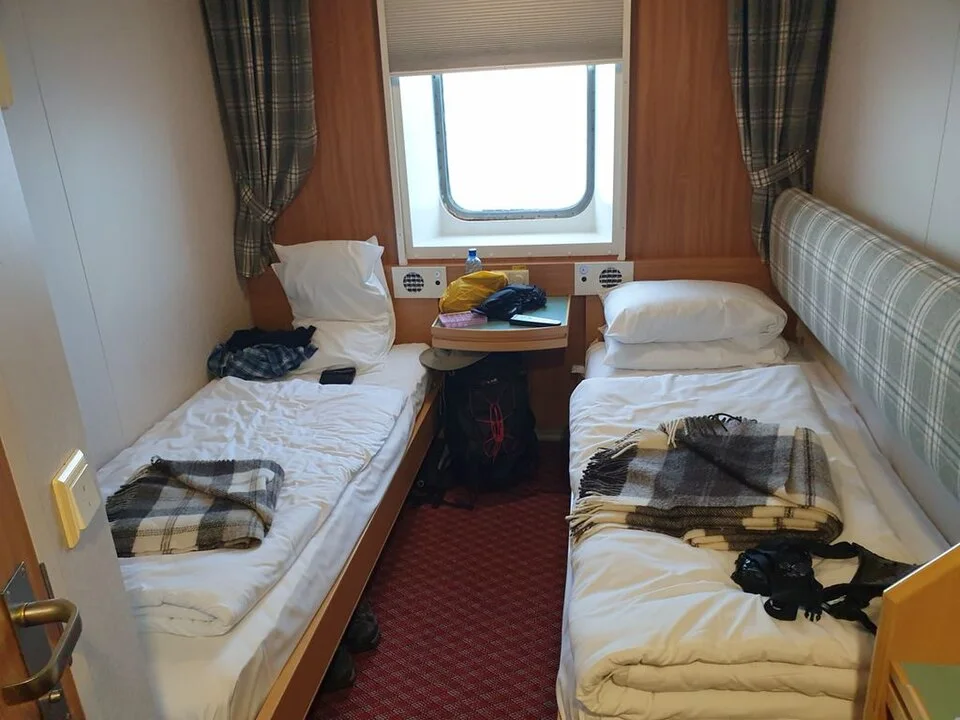
Private cabins make overnight and longer mainland crossings easier. Family-sized cabins can keep groups together and provide private space.
Standard & superior seats
Airline-style or lounge seating is the normal choice for short and medium crossings. Some ships
separate superior or VIP areas for greater space and quieter travel.
Best considered forDaytime and high-speed routes
Private cabins
Conventional ferries can offer inside or outside cabins, generally with private bathroom facilities.
On overnight journeys, a cabin turns the sailing into useful rest time.
Best considered forLong crossings and overnight travel
VIP & Exclusive
Selected vessels offer VIP lounges, premium cabins or highly private spaces. The Margarita Salas and
Avemar Dos include an Exclusive lounge concept with enhanced service.
Best considered forExtra space and premium service
Pet-friendly cabin
On participating ferries, pet-friendly cabins allow owners and pets to stay together. These cabins
include features such as a pet bed and water bowl, plus dedicated cleaning.
Best considered forLonger journeys with pets
Pet-friendly seat
Qualifying pets up to 8 kg including the carrier can remain with the passenger in designated
seating, with one pet per passenger and the animal remaining in the carrier.
Best considered forSmall pets on suitable services
Accessible accommodation
Many modern ships are adapted for passengers with reduced mobility, with lifts, accessible
circulation and dedicated seating or cabin arrangements depending on the vessel.
Best considered forPassengers requiring mobility support
Smart-ship feature
On participating ferries, a digital boarding card can provide QR access directly to an assigned
cabin, reducing the need to queue at reception.
Onboard experience
Food, Wi-Fi, outdoor space and family facilities
Baleària’s fleet ranges from compact inter-island fast ferries to large overnight ships, so the
precise facilities depend on the assigned vessel.
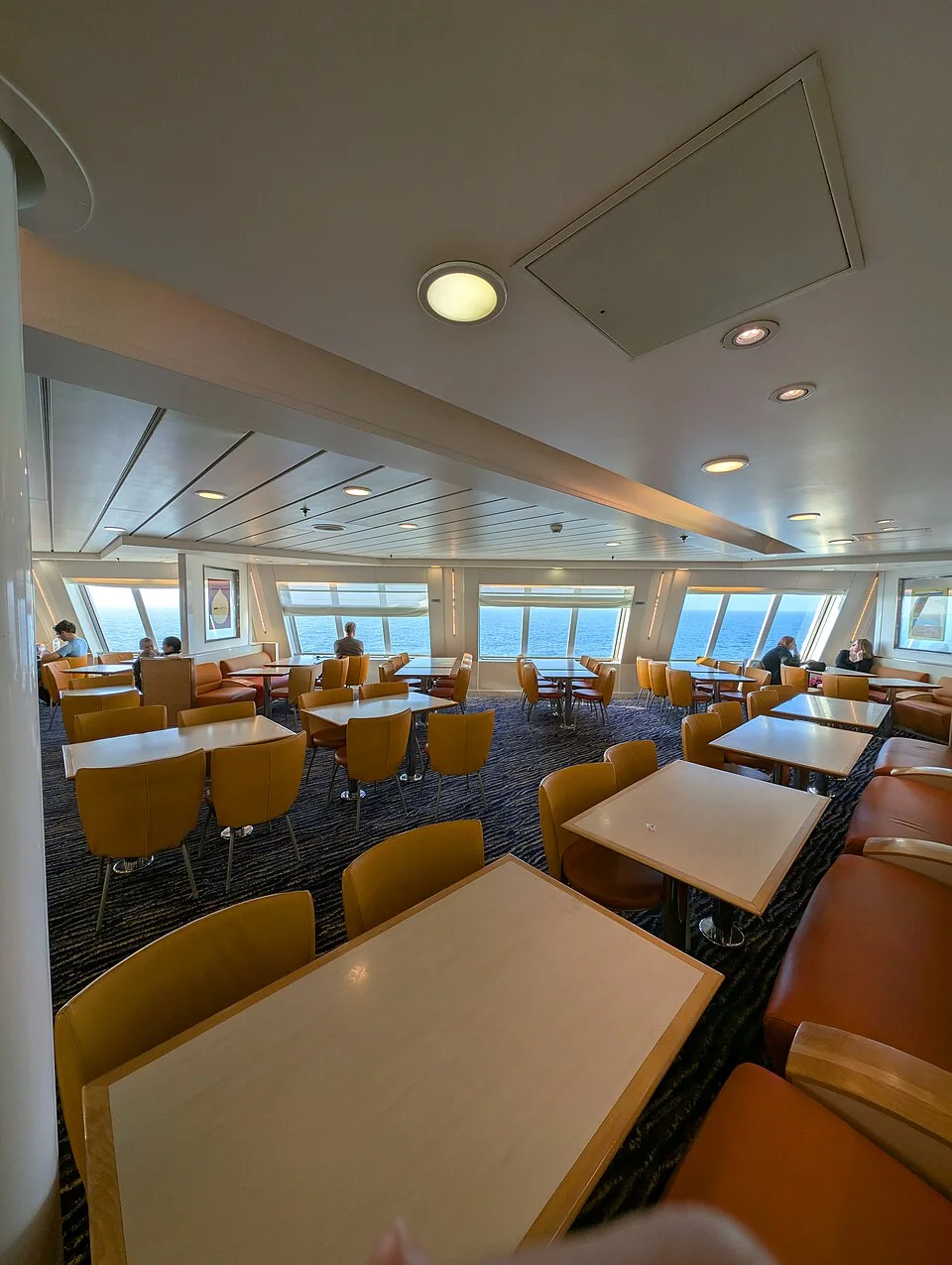
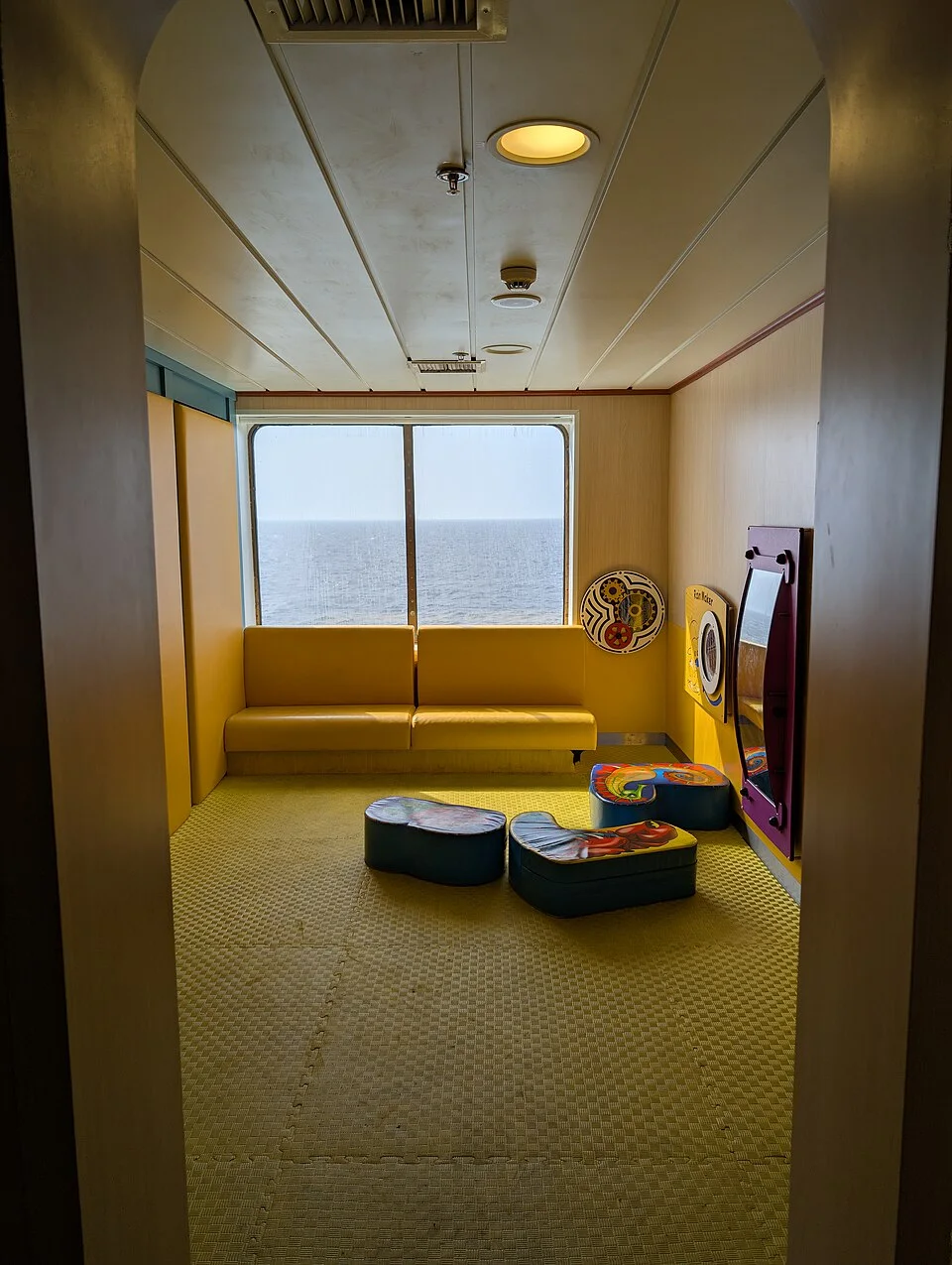
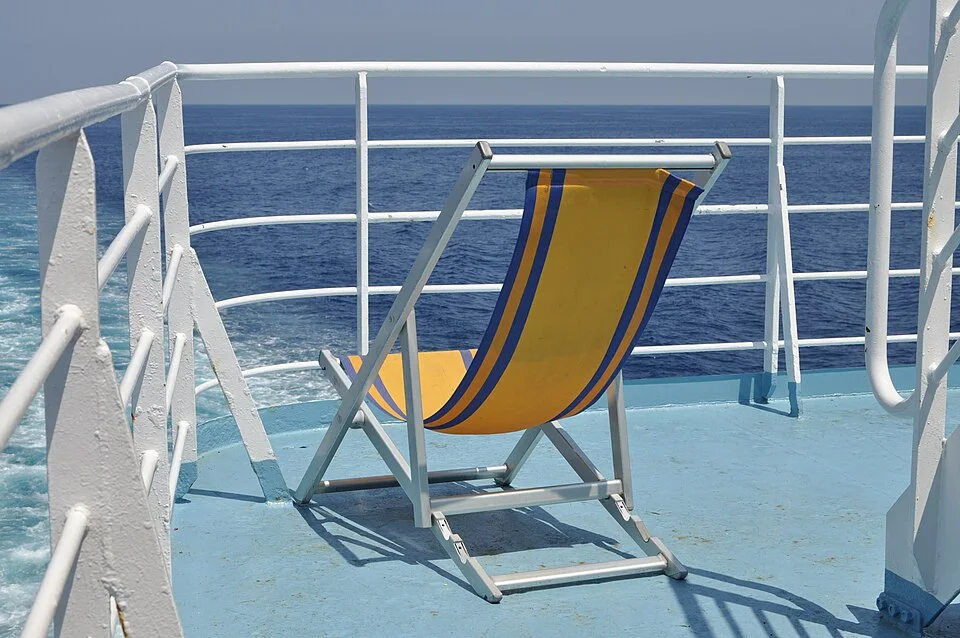
Restaurants and cafés turn longer sailings into part of the journey. Selected ships provide dedicated play space for younger passengers. Outdoor terraces are especially enjoyable on Mediterranean island routes. Open decks provide sea air and views when weather and operating conditions permit.
Restaurants & cafés
Food options can range from a simple fast-ferry café to restaurant service, snacks and bars on
larger conventional ships.
Connected travel
Many Baleària smart ships provide onboard Wi-Fi and digital entertainment. Internet packages and
free services vary by ship and route.
Families
Children’s play areas feature on several newer ships, while lounges and cabins make longer family
crossings easier to manage.
Pet monitoring
On smart ships, calm kennel accommodation can include video monitoring so owners can check their pet
from a mobile device.
Digital boarding
The Baleària app and mobile boarding tools support booking management and, on suitable vessels,
direct QR cabin access.
Outdoor decks
Terraces and sea-view spaces are a major advantage of ferry travel, particularly on scenic Balearic
and Canary crossings.
Facilities are ship-specific. Check the vessel displayed in your booking before paying for a
particular accommodation or onboard feature.
One of ferry travel’s biggest advantages
Take a car, motorhome, motorcycle, bicycle or pet
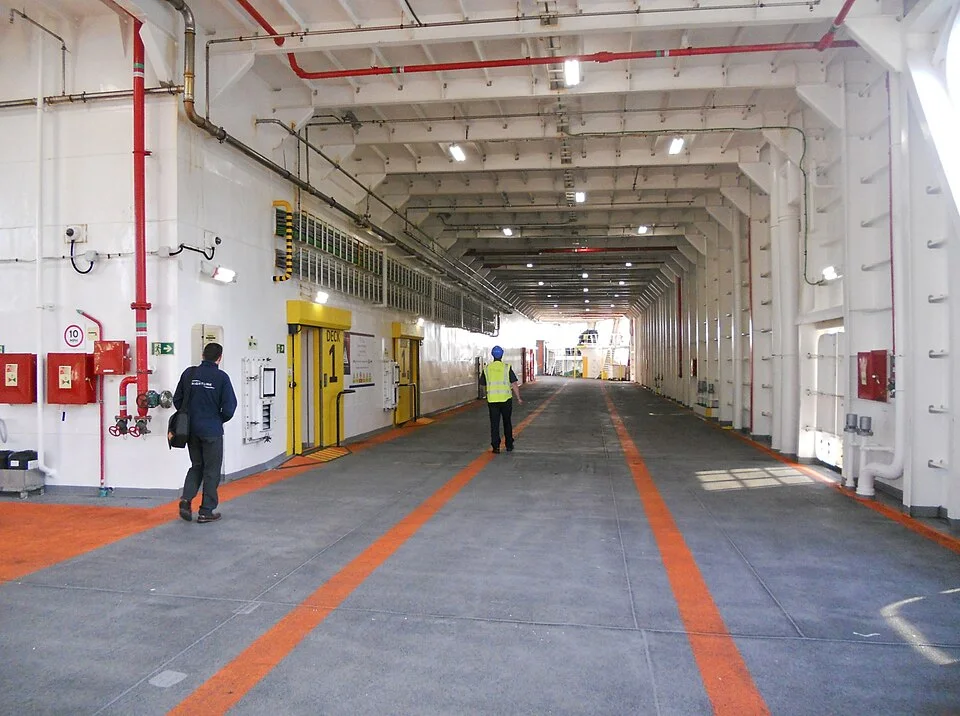
Baleària’s vehicle decks make the network particularly useful for island road trips and longer stays
where flying would mean renting a vehicle and restricting baggage.
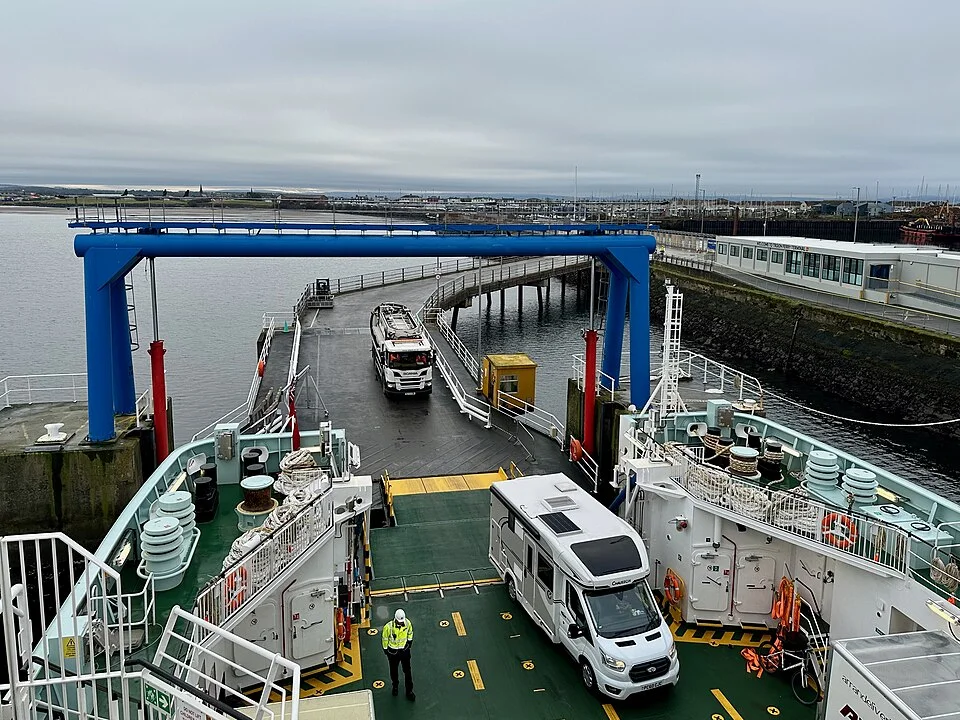
Motorhomes and caravans open up longer island touring itineraries. Electric cars are accepted and selected ships provide onboard charging points. Baleària offers several pet accommodation formats depending on vessel.
Cars & vans
Enter the correct make/type and dimensions. The vehicle listed on the booking must match the vehicle
presented for boarding.
Vehicle decks close during the crossing
Take medication and valuables with you
Charging is available only on selected ships
Motorhomes & caravans
These are popular for mainland-to-island journeys, but accurate overall length and height are
essential because deck space is sold by vehicle category.
Book early for school holidays and summer
Declare trailers or caravans separately
Check island vehicle restrictions where applicable
Motorcycles & bicycles
Motorcycles, scooters and bicycles can travel on many routes. Baleària specifically promotes bicycle
carriage as part of its vehicle options.
Follow crew instructions for securing motorcycles
Check whether the fast ferry accepts the chosen vehicle
Bike rules can differ on small inter-island craft
Pets
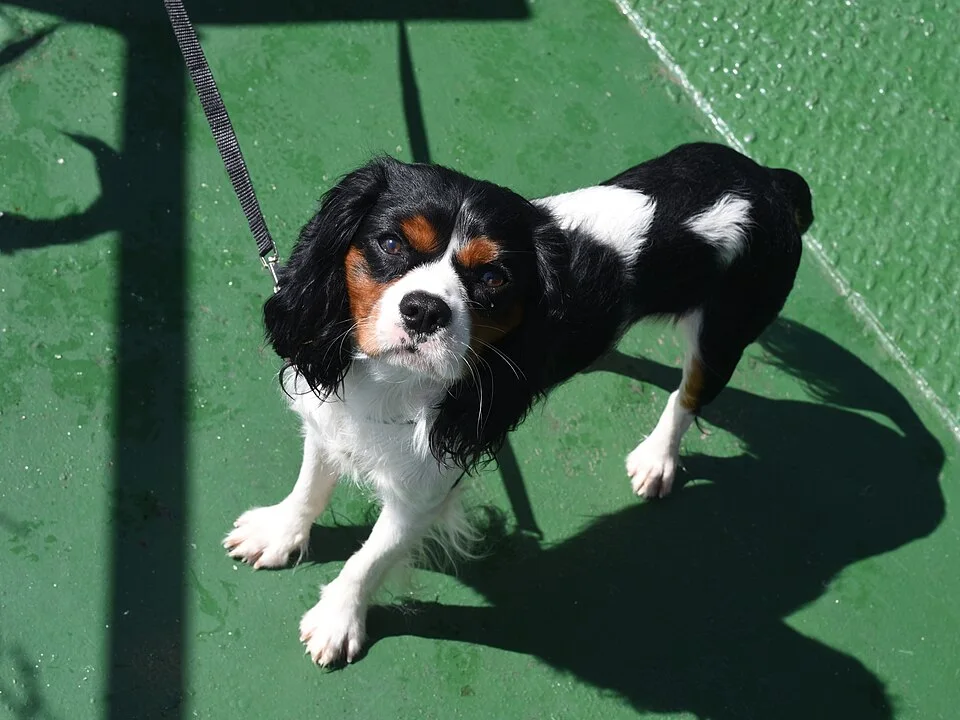
Choose pet-friendly cabin, pet-friendly seat or calm kennel where offered. Pet-friendly seats are
for qualifying animals travelling inside a carrier.
Health card and pet boarding pass are required
International routes need destination-specific animal documents
Walking areas exist on suitably equipped ships
Before you reach the port
Check-in, vehicles, documents and boarding time
Baleària publishes route-specific boarding deadlines. Short domestic crossings can require
relatively little advance time, while Algeria and some Morocco routes demand several hours.
International routes require more document and border processing than domestic island travel. The deadline printed for your actual route takes priority over any general rule.
A practical planning timeline
When booking
Enter passenger and vehicle details accurately
Passenger names should match travel documents. For vehicles, the category, length and height need to
reflect what arrives at the port.
Domestic routes
Use 60/90 minutes as a general baseline
For many Baleària routes the published minimum is 60 minutes before departure without a vehicle and
90 minutes with a vehicle. This is not universal.
Short exceptions
Ibiza–Formentera and Ceuta differ
Published minimums include 15 minutes without a vehicle and 30 minutes with one for
Ibiza–Formentera, and 30 minutes on the Ceuta–Algeciras route.
North Africa
Expect much longer lead times
Morocco and especially Algeria routes can require anything from one or two hours to five, six, seven
or nine hours depending on the exact port pair and direction.
Vehicle boarding
Take essentials out of the car
Vehicle decks remain closed during the crossing. Keep medicines, identity documents, valuables,
children's needs and pet items with you.
Where Baleària is especially useful
Choose the ferry when the vehicle and journey matter
On the Balearic and Canary Islands, the value of the ferry is often less about the sea crossing
itself and more about what happens afterwards. Arriving with your own car, motorcycle or motorhome
means you can leave the port and continue immediately without airport transfers or rental queues.
For overnight mainland crossings, cabins make travel time productive: instead of flying and
arranging a rental vehicle, you can sleep while the ship moves you, your passengers, luggage and
vehicle to the island. On short routes such as Ibiza–Formentera or Algeciras–Ceuta, the calculation
is different: frequency and port convenience can be more important than onboard facilities.
Baleària’s enlarged 2026 network also makes the operator relevant to more complex itineraries,
including multi-island Canary travel and road journeys continuing into Morocco, Algeria, Ceuta or
Melilla. For those trips, compare the route as carefully as the fare.
Common planning questions
Baleària FAQs
Where does Baleària operate?
The group’s current network includes the Balearic Islands, Canary Islands through Baleària Canarias,
Ceuta, Melilla, Morocco, Algeria and services between Florida and the Bahamas. The route directory
lists more than 40 routes after the 2026 expansion.
What changed for Baleària in 2026?
Baleària took effective control of Armas Trasmediterránea assets in the Canary Islands in May 2026
and completed its acquisition of Strait and Alborán assets in July. The resulting group has more
than 50 vessels and around 4,500 employees.
What is Baleària Canarias?
It is the brand introduced for the group’s Canary Islands operation following the acquisition of
Armas Trasmediterránea assets. During the transition some legacy Armas branding can still appear, so
live booking information matters.
Can I take a car or motorhome?
Yes on routes and ships equipped for vehicles. Baleària accepts cars, vans, caravans, motorcycles
and other vehicle categories. Enter the exact dimensions when booking, especially for motorhomes,
vans, roof boxes and trailers.
Are cabins available on Baleària ferries?
Yes on many conventional ferries. Cabins can include inside and outside categories, family-sized
accommodation, premium options and pet-friendly cabins. High-speed vessels generally rely more on
standard, superior or VIP seating.
How can my pet travel?
Depending on the ship, your pet can use a pet-friendly cabin, pet-friendly seat or calm kennel. In
the pet-friendly seat category, the animal must meet the published weight/carrier conditions and
remain inside the carrier. Health documentation and a pet boarding pass are required.
How early should I arrive?
For many routes the published minimum is 60 minutes without a vehicle and 90 minutes with one, but
there are important exceptions. Ibiza–Formentera and Ceuta have shorter minimums, while Morocco and
Algeria routes can require substantially longer arrival times. Follow your ticket.
Which Baleària ships are the newest or most distinctive?
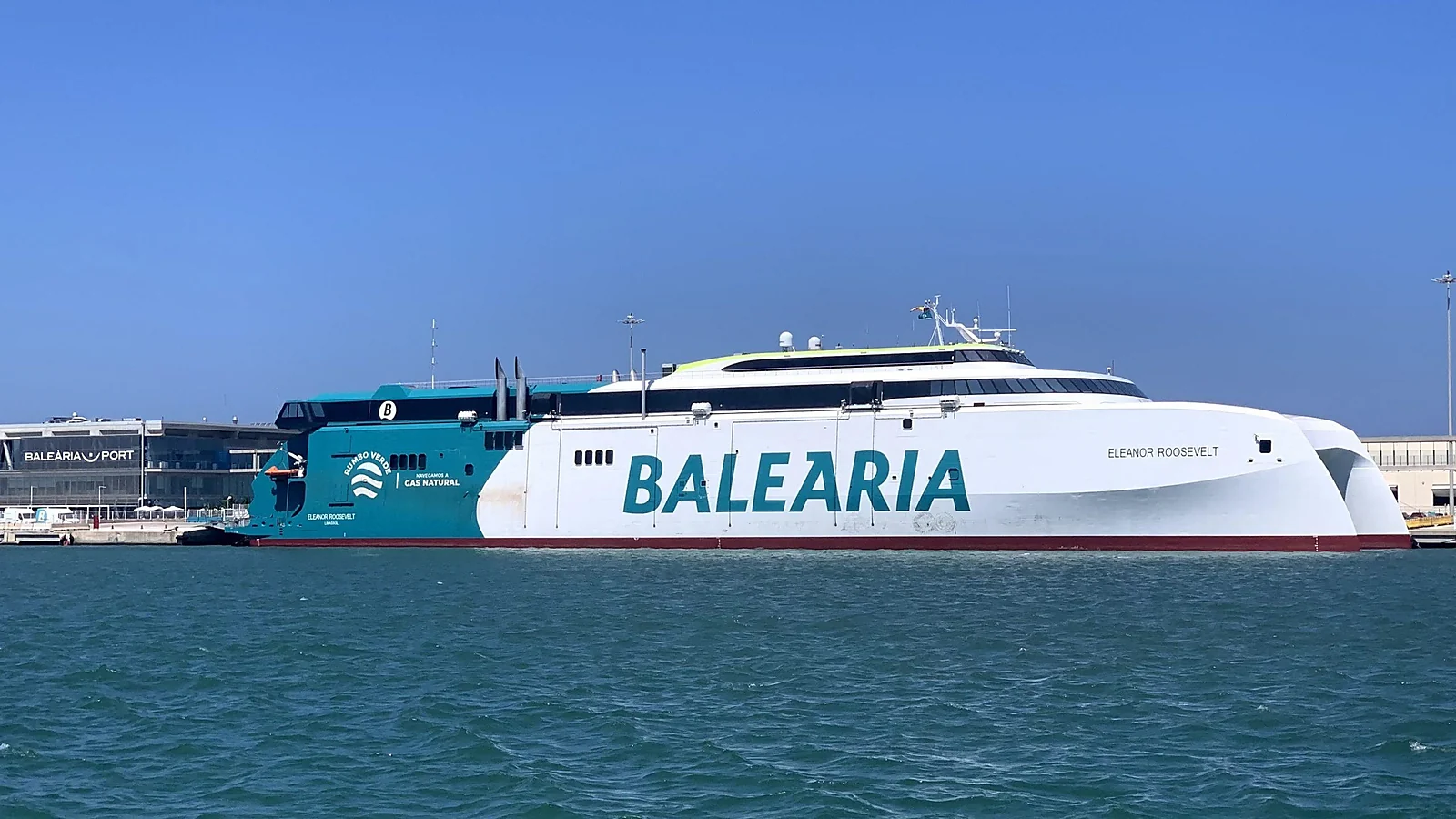
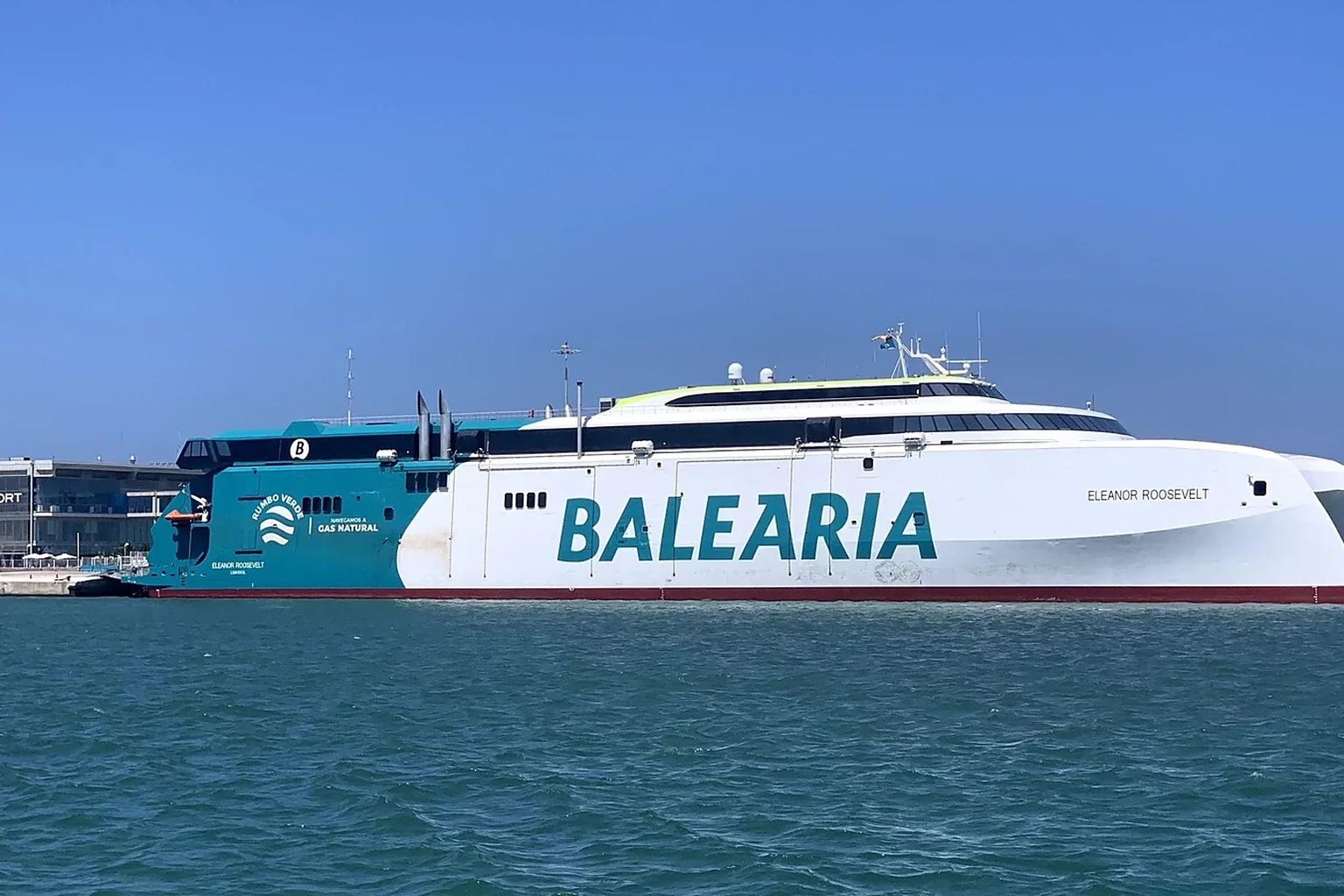
Margarita Salas, Eleanor Roosevelt and Mercedes Pinto are notable high-speed natural-gas catamarans.
Cap de Barbaria is an electric ferry, while the conventional fleet includes smart ferries with
cabins, Wi-Fi and pet-friendly accommodation. The 2026 Armas acquisition also added numerous
vessels.
Does Baleària have Wi-Fi?
Many smart ships provide Wi-Fi and digital entertainment, although the exact free and paid
connectivity options differ by vessel. Some smart ships also support direct QR cabin access and pet
video monitoring.
Is Baleària good for island hopping?
Yes. Baleària is the only maritime company connecting all four main Balearic islands and, after the
2026 expansion, Baleària Canarias serves all seven principal Canary Islands. Frequency and
directness vary, so compare the actual timetable before building a multi-island itinerary.
Facility photographs are examples; the vessels shown are identified below. Facilities vary by ship.
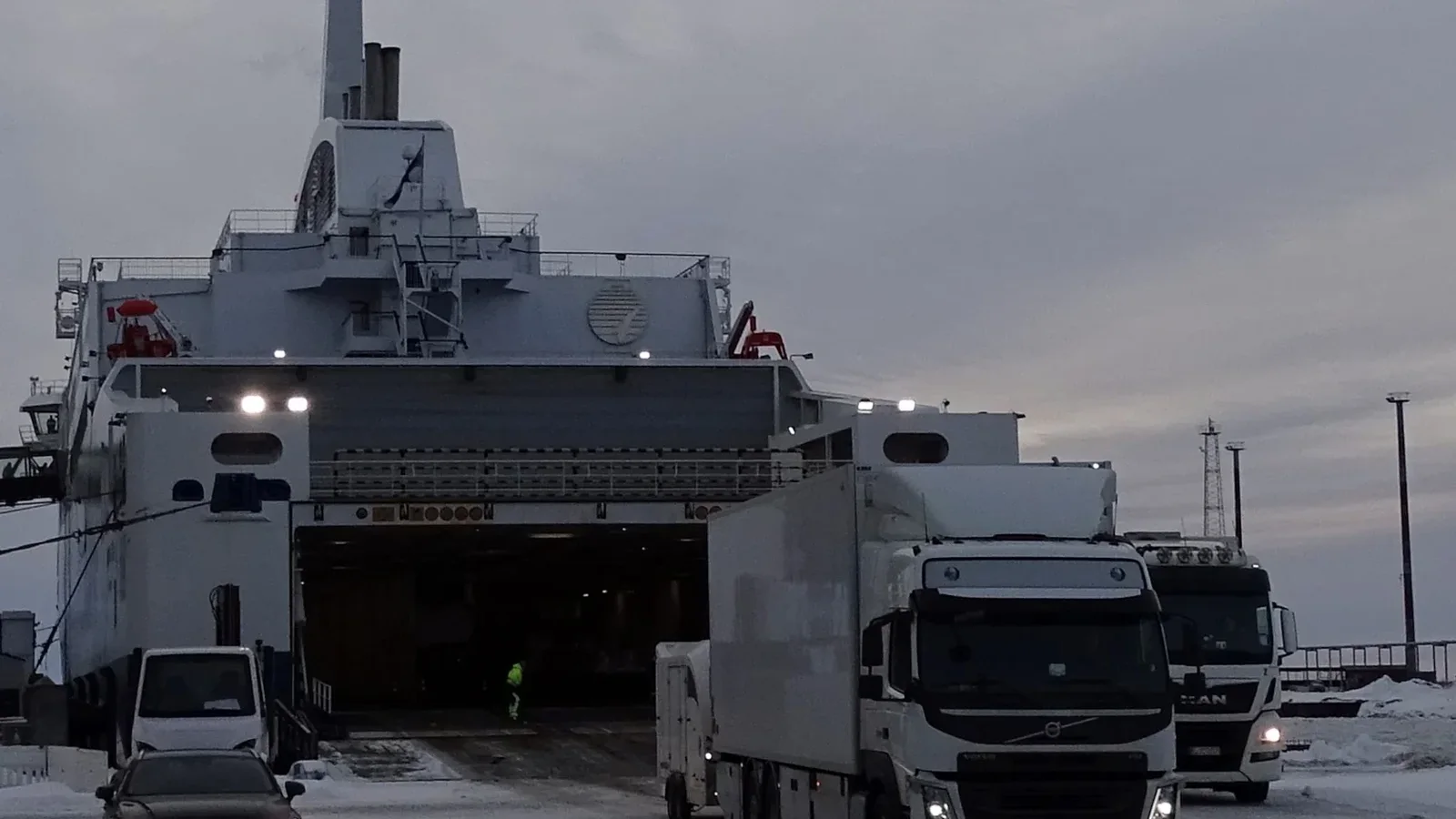
250120 1029 MV Glen Sannox loading, Port of Troon ferry terminal.jpg — Dave souza; CC BY-SA 4.0. Source: https://commons.wikimedia.org/wiki/File:250120_1029_MV_Glen_Sannox_loading,_Port_of_Troon_ferry_terminal.jpg. Licence: https://creativecommons.org/licenses/by-sa/4.0. Resized for display.
Cabin on MV Hrossey - geograph.org.uk - 7254252.jpg — Oliver Dixon; CC BY-SA 2.0. Source: https://commons.wikimedia.org/wiki/File:Cabin_on_MV_Hrossey_-_geograph.org.uk_-_7254252.jpg. Licence: https://creativecommons.org/licenses/by-sa/2.0. Resized for display.
Cavalier King Charles Spaniel (49687542022).jpg — Chris Hunkeler from Carlsbad, California, USA; CC BY-SA 2.0. Source: https://commons.wikimedia.org/wiki/File:Cavalier_King_Charles_Spaniel_(49687542022).jpg. Licence: https://creativecommons.org/licenses/by-sa/2.0. Resized for display.
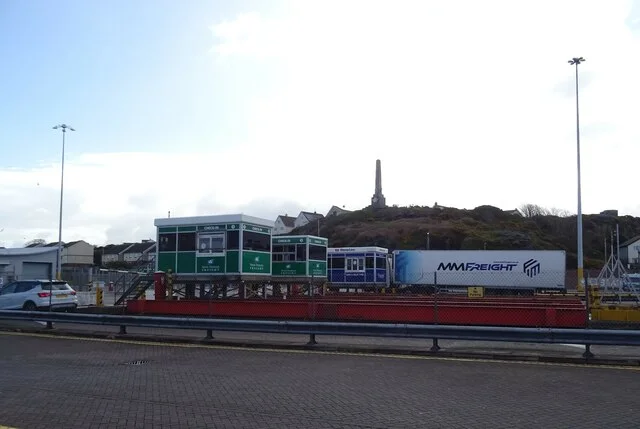
Check-in, Holyhead Ferry Terminal - geograph.org.uk - 7757104.jpg — JThomas; CC BY-SA 2.0. Source: https://commons.wikimedia.org/wiki/File:Check-in,_Holyhead_Ferry_Terminal_-_geograph.org.uk_-_7757104.jpg. Licence: https://creativecommons.org/licenses/by-sa/2.0. Resized for display.
Deckchair on ferry.jpg — User:Amada44; CC BY 3.0. Source: https://commons.wikimedia.org/wiki/File:Deckchair_on_ferry.jpg. Licence: https://creativecommons.org/licenses/by/3.0. Resized for display.
Vehicle deck on the Victoria of Wight (Wightlink ferry).jpg — ITookSomePhotos; CC BY-SA 4.0. Source: https://commons.wikimedia.org/wiki/File:Vehicle_deck_on_the_Victoria_of_Wight_(Wightlink_ferry).jpg. Licence: https://creativecommons.org/licenses/by-sa/4.0. Resized for display.



 40+ routes
 50+ vessels
 Cars & motorhomes