Use this EUFerry operator guide to understand where Finnlines sails and the practical options to
consider before checking current availability and fares.
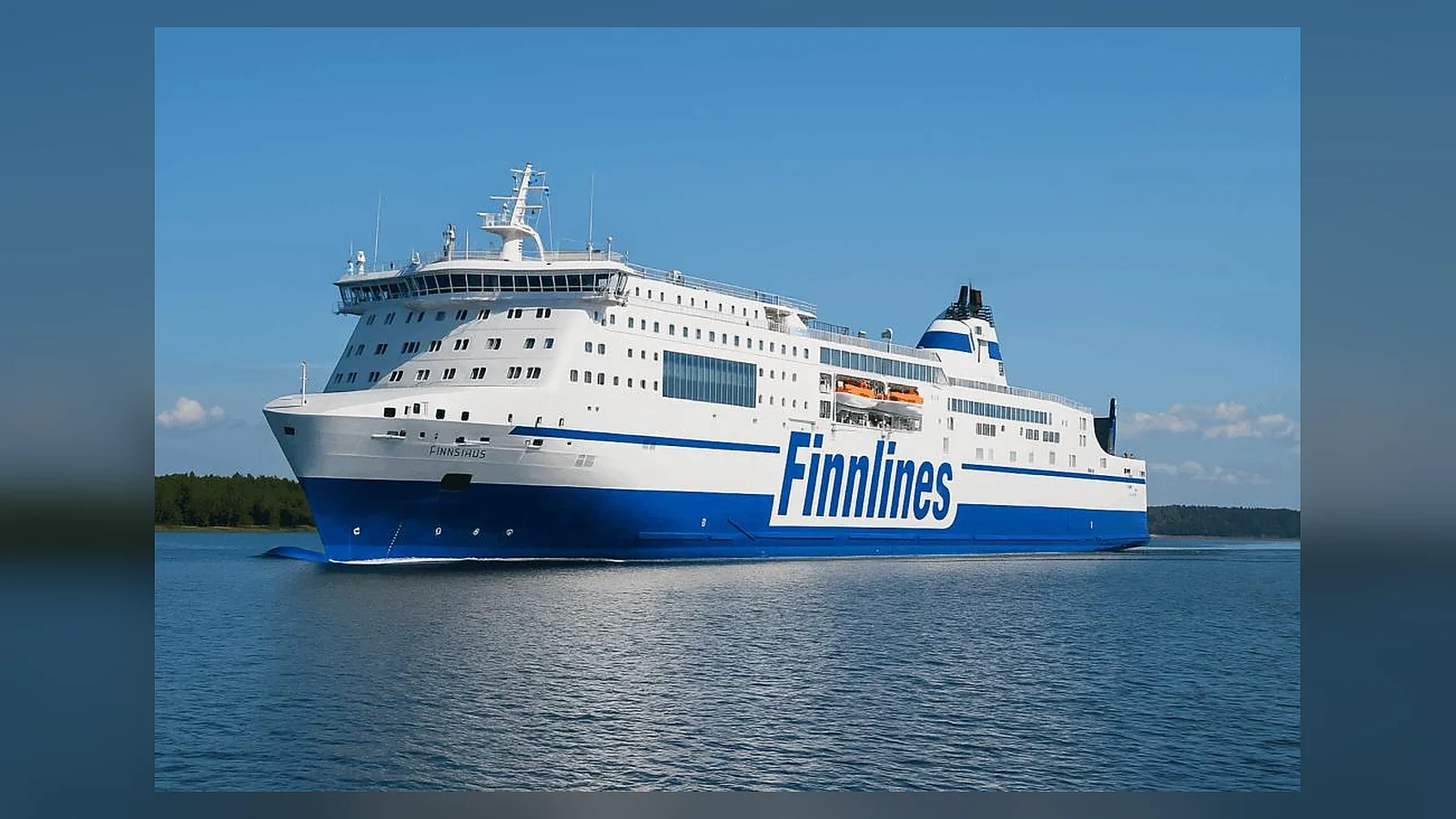
Finnlines combines passenger travel with high-capacity vehicle and freight services across the Baltic.
About the operator
A Baltic ferry network built for road trips and long-distance travel
Finnlines is a Finnish shipping company with a long-established Baltic Sea network and is part of
the Grimaldi Group. Its passenger services connect major road corridors between Finland, Sweden,
Germany and Poland, with Åland included on the Naantali–Kapellskär route.
The network mixes very different journeys. Helsinki–Travemünde is a long overnight crossing where a
private cabin and onboard facilities are an important part of the trip, while
Naantali–Långnäs–Kapellskär provides a faster Finland–Sweden link that suits motorists travelling
between southern Finland and the Stockholm region.
Further south, Finnlines links Malmö with Travemünde and Świnoujście. These routes are particularly
useful for travellers who want to keep their own vehicle, avoid a long overland detour through
Denmark, or turn the ferry crossing into a rest period between driving stages.
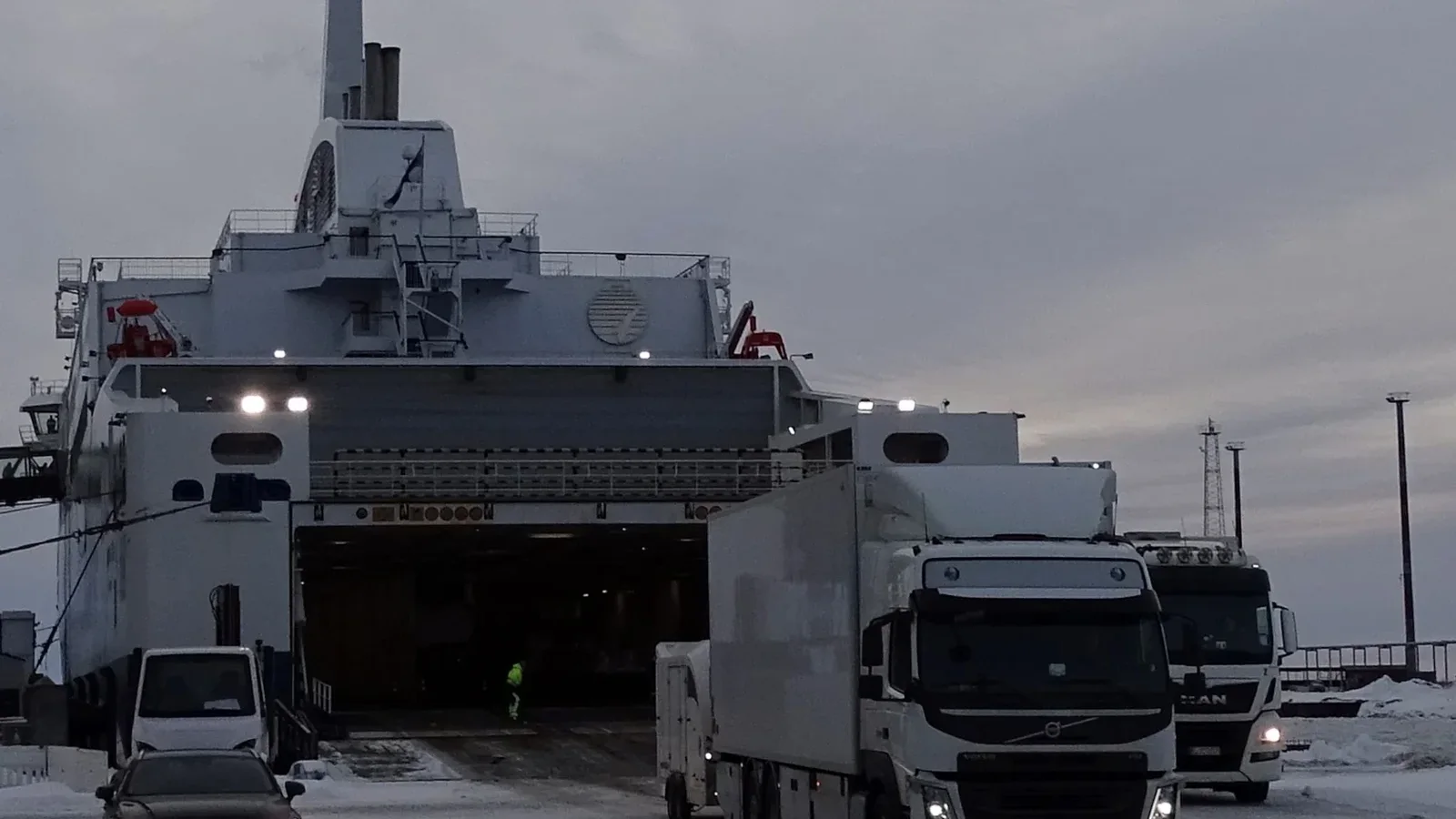
Travel-planning note: Finnlines carries substantial freight as well as passengers, so some ports and terminals are more industrial than city-centre ferry terminals. Check the exact terminal address and road access before travelling.
Across the Baltic
Finnlines passenger routes
Finnlines’ current passenger network includes Travemünde–Helsinki, Travemünde–Malmö,
Kapellskär–Långnäs–Naantali and the new daily Świnoujście–Malmö route. The three cards below
highlight representative corridors while the live timetable covers the complete network.
Regular sailingsLong overnight route
Finland
Helsinki
Germany
Travemünde
The Helsinki–Travemünde route is Finnlines’ longest passenger crossing and is commonly planned as an
overnight sea journey of roughly a day and a half, depending on timetable. It is particularly useful
for road trips between Finland and continental Europe.
Private cabin accommodation is central to the long-distance journey
Cars, motorcycles, motorhomes and caravans can be booked
Allow generous time for port access and vehicle check-in
Finnlines links Naantali with Kapellskär via Långnäs in Åland. The route provides a practical
alternative to travelling via Helsinki or Turku and is especially convenient for motorists heading
towards Stockholm or southern Finland.
Selected sailings call at Långnäs in Åland
Modern passenger ferries provide cabins, restaurants and lounge facilities
Excellent road-trip connection between Finland and the Stockholm region
Malmö–Travemünde links southern Sweden directly with northern Germany and can remove a substantial
road detour around the Danish straits. Day and overnight timings make it useful for both leisure and
long-distance motorists.
Vehicle-friendly Baltic crossing
Cabins and onboard dining available on passenger sailings
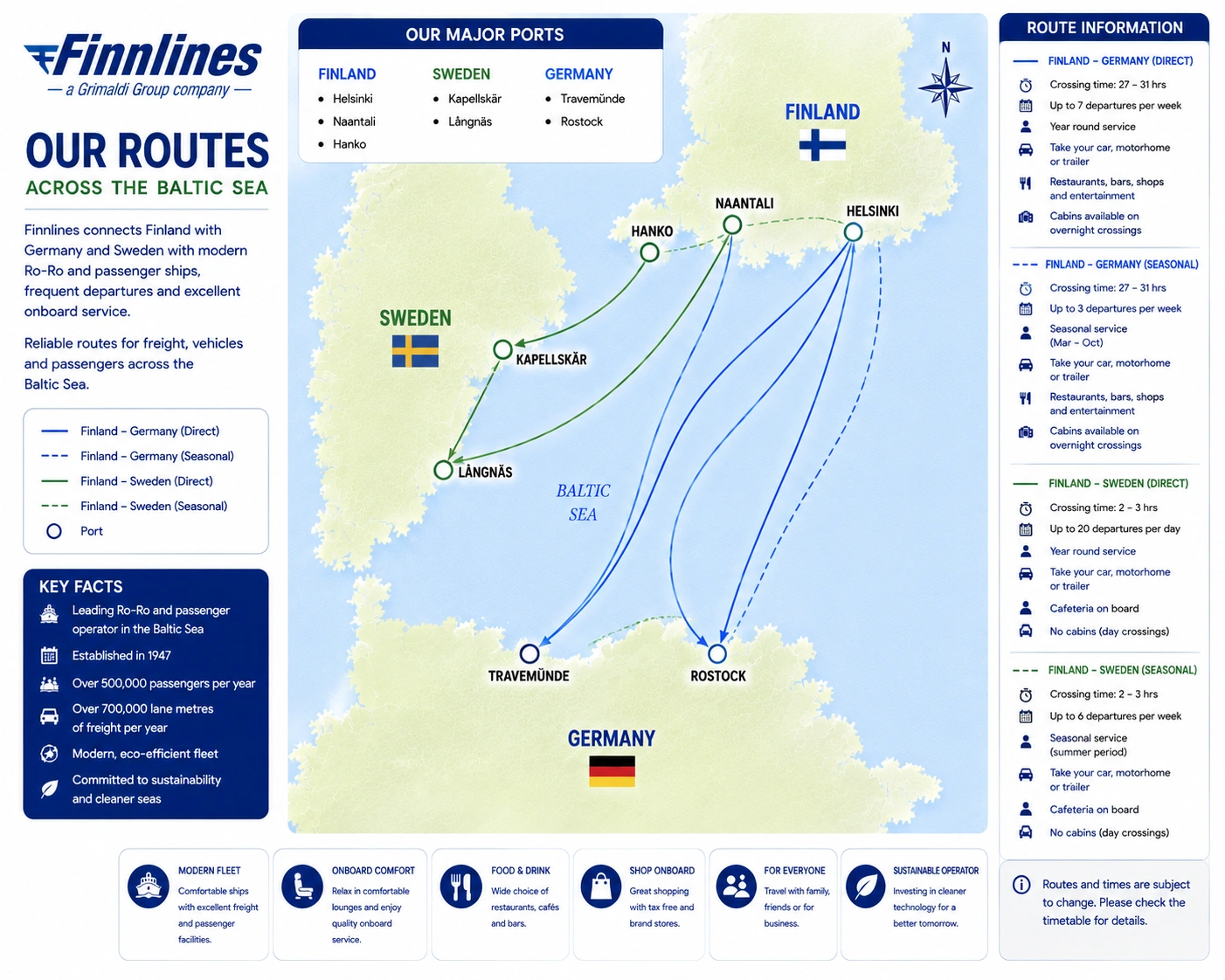
This schematic summarises the three representative current route groups described above. It is not a
complete network map or timetable; the live operator booking result is definitive.
For planning with Finnlines, use the map to compare the representative route groups above, including
Helsinki–Travemünde, Naantali–Kapellskär, Malmö–Travemünde. It is most useful for judging which
departure or arrival point best fits the rest of the journey rather than as a substitute for the
live timetable.
After choosing the most practical route, compare the live Finnlines sailing for departure time,
calling pattern, passenger requirements and the facilities or accommodation shown for that service.
The complete itinerary and arrival location can matter more than a small difference in the headline
fare.
Route map is provided for planning context. Confirm the current passenger timetable, port and vessel
before booking.
Illustrative Finnlines route map. Routes and operating patterns can change; check the live timetable for your date.
Ports worth planning around
Key Finnlines ports and gateways
Finnlines terminals range from major capitals to purpose-built freight and passenger ports.
Understanding the port location can save significant driving time on a Baltic road trip.
Mainland gateway
Helsinki
Finland’s capital is the starting point for the long Finnlines connection to Germany. Finnlines uses
the Vuosaari harbour area rather than Helsinki’s central cruise-ferry terminals, so allow time for
the drive east of the city centre.
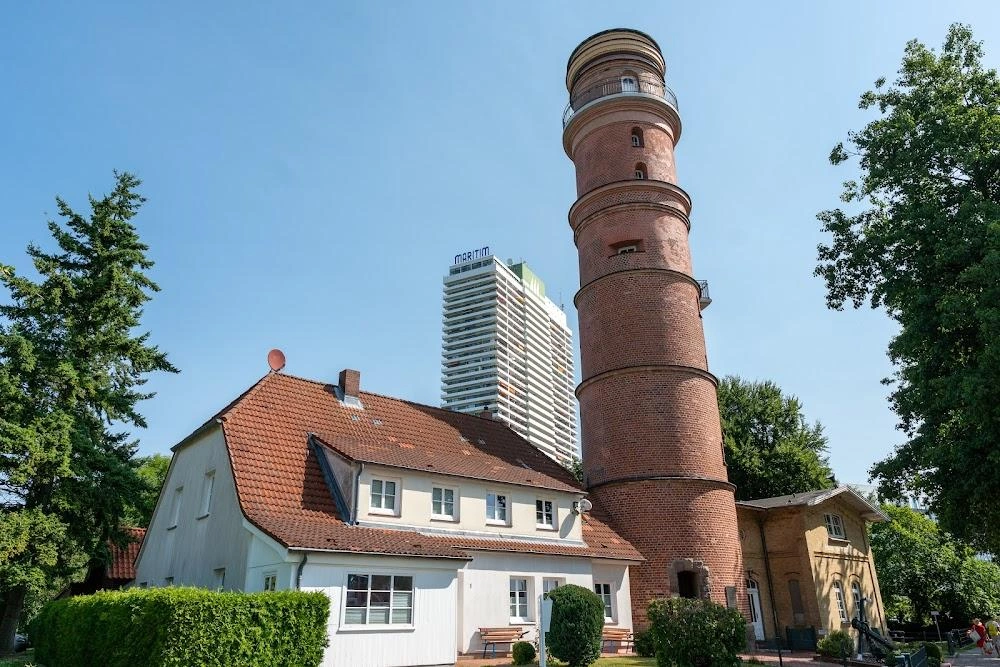
Travemünde is Lübeck’s Baltic ferry port and a major gateway into Germany. Motorways provide onward
access towards Hamburg, Berlin and the wider European road network.
Kapellskär sits north-east of Stockholm and is designed around road traffic. The location can be
particularly convenient for travellers who want to avoid driving through central Stockholm after
arriving from Finland.
Compare the complete journey rather than the sea crossing alone. Check the live timetable for your
date, confirm the exact departure and arrival ports, and allow enough time for check-in and onward
travel.
Cabins and rest at sea
Cabins, lounges and overnight comfort
Finnlines passenger routes range from medium-length Baltic crossings to very long overnight
journeys, so the value of a private cabin depends strongly on your route and departure time.
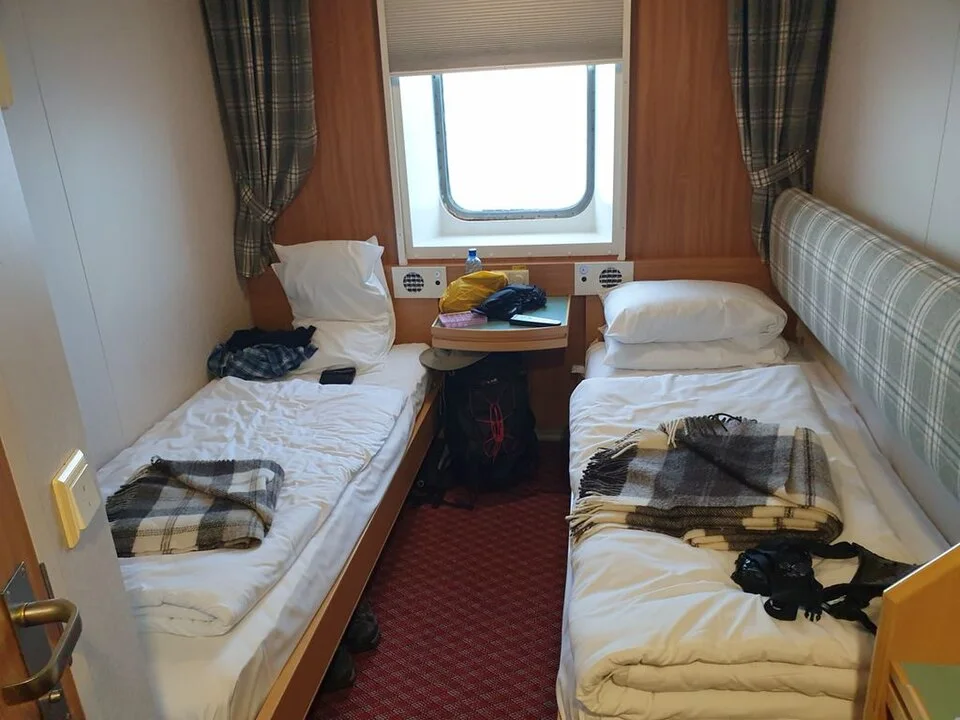
Private cabins are especially valuable on long overnight Finnlines crossings. Higher-category cabins can add extra space, privacy and sea views on selected ships.
Private cabins
Cabins are available across Finnlines passenger services and are particularly important on overnight
routes. Categories vary by ship, from compact inside cabins to larger outside and premium
accommodation.
Best considered forOvernight and long-distance travellers
Sea-view cabins
Outside cabins provide natural light and a sea view, which can make long Baltic journeys feel more
like part of the holiday.
Best considered forCouples and travellers wanting more comfort
Premium accommodation
Newer Finnlines passenger ferries offer upgraded cabin and lounge products with more space and
additional comfort features. Exact products depend on vessel.
Best considered forLong crossings and special trips
Pet cabins
Pet-friendly cabins are available on relevant passenger routes and should be booked at the same time
as the ferry ticket because capacity can be limited.
Best considered forTravellers taking dogs or cats
Accessible cabins
Accessible cabin types and lifts are available on passenger ferries, but facilities differ by
vessel. Advise the operator of mobility requirements when booking.
Best considered forPassengers requiring adapted accommodation
Public lounge seating
On shorter sailings, public lounges and restaurant seating may be sufficient if a cabin is not
required by the route or fare.
Best considered forDaytime and shorter Baltic crossings
Cabin planning tip
Treat Helsinki–Travemünde differently from a short daytime crossing. On the longest routes, compare
cabin category and meal arrangements as part of the total journey cost rather than looking only at
the base ferry fare.
Life onboard
Restaurants, lounges, shops and family facilities
Finnlines’ passenger ferries are designed for long Baltic journeys, with onboard services that can
turn driving time into rest time. Facilities vary significantly by route and assigned vessel.
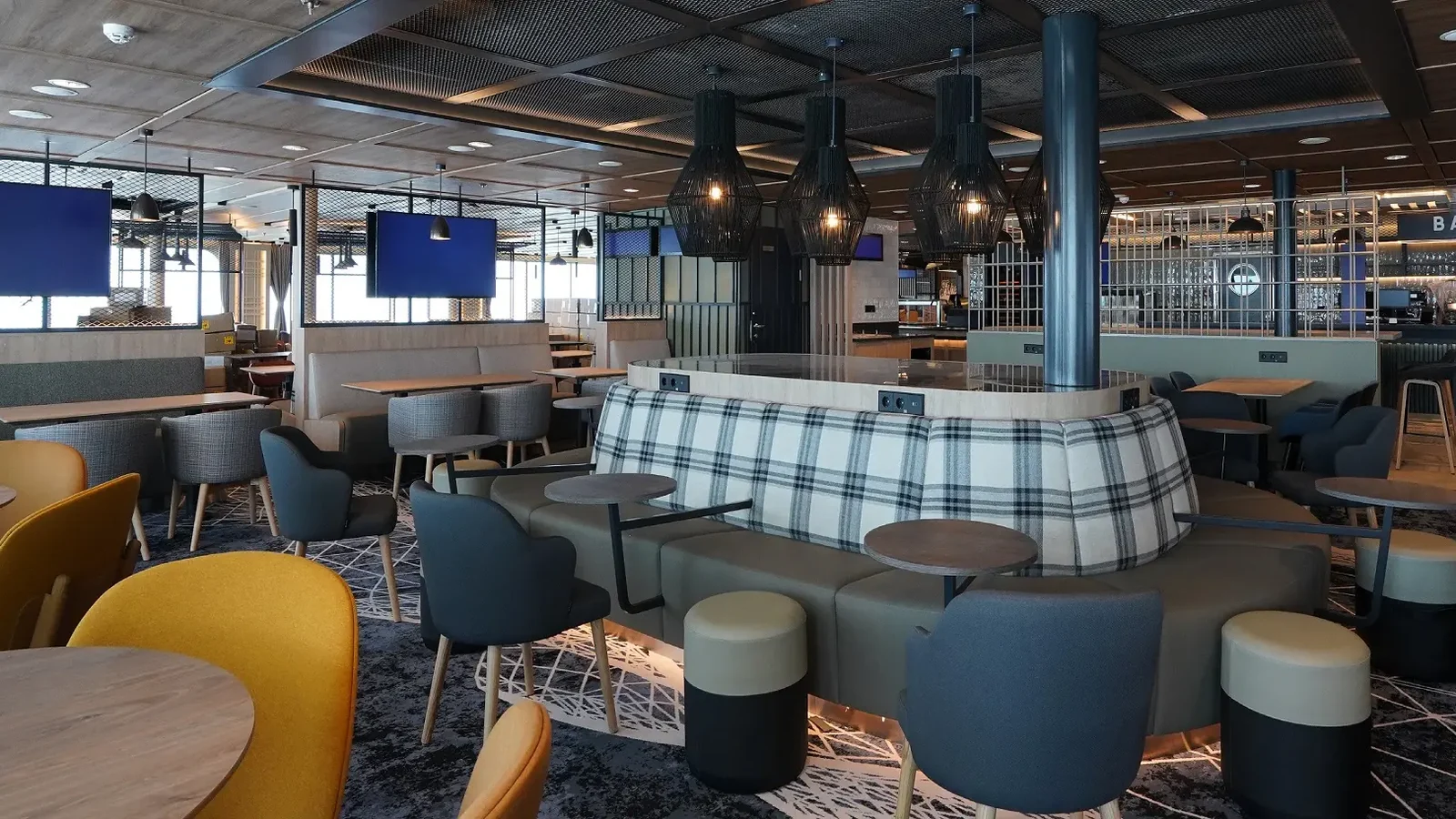
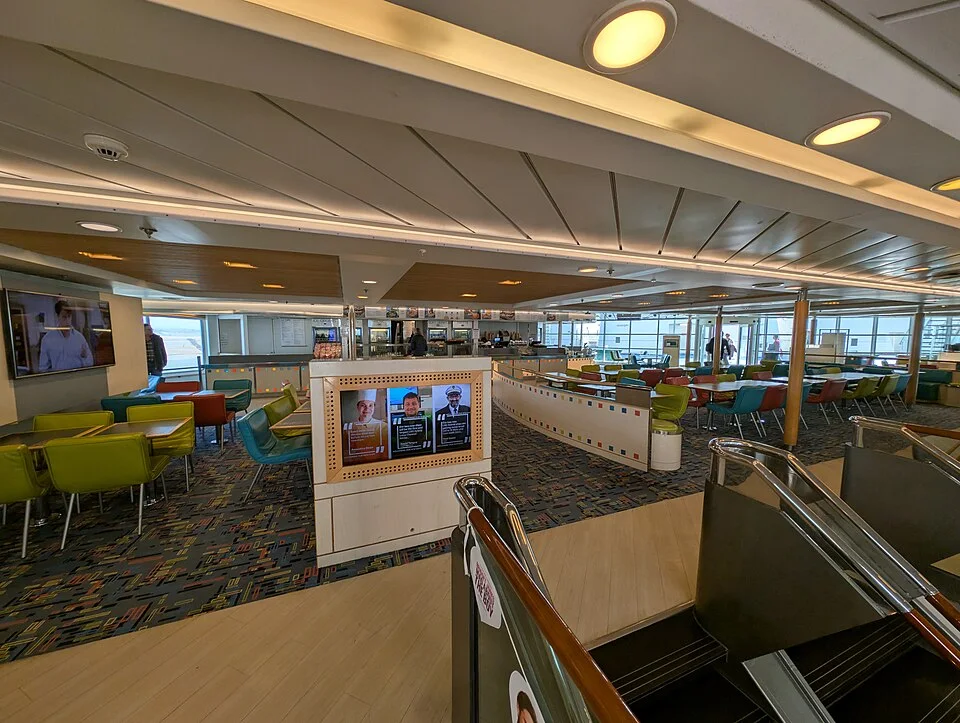
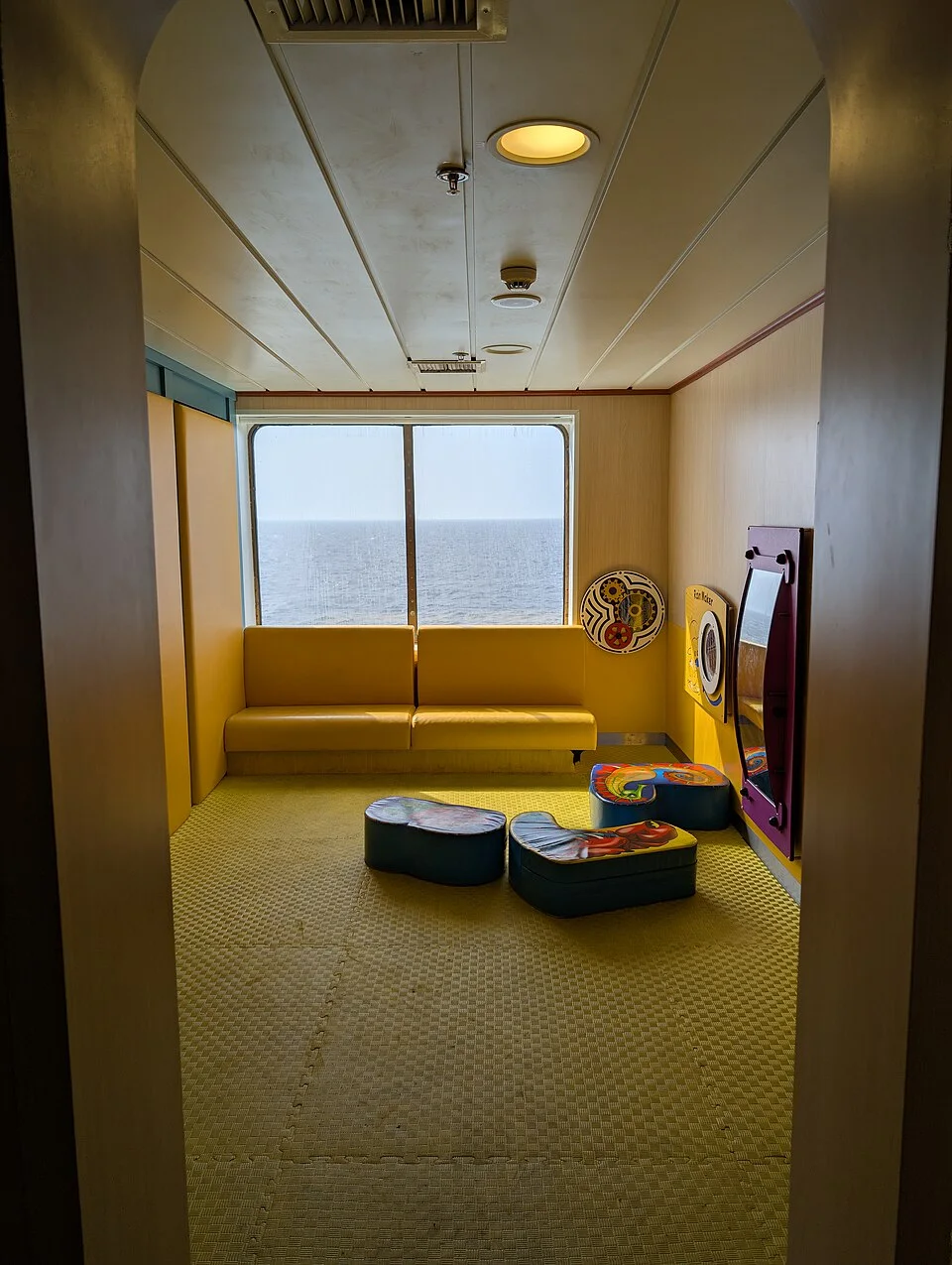
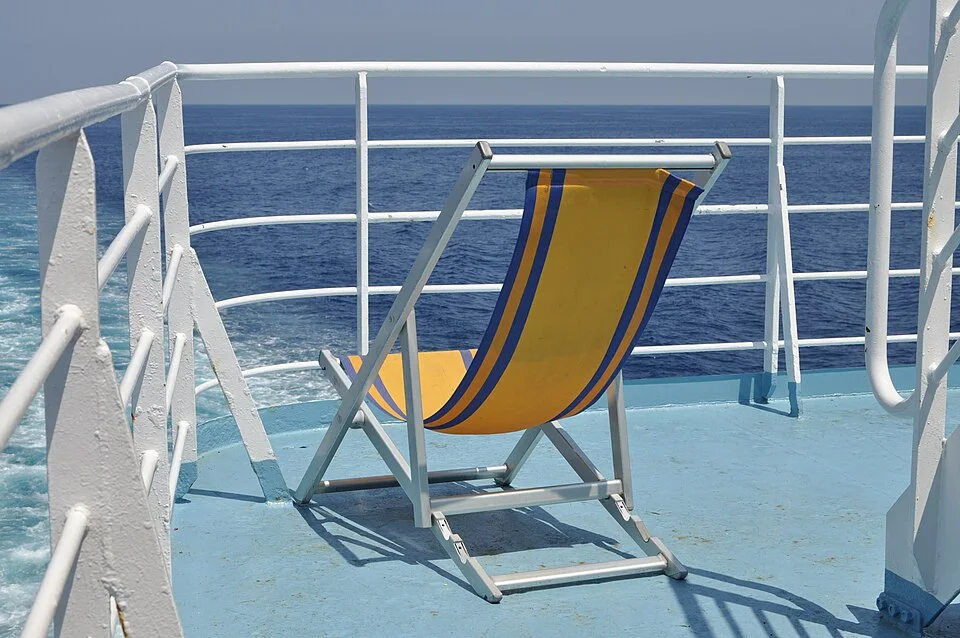
Buffet and restaurant choices help break up longer Baltic crossings. Cafés and lounges provide informal places to relax between meals. Family facilities can make long sea journeys easier with children. Open decks offer fresh air and Baltic views when weather allows.
Restaurants and buffet
Passenger ferries provide meal options ranging from buffet-style dining to à la carte or bistro
products. The exact combination depends on route and vessel.
Bars and cafés
Bars and cafés provide lighter meals, snacks, coffee and drinks during the crossing, with opening
hours linked to the sailing schedule.
Wi-Fi and work space
Internet access is available on passenger ferries, although speed and included data can vary at sea.
Longer routes may also provide quieter areas suitable for work.
Sailor’s Shop
Finnlines passenger ships include onboard shopping, with product ranges varying by route, vessel and
applicable tax or duty rules.
Family and wellness
Newer Finnlines vessels include family areas and, on selected routes, wellness facilities such as
saunas or spa-style spaces. Check the assigned ship for exact facilities.
Outdoor decks
Weather-permitting outdoor areas provide views across the Baltic and a break from lounges, cabins
and vehicle decks during longer crossings.
This section combines genuine Finnlines imagery with selected images from EUFerry's general
ferry-travel library. Photo source: Finnlines.
Bring your vehicle
Cars, motorhomes, bicycles, pets and accessibility
Finnlines is strongly oriented towards vehicle travel. Cars, motorcycles, motorhomes and caravans
are central to the passenger product, but exact dimensions, pet arrangements and accessibility
provisions should be declared correctly at booking.
Motorhomes and caravans make Finnlines a natural choice for Baltic touring holidays. Roadworthy electric and hybrid cars can be carried when booked and declared correctly. Pet-friendly cabins and designated areas are available on relevant Finnlines passenger services.
Cars, motorcycles and vans
Book the correct vehicle type, registration and dimensions. Finnlines terminals are designed for
large volumes of road traffic, so follow lane signs and staff instructions carefully.
Measure roof boxes, racks and trailers before booking
Keep travel documents accessible before entering the check-in lane
Do not assume you can access the vehicle deck during the voyage
Motorhomes, caravans and bicycles
Touring vehicles are a major reason to choose Finnlines. Bicycles can also be carried on relevant
passenger routes, but terminal access may differ from foot-passenger arrangements.
Declare full vehicle length and height including attachments
Check gas and fuel rules before travel
Confirm bicycle check-in arrangements for the specific port
Travelling with pets
Pets are welcome on passenger routes, with pet cabins or designated arrangements depending on the
vessel. Reserve pet accommodation early on overnight journeys.
Carry the animal-health documents required for each border crossing
Use only designated pet areas onboard
Never assume pets may remain in a vehicle unless the operator explicitly permits it
Reduced mobility and assistance
Finnlines passenger vessels and terminals provide accessibility support, but equipment and cabin
types vary. Contact the operator in advance if you need assistance.
Book an accessible cabin where required
Advise staff about wheelchairs, mobility equipment or assistance dogs
Allow extra time at vehicle check-in and boarding
Before you reach the port
Check-in, documents, luggage and boarding
Finnlines uses several different passenger terminals and route types, so there is no safe
one-size-fits-all check-in rule. Follow the deadline printed on your booking confirmation and arrive
earlier when travelling with a vehicle, pet or non-standard load.
Keep booking details, identification and vehicle information ready before reaching Finnlines check-in. Large RoPax terminals can involve long vehicle lanes, security checks and staged boarding.
Recommended travel sequence
When booking
Choose the exact route and passenger product
Confirm the departure port, arrival port, passenger count, cabin requirement and full vehicle
dimensions before paying.
Before travelling
Check the route-specific deadline
Finnlines check-in times differ by route and terminal. Use the deadline shown in the booking
confirmation rather than relying on a general rule.
Around 2 hours before
A sensible target for many vehicle journeys
Long-distance and international vehicle crossings benefit from generous arrival time. Allow extra
time for unfamiliar terminals, pets, trailers or special assistance.
At check-in
Have documents and booking details ready
Passenger identification, booking reference and vehicle information may be required before you enter
the loading lanes.
Before boarding closes
Remain in the assigned lane
Follow port staff instructions and do not leave the loading area once your vehicle has been directed
into a boarding sequence.
Which Finnlines route fits?
Choose the crossing that best replaces road miles
Helsinki–Travemünde is the obvious choice when the goal is to replace a very long drive between
Finland and Germany. The sea journey is long, but it can combine transport, rest, meals and an
overnight cabin in one stage.
Naantali–Kapellskär is more about regional efficiency. It suits motorists moving between southern
Finland and the Stockholm area, while the Malmö routes can remove lengthy road detours between
Scandinavia, Germany and Poland.
Compare the full trip rather than only the ferry time: driving distance to each port, fuel, tolls,
bridge costs, hotel nights, cabin category, meal costs and arrival time can all change which route
represents the best value.
Common Baltic travel questions
Finnlines FAQs
Which passenger routes does Finnlines operate?
Finnlines’ core passenger network includes Helsinki–Travemünde, Naantali–Långnäs–Kapellskär,
Malmö–Travemünde and Malmö–Świnoujście. Passenger availability and sailing frequency should be
checked for the selected travel date.
How long is the Helsinki–Travemünde ferry?
It is a long overnight Baltic crossing, typically planned as roughly a day and a half at sea
depending on the timetable. Check the selected sailing for the exact duration and arrival time.
Does Finnlines sail between Finland and Sweden?
Yes. The Naantali–Kapellskär route links Finland and Sweden and selected sailings call at Långnäs in Åland.
Can I take my car or motorhome on Finnlines?
Yes. Finnlines passenger services are strongly vehicle-oriented and carry cars, motorcycles,
motorhomes, caravans and other booked vehicle types. Enter the correct dimensions when booking.
Are cabins available on Finnlines?
Yes. Private cabins are an important part of Finnlines’ passenger service, especially on long and
overnight routes. Cabin categories and requirements vary by route and vessel.
Can I travel with a pet on Finnlines?
Yes on relevant passenger services. Pet-friendly cabins and designated arrangements are available,
but capacity is limited and pet accommodation should be booked in advance.
How early should I arrive for Finnlines check-in?
Check-in deadlines vary by route and terminal, so use the time stated in your booking confirmation.
For international vehicle travel, arriving well in advance—often around two hours before a
long-distance sailing—is a sensible planning target.
Can foot passengers use Finnlines?
Foot-passenger availability depends on the route and terminal. Finnlines is heavily
vehicle-oriented, so confirm whether the selected sailing accepts passengers without a vehicle
before booking onward transport.
Is Finnlines suitable for passengers with reduced mobility?
Passenger vessels provide accessible facilities and adapted cabin options on relevant routes.
Contact Finnlines in advance if you require boarding assistance or accessible accommodation.
Does Finnlines have restaurants and Wi-Fi?
Passenger ferries provide dining, lounge and shopping facilities, and Wi-Fi is available on relevant
vessels. Exact services depend on the ship and route.
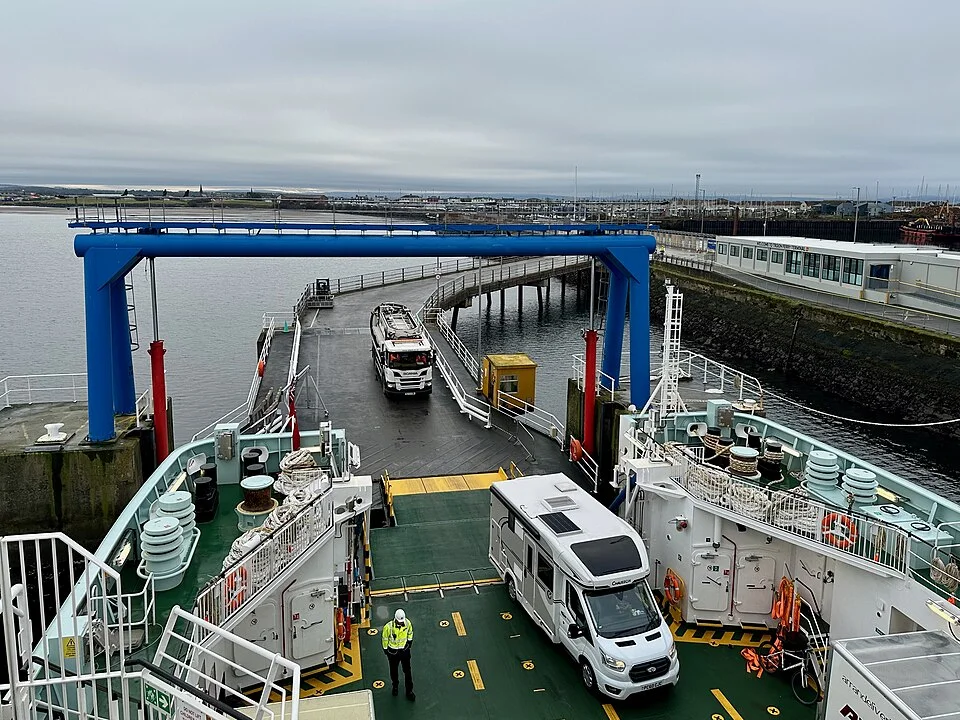
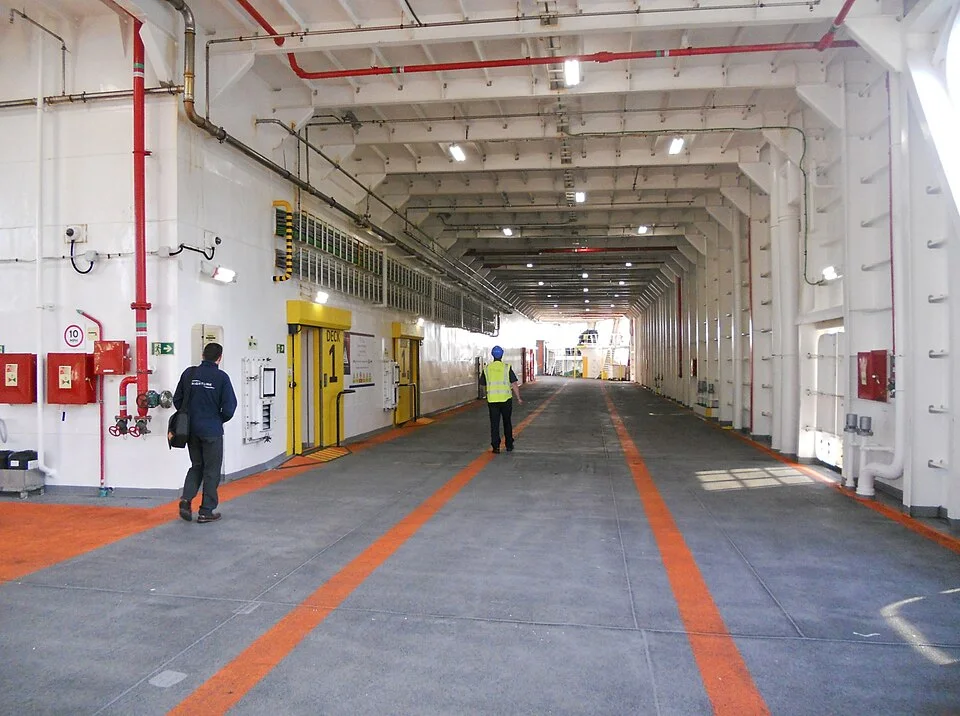
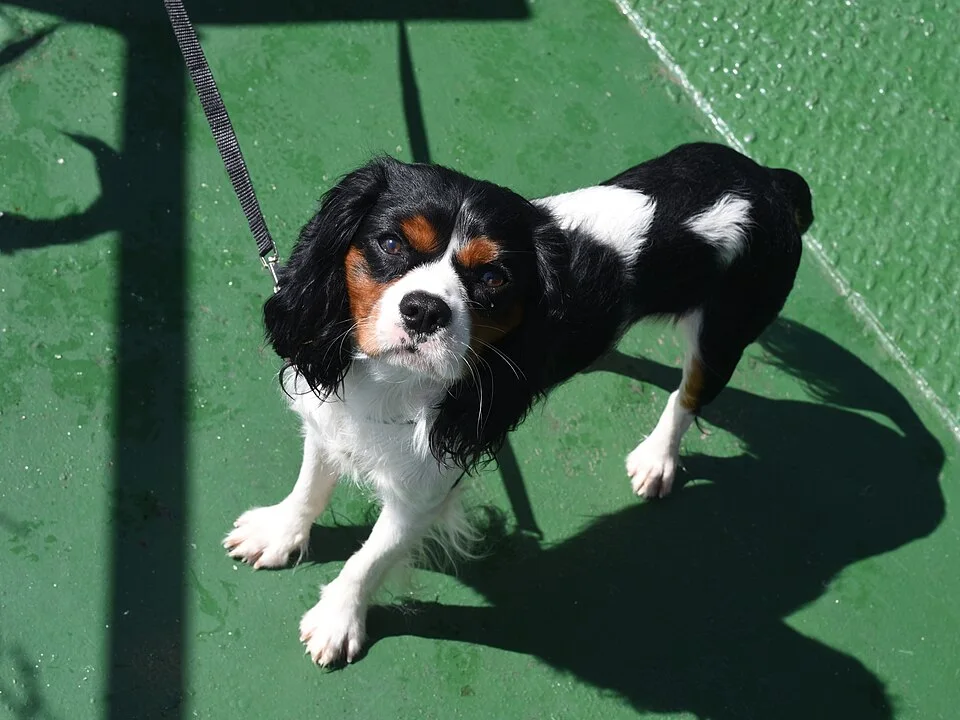
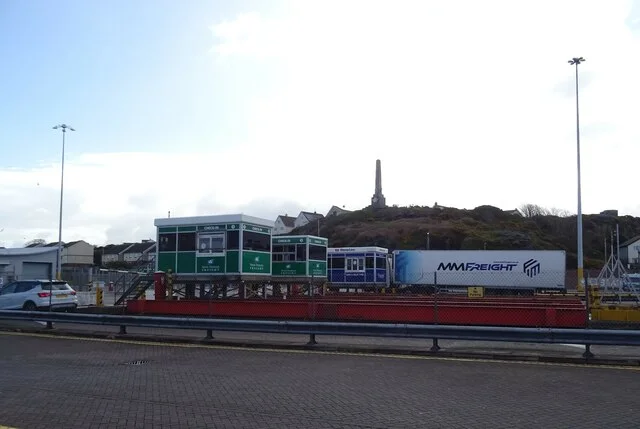
Facility photographs are examples; the vessels shown are identified below. Facilities vary by ship.
250120 1029 MV Glen Sannox loading, Port of Troon ferry terminal.jpg — Dave souza; CC BY-SA 4.0. Source: https://commons.wikimedia.org/wiki/File:250120_1029_MV_Glen_Sannox_loading,_Port_of_Troon_ferry_terminal.jpg. Licence: https://creativecommons.org/licenses/by-sa/4.0. Resized for display.
Cabin on MV Hrossey - geograph.org.uk - 7254252.jpg — Oliver Dixon; CC BY-SA 2.0. Source: https://commons.wikimedia.org/wiki/File:Cabin_on_MV_Hrossey_-_geograph.org.uk_-_7254252.jpg. Licence: https://creativecommons.org/licenses/by-sa/2.0. Resized for display.
Cavalier King Charles Spaniel (49687542022).jpg — Chris Hunkeler from Carlsbad, California, USA; CC BY-SA 2.0. Source: https://commons.wikimedia.org/wiki/File:Cavalier_King_Charles_Spaniel_(49687542022).jpg. Licence: https://creativecommons.org/licenses/by-sa/2.0. Resized for display.
Check-in, Holyhead Ferry Terminal - geograph.org.uk - 7757104.jpg — JThomas; CC BY-SA 2.0. Source: https://commons.wikimedia.org/wiki/File:Check-in,_Holyhead_Ferry_Terminal_-_geograph.org.uk_-_7757104.jpg. Licence: https://creativecommons.org/licenses/by-sa/2.0. Resized for display.
Deckchair on ferry.jpg — User:Amada44; CC BY 3.0. Source: https://commons.wikimedia.org/wiki/File:Deckchair_on_ferry.jpg. Licence: https://creativecommons.org/licenses/by/3.0. Resized for display.
Vehicle deck on the Victoria of Wight (Wightlink ferry).jpg — ITookSomePhotos; CC BY-SA 4.0. Source: https://commons.wikimedia.org/wiki/File:Vehicle_deck_on_the_Victoria_of_Wight_(Wightlink_ferry).jpg. Licence: https://creativecommons.org/licenses/by-sa/4.0. Resized for display.



 Finland, Sweden, Germany & Poland
 Day & overnight crossings
 Cars, cabins & pets