Use this EUFerry operator guide to understand where Corsica Ferries sails and the practical options
to consider before checking current availability and fares.
France & Italy Corsica & Sardinia Balearic Islands
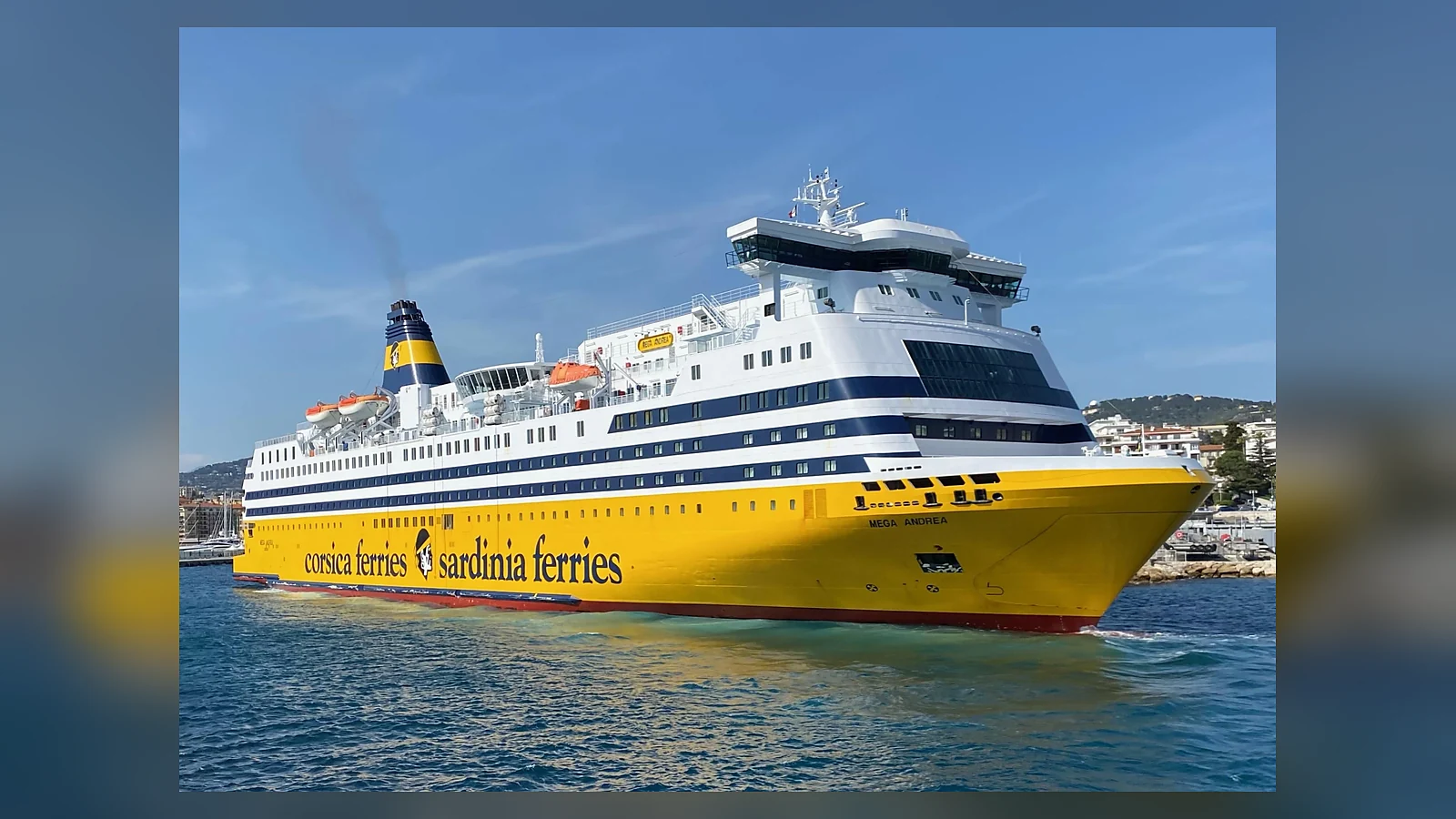
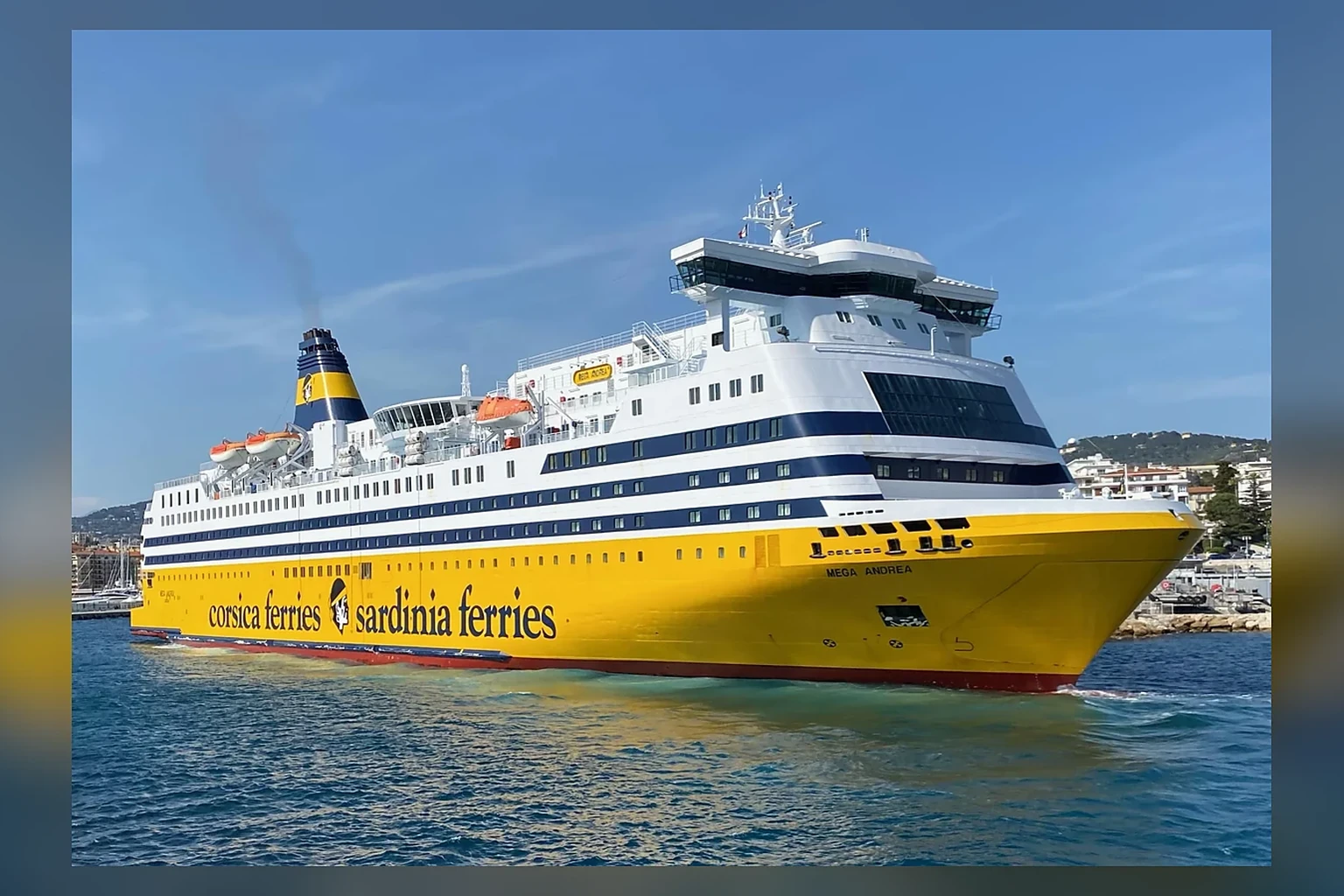
Yellow ferries linking mainland Europe with Mediterranean islands
Corsica Ferries traces its history to 1968, when Pascal P. Lota founded Corsica Line in Bastia and
began ferry services between Corsica and Italy. The network later expanded to French mainland ports
and Sardinia, creating the familiar Corsica Ferries and Sardinia Ferries operation built around
large yellow passenger-and-vehicle ferries.
For travellers, the operator's main strength is flexibility between mainland gateways and island
ports. Corsica can be reached from French ports such as Toulon, Nice and Sète and from Italian
gateways including Livorno and Savona. Sardinia has services from both Italy and France, while the
2026 programme also promotes Balearic connections from Toulon and Sète.
Crossings range from relatively short daytime journeys such as Livorno–Bastia to overnight routes
where a private cabin can transform the travel experience. That variety makes the assigned route and
departure time just as important as the headline fare when comparing options.
Planning note: Mediterranean schedules vary considerably by season. Some routes operate daily or several times per day in peak periods, while newer Sète and Balearic links may run only on selected days.
France, Italy and the islands
Corsica Ferries routes
The operator serves many port combinations. These representative routes show the main travel
patterns across Corsica, Sardinia and the Balearic network rather than attempting to reproduce a
live seasonal timetable.
Core Corsica routeNight sailing available
France
Toulon
Corsica
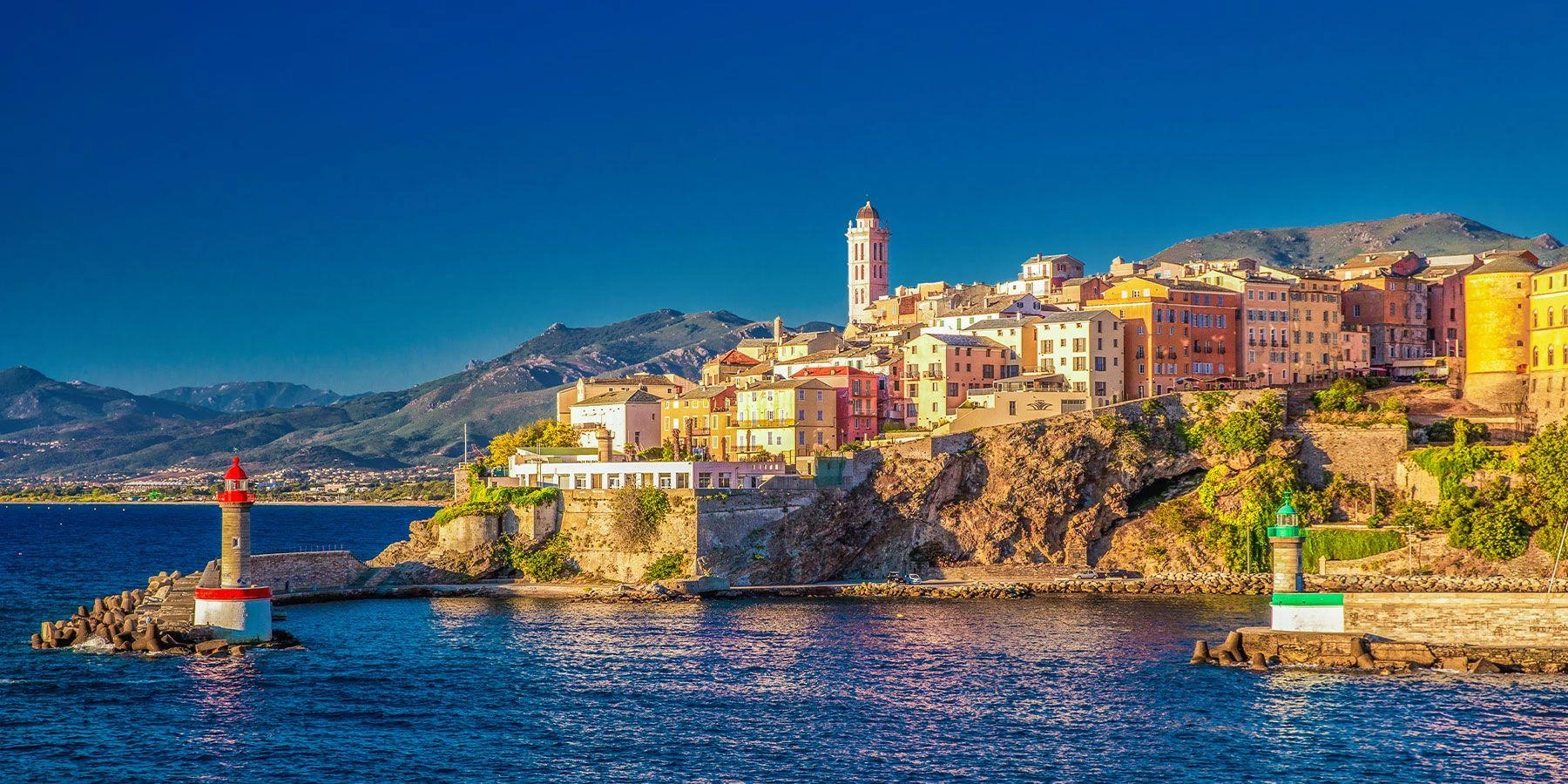
Bastia
Toulon is one of Corsica Ferries' most important French gateways. The operator currently promotes
regular overnight Bastia departures, making a cabin useful for travellers who want to arrive rested
for an island road trip.
This route connects southern France directly with northwest Sardinia, avoiding the need to drive
into Italy before boarding. Porto Torres is well placed for Alghero, Stintino and the island's
northwestern coast.
Sète has become an increasingly useful Corsica Ferries gateway, with 2026 departures promoted to
Corsica, Sardinia and the Balearics. The Sète–Alcúdia link gives southern France another direct
route to Majorca.
Newer French Mediterranean gateway
Direct access to northern Majorca
Limited weekly frequency makes date flexibility valuable
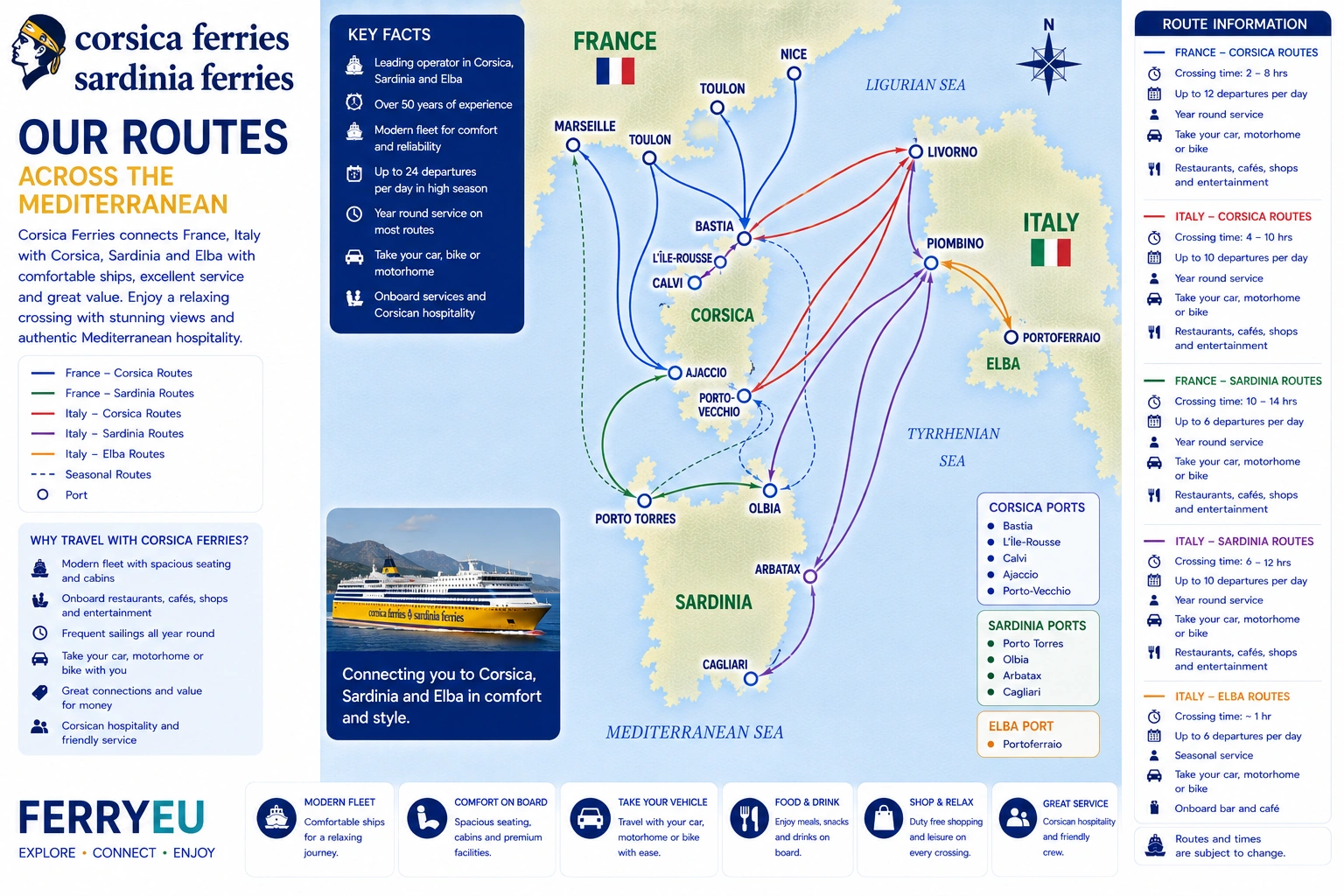
This schematic summarises the three representative current route groups described above. It is not a
complete network map or timetable; the live operator booking result is definitive.
For planning with Corsica Ferries, use the map to compare the representative route groups above,
including Toulon–Bastia, Toulon–Porto Torres, Sète–Alcúdia. It is most useful for judging which
departure or arrival point best fits the rest of the journey rather than as a substitute for the
live timetable.
After choosing the most practical route, compare the live Corsica Ferries sailing for departure
time, calling pattern, passenger requirements and the facilities or accommodation shown for that
service. The complete itinerary and arrival location can matter more than a small difference in the
headline fare.
Frequencies can change substantially by season, and some port combinations operate only on selected
days. Avoid planning a tight onward connection solely from an illustrative map.
Illustrative Corsica Ferries route map. Routes and operating patterns can change; check the live timetable for your date.
Ports and places
Mediterranean ports worth building a trip around
Corsica Ferries' network works particularly well for road trips because the mainland and island
ports each open a different region. Choosing the right port can save hours of driving before or
after the crossing.
French mainland gateway
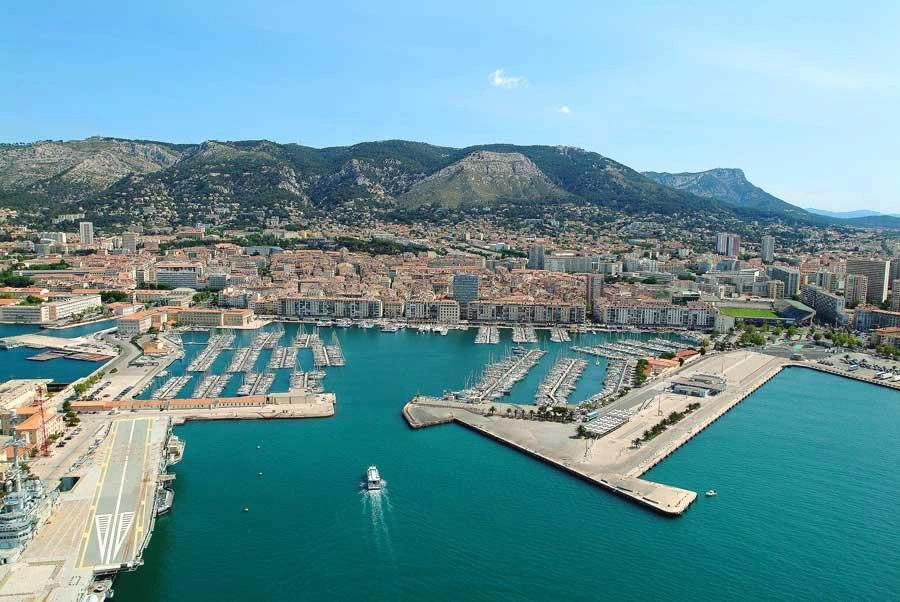
Toulon
Toulon is one of Corsica Ferries’ principal French gateways and can be a practical starting point
for vehicle travel to Corsica or Sardinia.
Corsica has several ferry ports and Sardinia has more than one useful northern gateway. A slightly
longer sailing can still produce the easier overall journey if it reduces driving after arrival.
Day crossing or overnight
Seats and cabins for Mediterranean crossings
Corsica Ferries offers different accommodation styles depending on route, ship and departure time. A
daytime crossing can work well with seating or a day cabin, while overnight sailings make a private
cabin much more valuable.
Private cabins can make overnight island crossings part of the holiday rather than lost travel time. Higher-category cabins add extra space and comfort on selected ferries and routes.
Reclining seats
Closed passenger spaces with bookable seating are available on supported Mega Express crossings and
provide a straightforward alternative to a private cabin.
Best considered forDay travel and passengers prioritising value
Day cabins
Exclusive cabins can be reserved for daytime crossings on suitable sailings, giving a private room
for rest, children or a quieter journey away from the main lounges.
Best considered forFamilies and longer daytime crossings
Inside and outside cabins
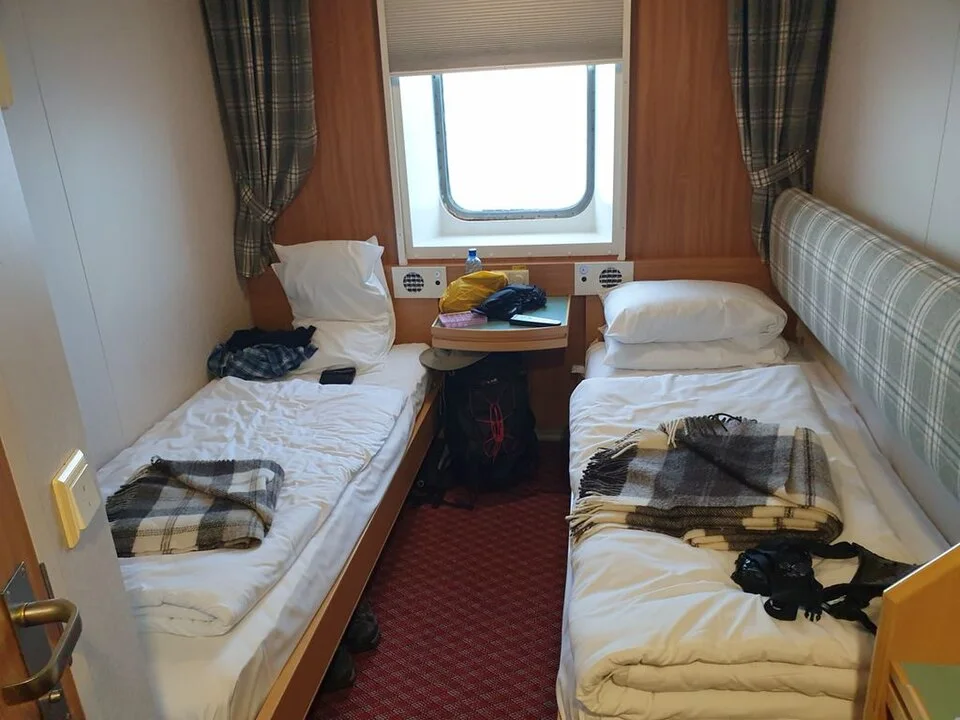
Night sailings can offer inside cabins without a porthole and outside cabins with a sea-facing
window. Availability depends on the assigned ferry.
Best considered forOvernight routes to Corsica, Sardinia and the Balearics
Luxury cabins
Selected ferries offer higher-category accommodation with features such as a double bed, sitting
area and television, subject to vessel configuration.
Best considered forCouples and passengers wanting a more private crossing
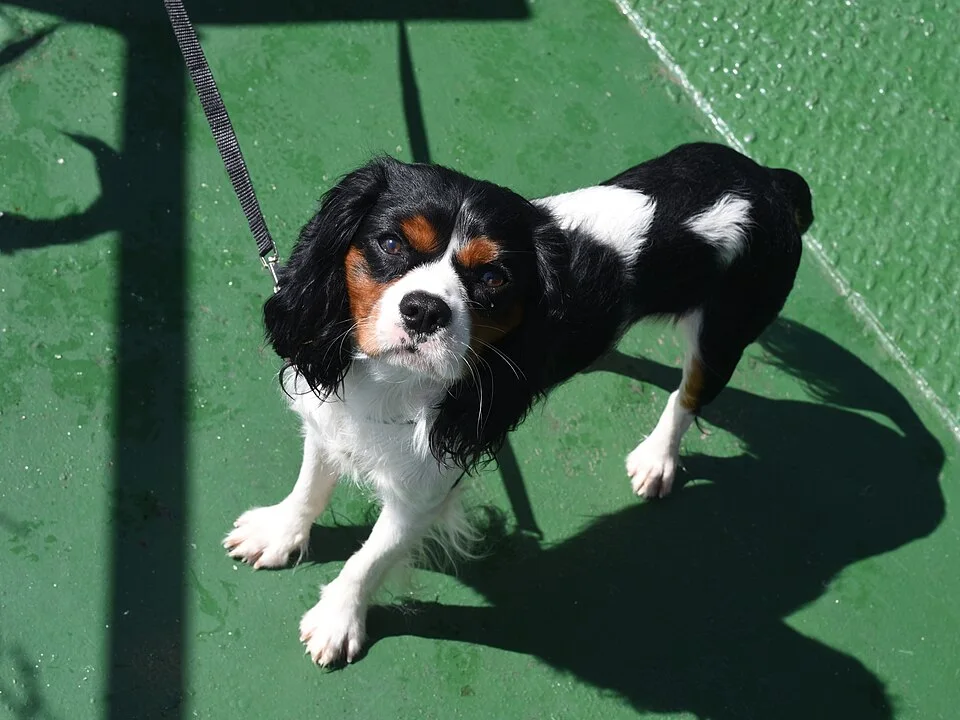
Pet-friendly cabins
Special cabins with practical flooring are offered on many ferries for passengers travelling with
dogs. These should be reserved early because the number available is limited.
Best considered forDog owners on longer and overnight sailings
Accessible cabins
Adapted cabins are available on most ferries for passengers with reduced mobility. Assistance needs
should be declared during the reservation.
Best considered forPassengers needing wheelchair-accessible accommodation
Accommodation tip
Check the departure time before choosing a fare. A cabin that seems unnecessary on a short daytime
route can be the most useful purchase on a night sailing that arrives early the following morning.
During the crossing
Restaurants, cafés, lounges, shops and sea views
Corsica Ferries' larger passenger ships are designed for both day and overnight journeys, with
dining and relaxation facilities that vary by vessel.
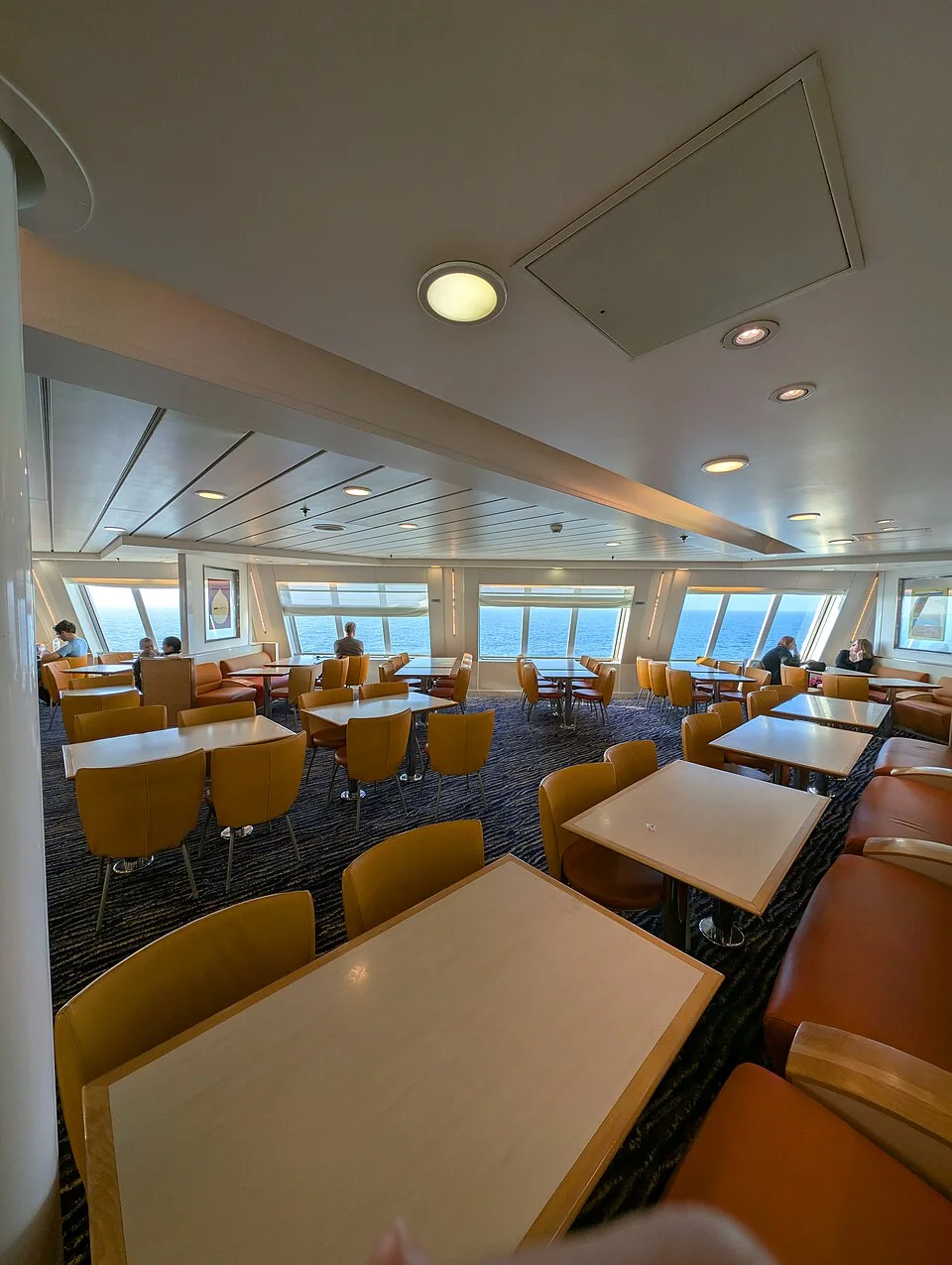
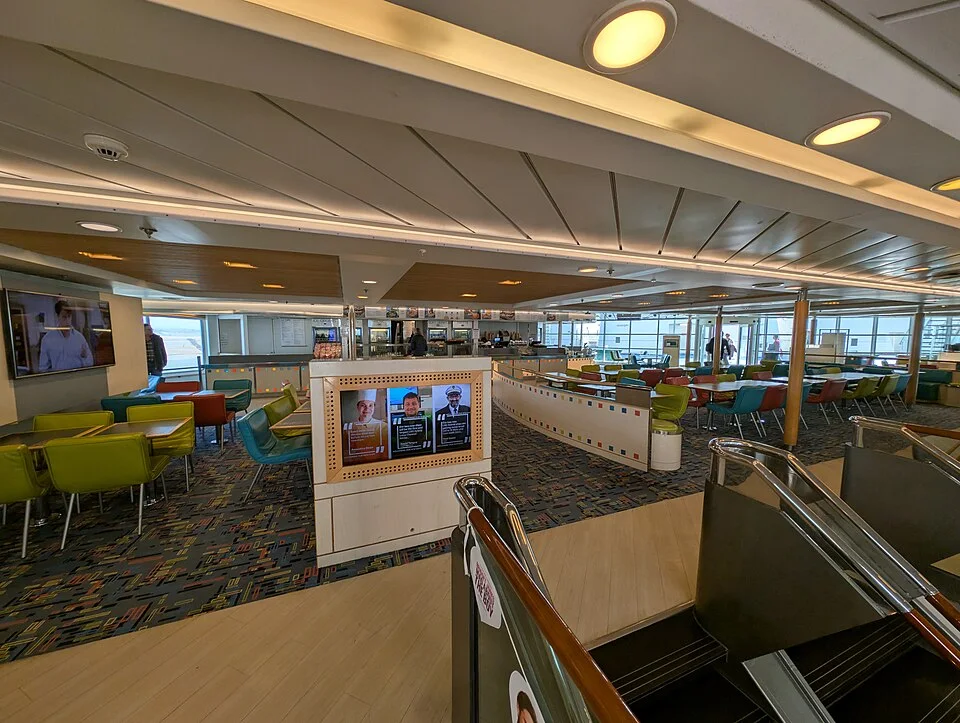
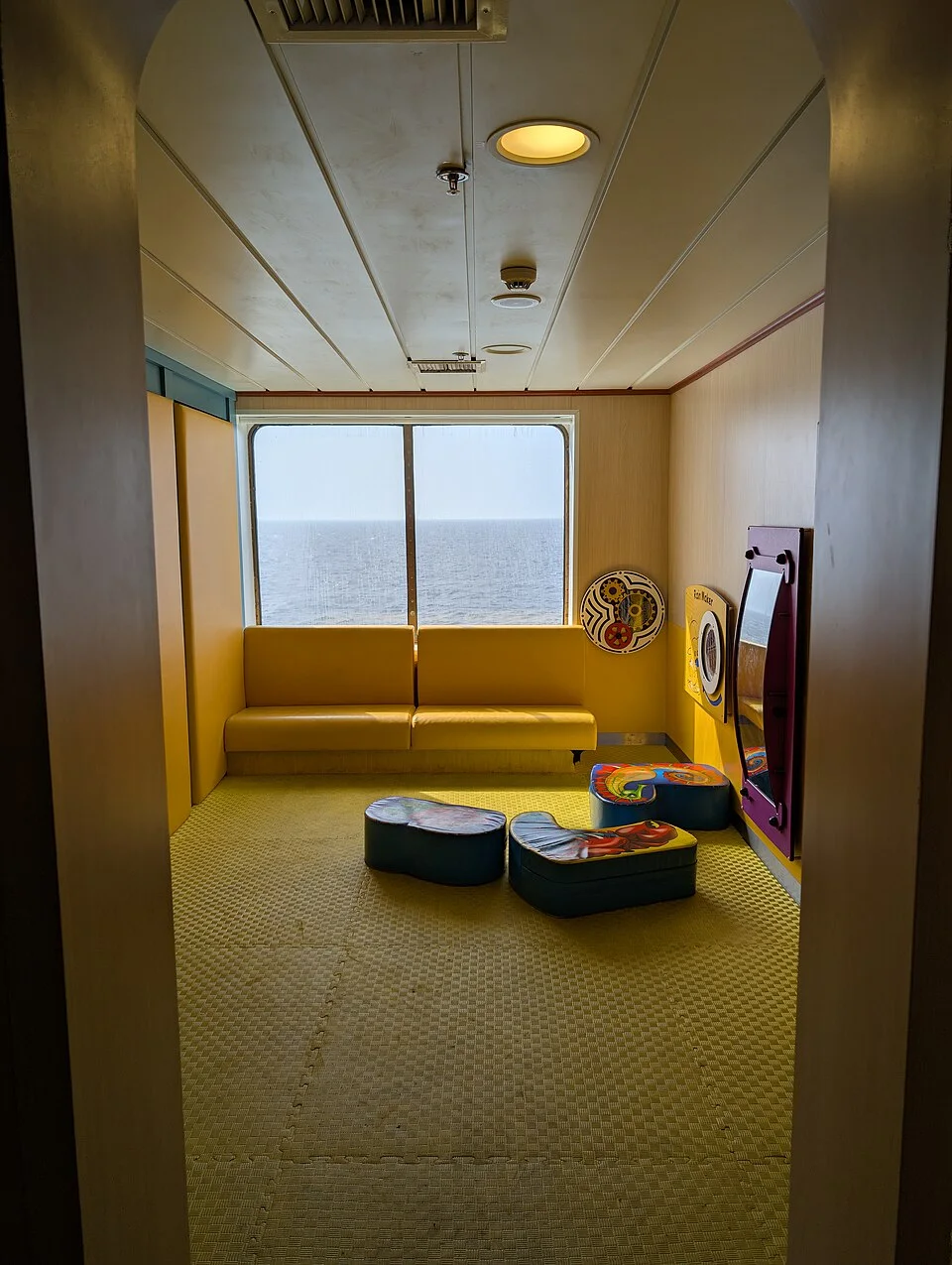
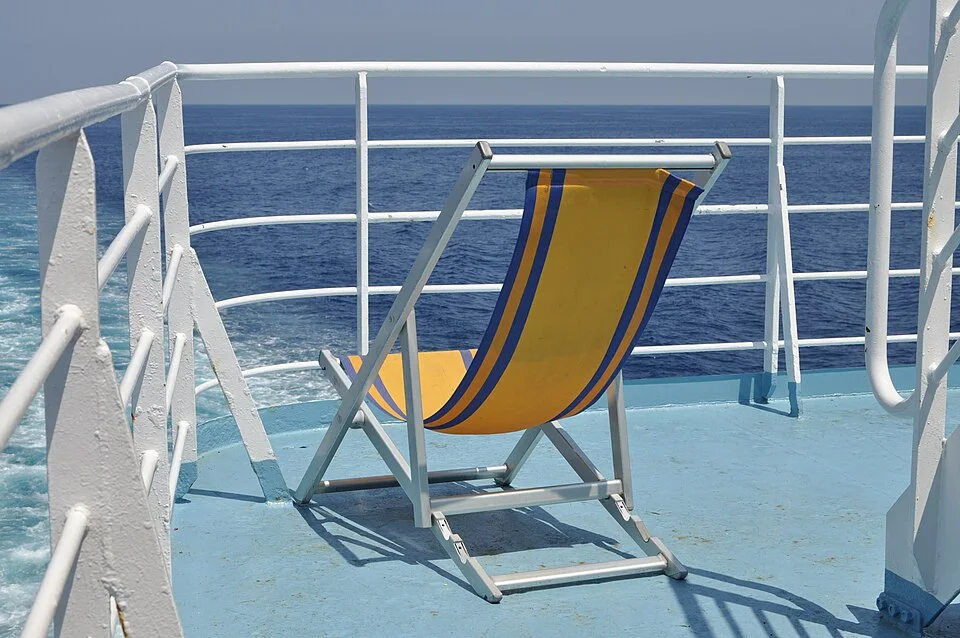
Restaurant choices can range from self-service meals to brasserie-style dining. Coffee shops and lounge areas offer informal places to spend a daytime crossing. Selected ships provide children's areas and family-friendly facilities. Open decks provide Mediterranean views when weather and operating conditions permit.
Restaurants and self-service
Dining concepts include self-service restaurants, brasserie-style meals and casual food choices. The
exact outlets depend on the ship.
Bars and coffee shops
Coffee, cold drinks, snacks and evening drinks are available in café and bar areas on supported ferries.
Wi-Fi and mobile connectivity
Paid Wi-Fi packages are promoted onboard, while mobile coverage at sea can depend on route and
distance from the coast.
Shops
Onboard boutiques provide travel essentials, gifts and selected retail products, with range varying
by vessel and itinerary.
Family facilities
Selected ferries include children's play or game areas, helping families break up longer
Mediterranean crossings.
Decks and relaxation spaces
Lounges and open decks provide places to read, rest and enjoy the crossing; some ships also
advertise seasonal pool areas.
Images in this section are from EUFerry’s general ferry-travel library and illustrate facility
types; they are not presented as photographs of a particular Corsica Ferries vessel. Confirm the
facilities on the ship assigned to your sailing.
Take the road trip across the sea
Cars, motorhomes, bicycles and pets
The network is particularly useful for travellers bringing their own vehicle to an island. Accurate
vehicle dimensions and advance pet information are important because car-deck and pet-cabin capacity
are finite.
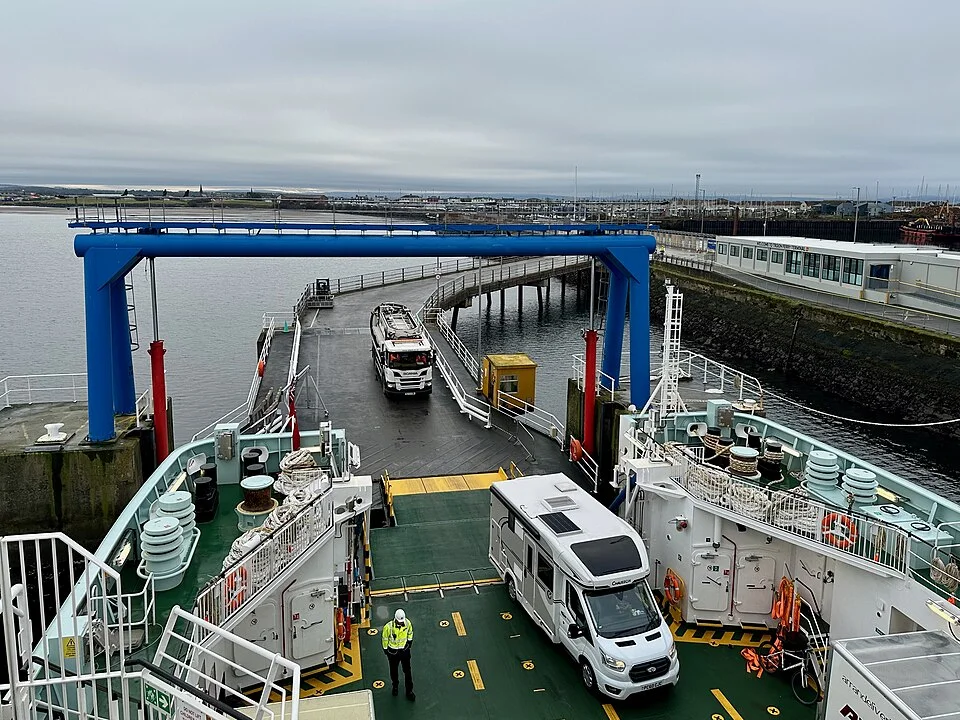
Motorhomes, caravans and trailers need accurate total dimensions in the reservation. Electric and alternative-fuel vehicles must comply with the operator’s current safety and declaration rules. Pets should be declared in advance and travel in the accommodation or areas permitted for the selected sailing.
Cars, motorhomes and caravans
Book the complete vehicle dimensions, including roof boxes, bicycle racks, tow bars and trailers.
Incorrect measurements can create a car-deck capacity problem at boarding.
Trailers and caravans are entered as towed vehicles
Camper vans cannot be connected to electricity onboard
Up to three permitted cooking/heating gas cylinders are subject to published limits
Bicycles and motorcycles
A reservation can contain one car, motorcycle or bicycle as its vehicle. If two passengers each
bring a motorcycle or bicycle, separate tickets may be required.
Declare the correct vehicle category when booking
Roof-mounted bicycles change the vehicle's overall height
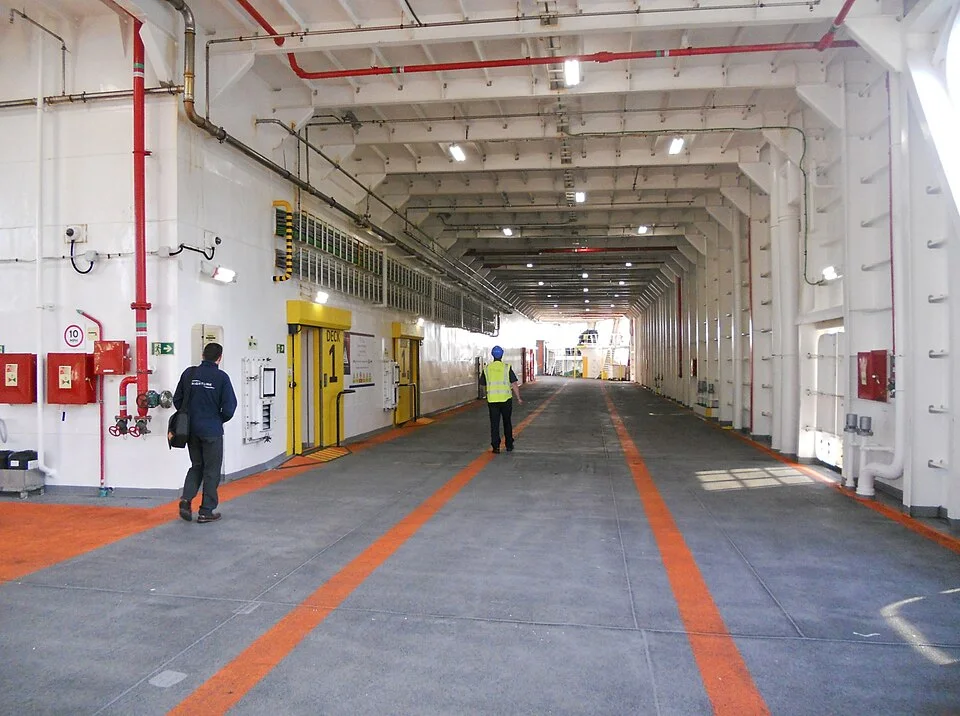
Follow crew instructions for vehicle-deck positioning
Travelling with pets
Pets must be declared and paid for in advance. Dogs may use designated onboard areas and suitable
pet cabins, while cats and other small pets remain in a carrier.
Dogs are kept on a leash and may need a muzzle
Pets must not remain in the vehicle during the crossing
International journeys require the correct EU pet documentation
Reduced mobility and assistance
Request assistance when booking so the port and ship can plan suitable boarding, car-deck
positioning and access to lifts or adapted cabins.
Identify yourself to port staff before boarding operations
Adapted cabins are available on most ferries
Parking near a lift can be arranged where appropriate
Before you reach the port
Check-in, documents and boarding
Online check-in can simplify the port experience, but it does not remove the need to arrive before
the published deadline with correct passenger, vehicle and pet information.
Online check-in opens seven days before departure, allowing passengers to confirm details and receive a boarding pass. Vehicle passengers should be at the terminal at least one hour before departure, with more time sensible in peak periods.
Recommended travel sequence
When booking
Enter every passenger and vehicle accurately
Use the correct identity information and vehicle category. Include overall height and length once
roof racks, bicycle carriers, trailers or other accessories are fitted.
7 days before departure
Online check-in opens
Review passenger identity details, vehicle information and accommodation, then save or print the
boarding pass.
90 minutes before
A sensible vehicle arrival target
The official minimum is one hour for vehicle passengers, but extra time helps during busy holiday
periods, unfamiliar ports or assistance boarding.
60 minutes before
Vehicle passengers should be at the terminal
Late arrival can lead to refused boarding. Follow any earlier deadline specifically stated on the
booking or sailing information.
30 minutes before
Latest standard foot-passenger arrival
Passengers without a vehicle should be at the terminal no later than 30 minutes before departure.
Is this the right crossing?
When Corsica Ferries can be a practical choice
Corsica Ferries is particularly useful for travellers who want to take their own vehicle onto
Mediterranean islands. The network's multiple mainland gateways can be combined with different
arrival ports, allowing the ferry to fit naturally into a wider France or Italy road trip.
For Corsica, compare Bastia with Ajaccio, Île-Rousse, Porto-Vecchio or Propriano according to where
you plan to stay. For Sardinia, Porto Torres and Golfo Aranci open different sides of the island. A
longer sea crossing can sometimes save more time overall if it avoids a major drive after arrival.
The 2026 Sète and Balearic programme also gives travellers more freedom to build multi-destination
Mediterranean itineraries. Because those services can be limited to selected days, flexibility with
travel dates is especially valuable.
Common planning questions
Corsica Ferries FAQs
Where does Corsica Ferries sail?
Corsica Ferries links French and Italian mainland ports with Corsica and Sardinia and also operates
selected Balearic Island services. Main mainland gateways include Toulon, Nice, Sète, Livorno and
Savona, with route availability varying by season.
How early should I arrive for Corsica Ferries?
Corsica Ferries asks vehicle passengers to be at the terminal at least one hour before departure and
foot passengers at least 30 minutes before departure. Arriving earlier is sensible in peak periods
or when travelling with a large vehicle or requiring assistance.
Can I check in online with Corsica Ferries?
Yes. Online check-in opens seven days before departure and can provide a digital boarding pass.
Passengers should confirm identity details, vehicle information and booked accommodation before
completing check-in.
Can I take a car, motorhome or caravan?
Yes. Cars, motorcycles, camper vans, caravans and trailers can be booked subject to deck capacity.
Accurate overall dimensions, including roof boxes, racks, tow bars and trailers, are important.
Are cabins available on Corsica Ferries?
Yes. Day cabins and night cabins are offered on suitable sailings, with inside, outside, luxury,
pet-friendly and reduced-mobility options depending on the vessel and availability.
Can pets travel with Corsica Ferries?
Yes. Pets must be declared in the booking. Dogs can accompany owners in designated public areas and
pet-friendly cabins on supported ships, while cats and other small animals must remain in a suitable
carrier. Pets must not be left in vehicles during the crossing.
Can I take a bicycle on Corsica Ferries?
Yes. Bicycles can be booked as the vehicle on a passenger reservation. Corsica Ferries allows only
one car, motorcycle or bicycle per ticket, so separate bookings can be needed when travellers have
more than one vehicle.
Does Corsica Ferries sail to Sardinia?
Yes. Current services include routes such as Livorno–Golfo Aranci and French mainland connections to
Porto Torres, with seasonal frequency varying by route.
Does Corsica Ferries sail to the Balearic Islands?
Yes. Corsica Ferries currently promotes Balearic services from Toulon and Sète to Alcúdia in
Majorca, with additional 2026 promotion of Majorca and Menorca departures from those French ports.
Is assistance available for passengers with reduced mobility?
Yes. Assistance should be requested during booking. Adapted cabins are available on most ferries,
and passengers requiring suitable vehicle positioning or lift access should identify themselves to
port staff before boarding.
Facility photographs are examples; the vessels shown are identified below. Facilities vary by ship.
250120 1029 MV Glen Sannox loading, Port of Troon ferry terminal.jpg — Dave souza; CC BY-SA 4.0. Source: https://commons.wikimedia.org/wiki/File:250120_1029_MV_Glen_Sannox_loading,_Port_of_Troon_ferry_terminal.jpg. Licence: https://creativecommons.org/licenses/by-sa/4.0. Resized for display.
Cabin on MV Hrossey - geograph.org.uk - 7254252.jpg — Oliver Dixon; CC BY-SA 2.0. Source: https://commons.wikimedia.org/wiki/File:Cabin_on_MV_Hrossey_-_geograph.org.uk_-_7254252.jpg. Licence: https://creativecommons.org/licenses/by-sa/2.0. Resized for display.
Cavalier King Charles Spaniel (49687542022).jpg — Chris Hunkeler from Carlsbad, California, USA; CC BY-SA 2.0. Source: https://commons.wikimedia.org/wiki/File:Cavalier_King_Charles_Spaniel_(49687542022).jpg. Licence: https://creativecommons.org/licenses/by-sa/2.0. Resized for display.
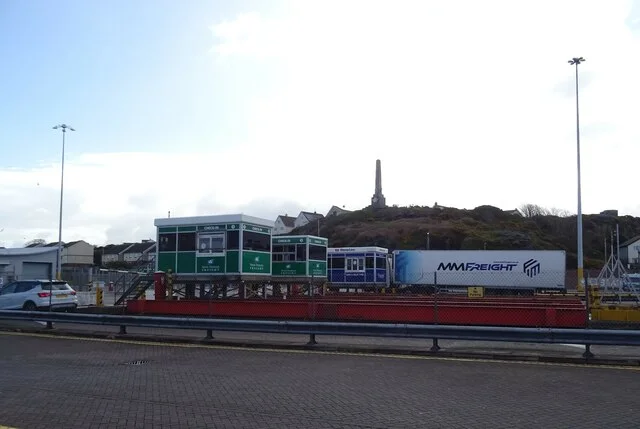
Check-in, Holyhead Ferry Terminal - geograph.org.uk - 7757104.jpg — JThomas; CC BY-SA 2.0. Source: https://commons.wikimedia.org/wiki/File:Check-in,_Holyhead_Ferry_Terminal_-_geograph.org.uk_-_7757104.jpg. Licence: https://creativecommons.org/licenses/by-sa/2.0. Resized for display.
Deckchair on ferry.jpg — User:Amada44; CC BY 3.0. Source: https://commons.wikimedia.org/wiki/File:Deckchair_on_ferry.jpg. Licence: https://creativecommons.org/licenses/by/3.0. Resized for display.
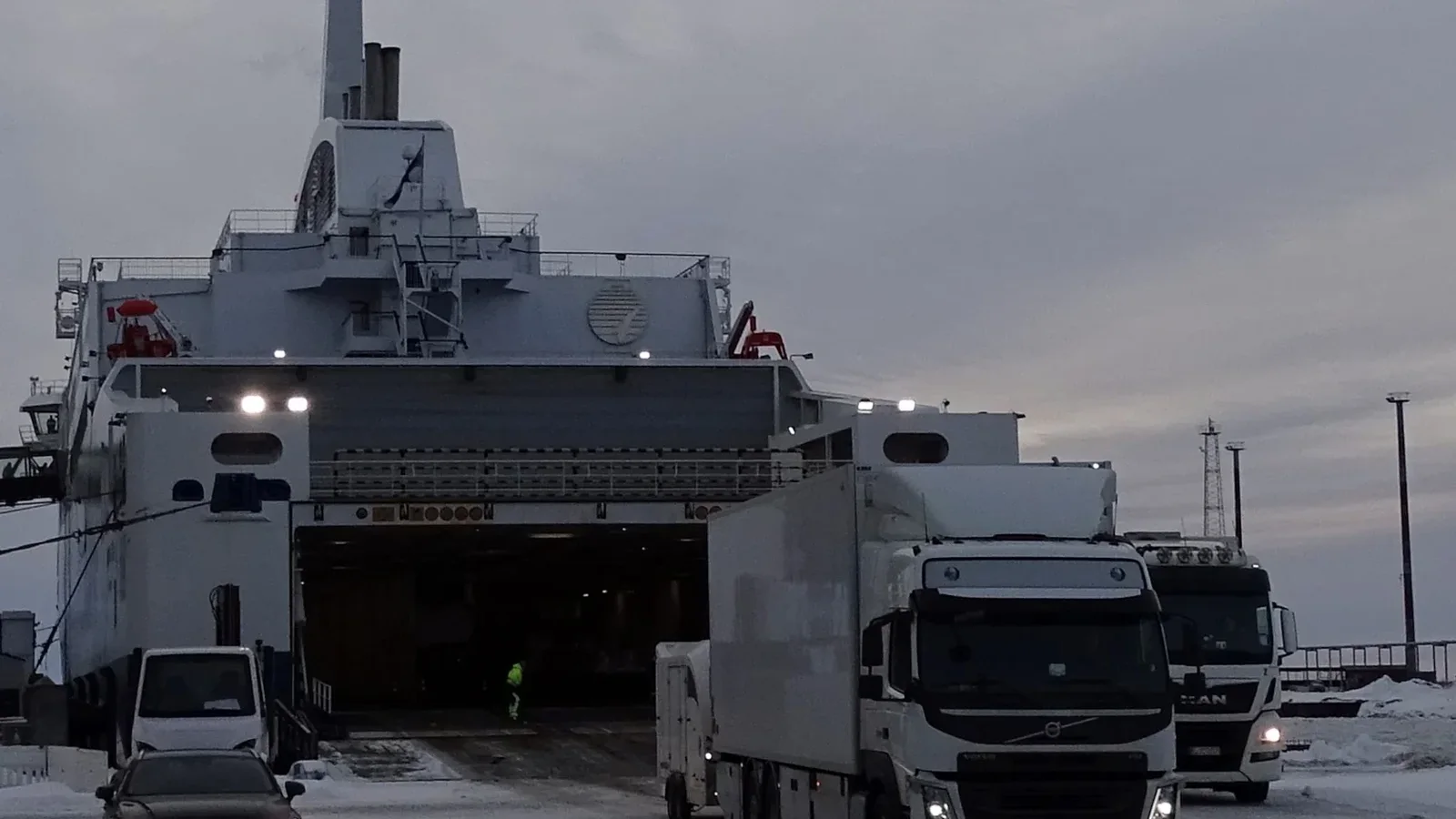
Vehicle deck on the Victoria of Wight (Wightlink ferry).jpg — ITookSomePhotos; CC BY-SA 4.0. Source: https://commons.wikimedia.org/wiki/File:Vehicle_deck_on_the_Victoria_of_Wight_(Wightlink_ferry).jpg. Licence: https://creativecommons.org/licenses/by-sa/4.0. Resized for display.



 France & Italy
 Corsica & Sardinia
 Balearic Islands