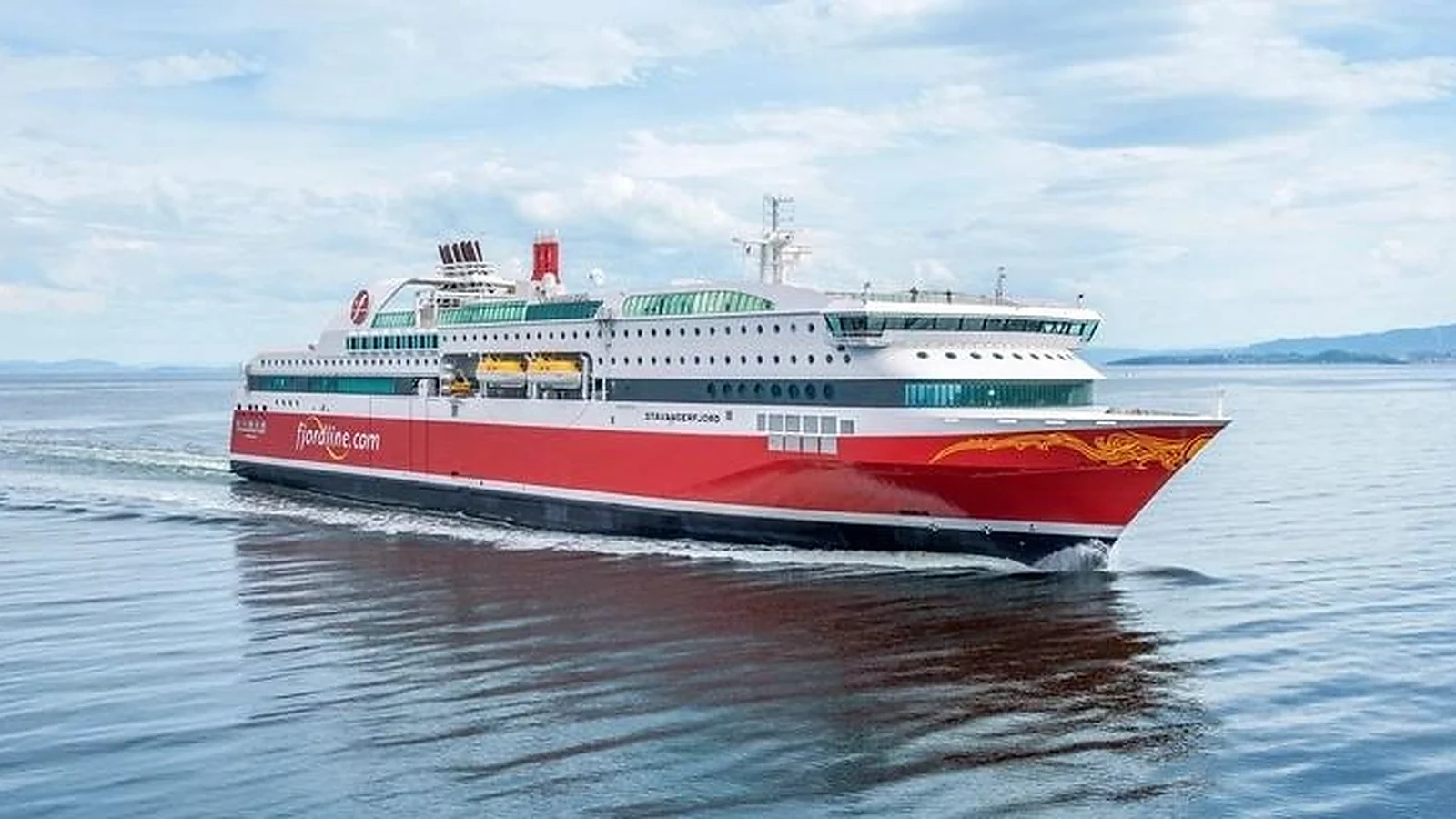
Explore Fjord Line routes with EUFerry, compare the journeys relevant to your trip and check current
passenger, vehicle and accommodation availability for your dates.
Hirtshals Fast & overnight crossings Western Norway
Passenger and vehicle ferries between Denmark and Norway
About the operator
A direct sea route from northern Denmark to Norway’s south and west coasts
Fjord Line links Hirtshals in northern Denmark with Kristiansand, Stavanger and Bergen in Norway.
The network combines a fast seasonal catamaran with conventional cruise ferries, giving travellers a
choice between a short high-speed crossing and longer journeys with cabins, restaurants and
overnight accommodation.
The Hirtshals–Kristiansand route is the most flexible product. Fjord FSTR covers the crossing in
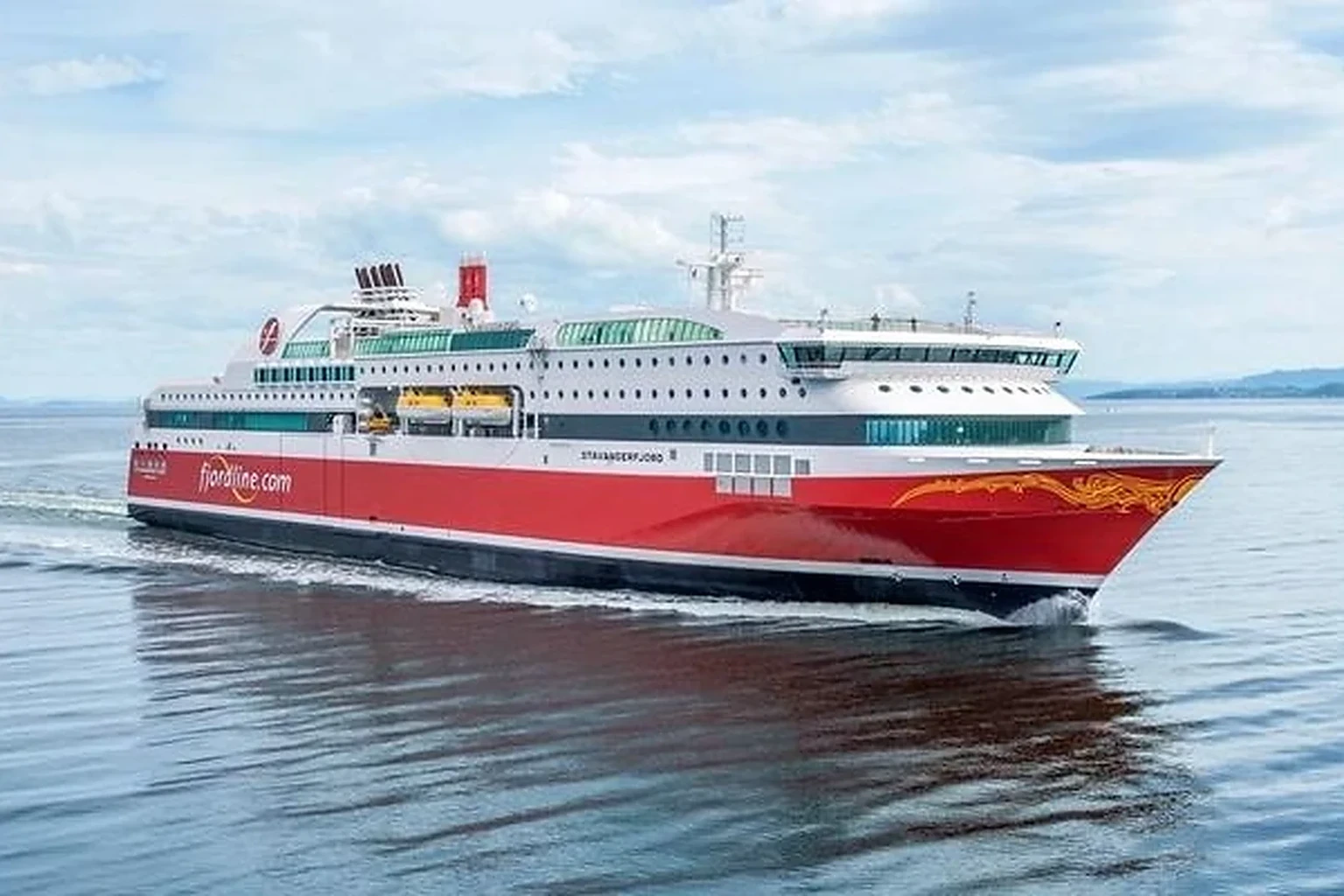
about 2 hours 25 minutes during its operating season, while MS Stavangerfjord and MS Bergensfjord
provide an approximately 3 hour 55 minute conventional alternative. The same cruise ferries continue
overnight to Stavanger and Bergen.
For road trips, the choice of Norwegian arrival port can remove substantial driving. Kristiansand
suits southern Norway, Stavanger opens the way to Rogaland and the Lysefjord region, while Bergen is
a natural gateway to the fjord country and western mountain routes.
Planning note: Fjord FSTR and the cruise ferries are different travel products. Compare crossing time, cabin or seat requirements, pet arrangements and onboard facilities for the actual vessel shown on your date.
Denmark to Norway
Fjord Line routes
Fjord Line’s passenger network is concentrated around Hirtshals. The short Kristiansand crossing has
both fast and conventional options, while Stavanger and Bergen are reached on the overnight
west-coast cruise-ferry service.
Daily / seasonal extra frequencySouthern Norway
Denmark
Hirtshals
Norway
Kristiansand
This is Fjord Line’s shortest international route. Fjord FSTR takes about 2 hours 25 minutes in
season, while the cruise ferries take about 3 hours 55 minutes and operate year-round.
Fast and conventional ferry choices on many dates
Vehicles including cars, motorhomes and caravans can be booked
FSTR has no cabins; cruise ferries offer cabins and fuller facilities
The overnight Hirtshals–Stavanger crossing takes about 11 hours. It is served by MS Stavangerfjord
and MS Bergensfjord and is useful for travellers heading to Stavanger, Lysefjord and southwest
Norway.
Cabin or Airseat accommodation is required on the overnight route
Restaurants, café, tax-free shopping and lounges are available
Onboard kennels and selected dog-friendly cabins can be booked
The Hirtshals–Bergen journey continues via Stavanger and takes roughly 17–18 hours. It can replace a
long drive across Norway and places travellers directly at the gateway to the western fjords.
Overnight cruise-ferry journey with multiple cabin categories
Vehicle travel works well for extended Norway road trips
Bergen–Stavanger domestic tickets are also sold on relevant sailings
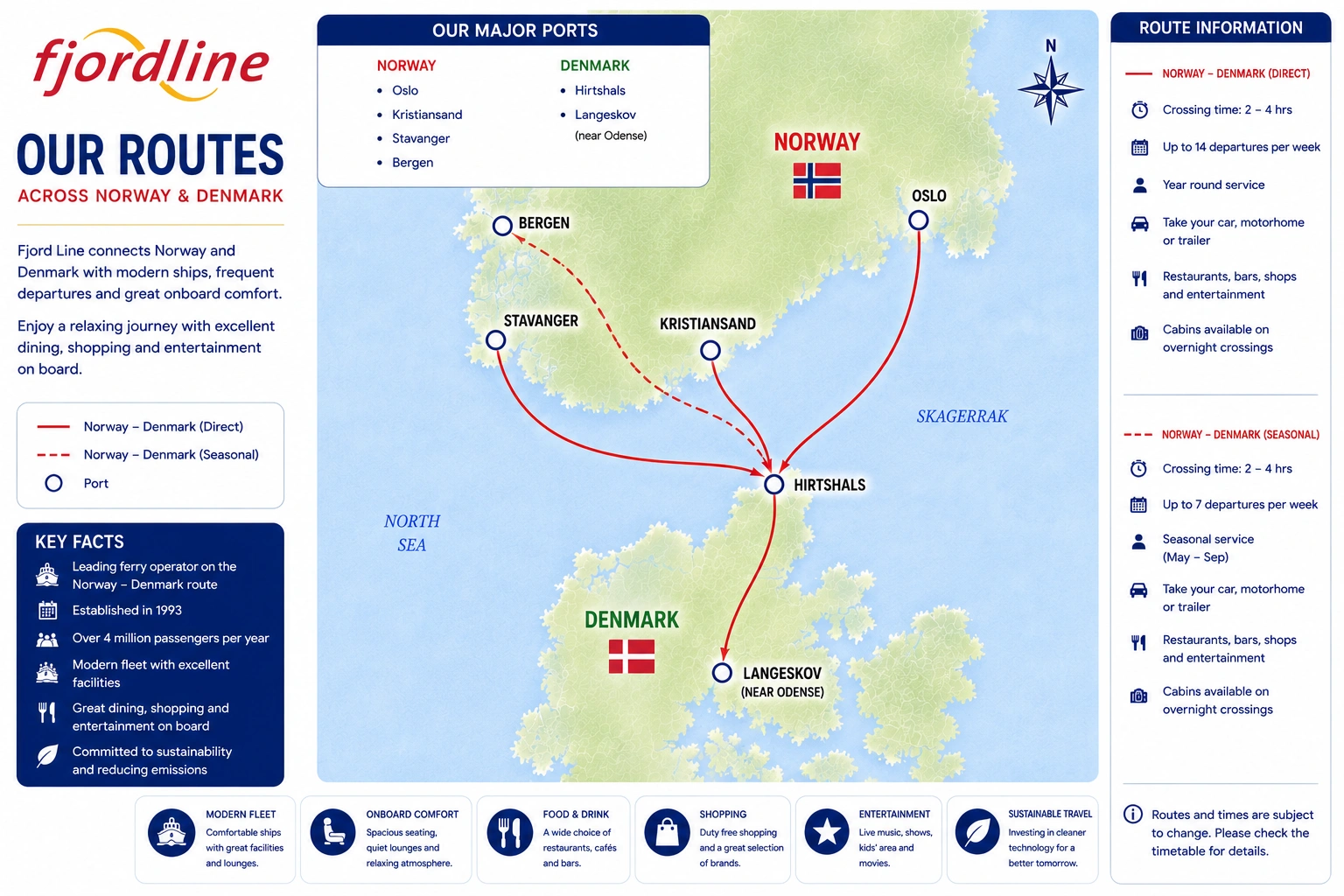
This schematic summarises the three representative current route groups described above. It is not a
complete network map or timetable; the live operator booking result is definitive.
For planning with Fjord Line, use the map to compare the representative route groups above,
including Hirtshals–Kristiansand, Hirtshals–Stavanger, Hirtshals–Bergen. It is most useful for
judging which departure or arrival point best fits the rest of the journey rather than as a
substitute for the live timetable.
After choosing the most practical route, compare the live Fjord Line sailing for departure time,
calling pattern, passenger requirements and the facilities or accommodation shown for that service.
The complete itinerary and arrival location can matter more than a small difference in the headline
fare.
Fjord FSTR is a seasonal high-speed service. The conventional cruise ferries also serve Kristiansand
and continue overnight to Stavanger and Bergen, so two departures on the same corridor can offer
very different onboard products.
Illustrative Fjord Line route map. Routes and operating patterns can change; check the live timetable for your date.
Ports and places
Choose the arrival port that fits your Norway trip
The best Fjord Line route depends on what happens after disembarkation. Southern Norway, the
Stavanger region and Bergen’s fjord country lead to very different road-trip itineraries.
Danish gateway
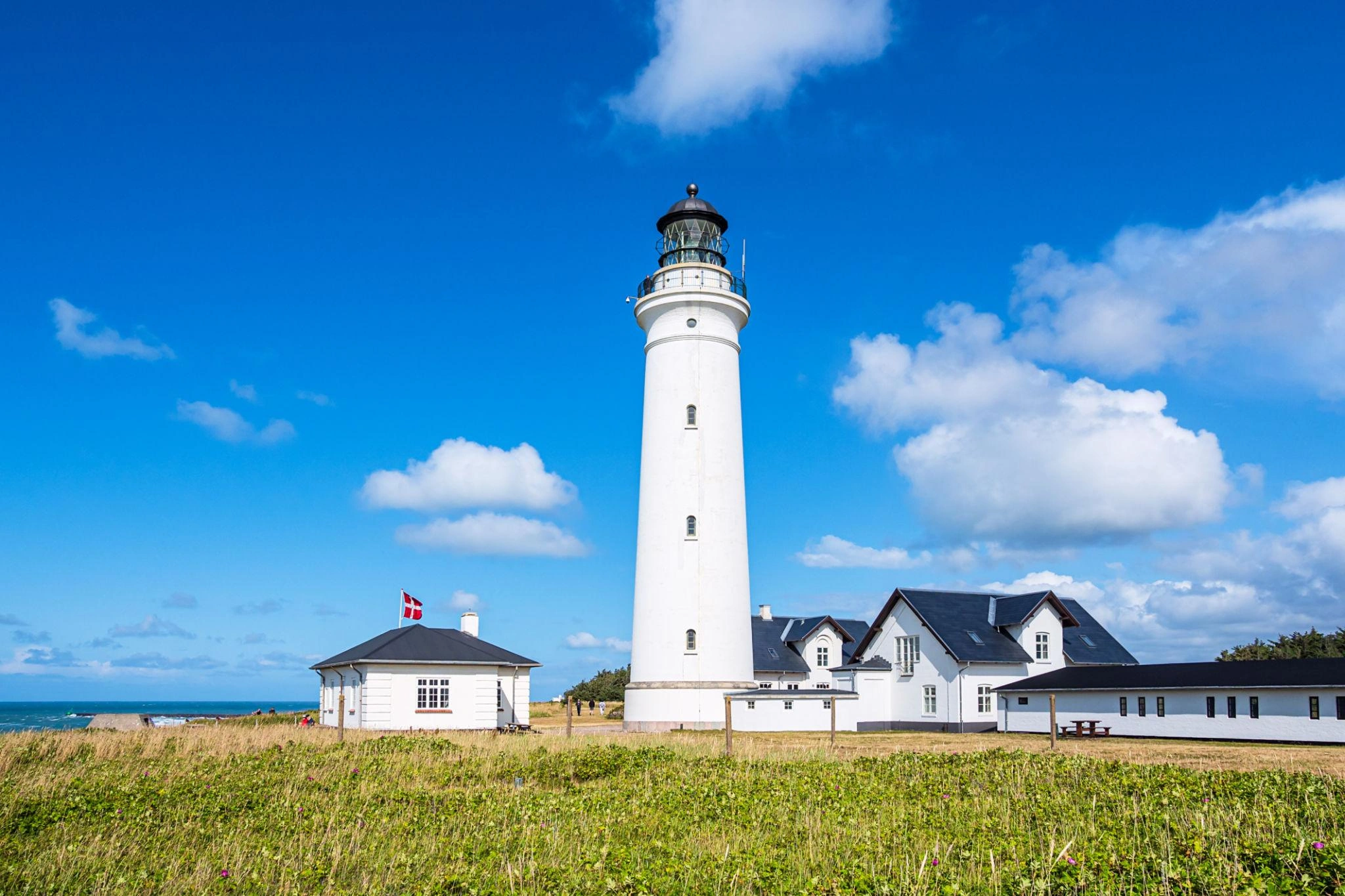
Hirtshals
Fjord Line’s Danish hub sits at the top of Jutland with direct road access from the E39. Allow time
for terminal check-in, vehicle lanes and the correct departure area.
The closest Norwegian port to Hirtshals is a practical entry for Sørlandet, Telemark and road trips
continuing north or west. Multiple ferry products make it the most flexible Fjord Line arrival.
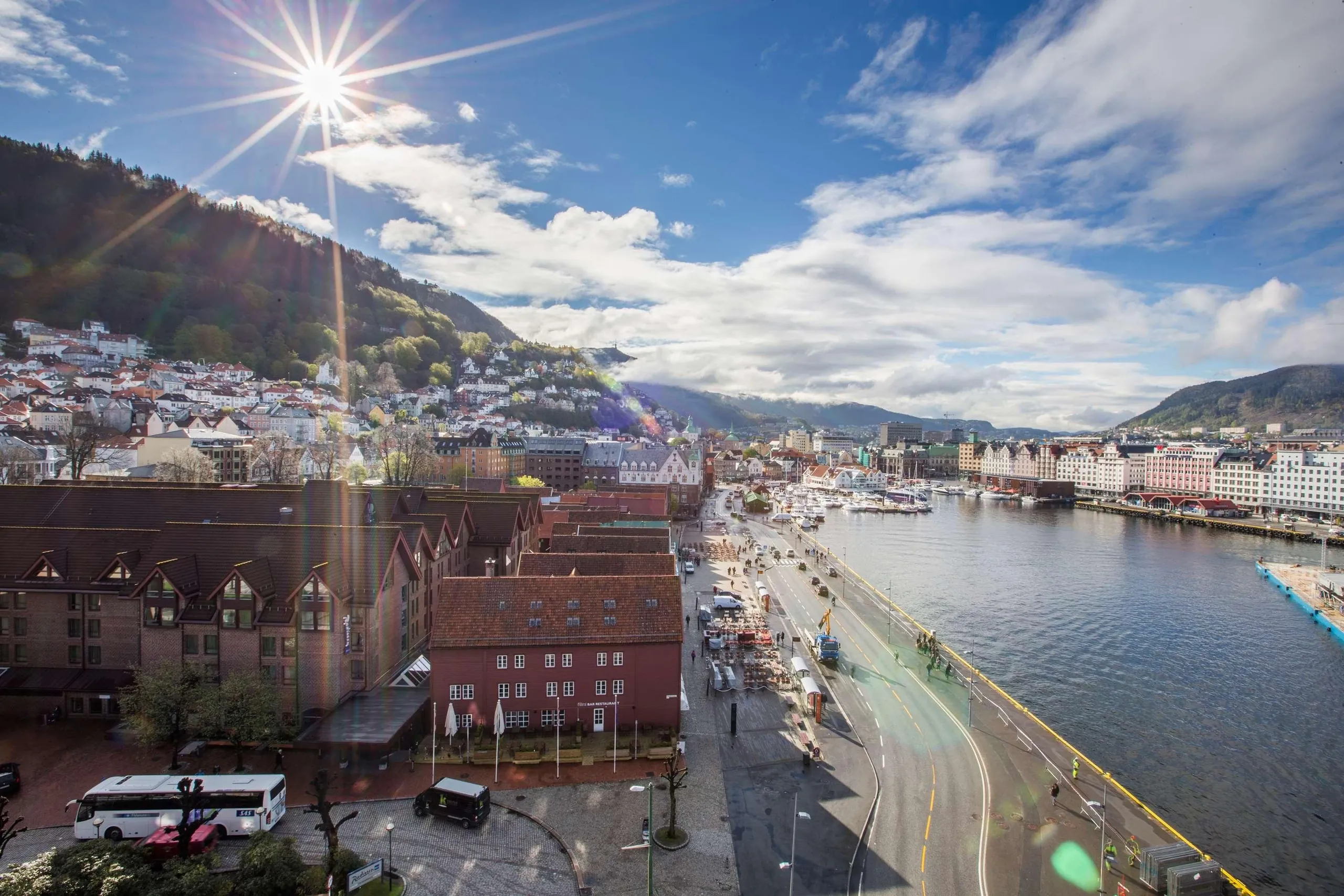
Bergen is a major gateway to western Norway’s fjords and mountains. Arriving by ferry can remove a
long cross-country drive and puts a vehicle traveller directly into the region.
The Stavanger call sits between Hirtshals and Bergen on the overnight cruise-ferry route. Compare
Stavanger and Bergen as arrival points against your first overnight stop; the best ferry fare is not
always the best whole-trip choice.
Sleep or settle in
Cabins, Airseats and fast-ferry seating
Accommodation depends heavily on the vessel. The overnight cruise ferries offer many cabin
categories and reclining Airseats, while Fjord FSTR is a short daytime product with passenger
seating rather than cabins.
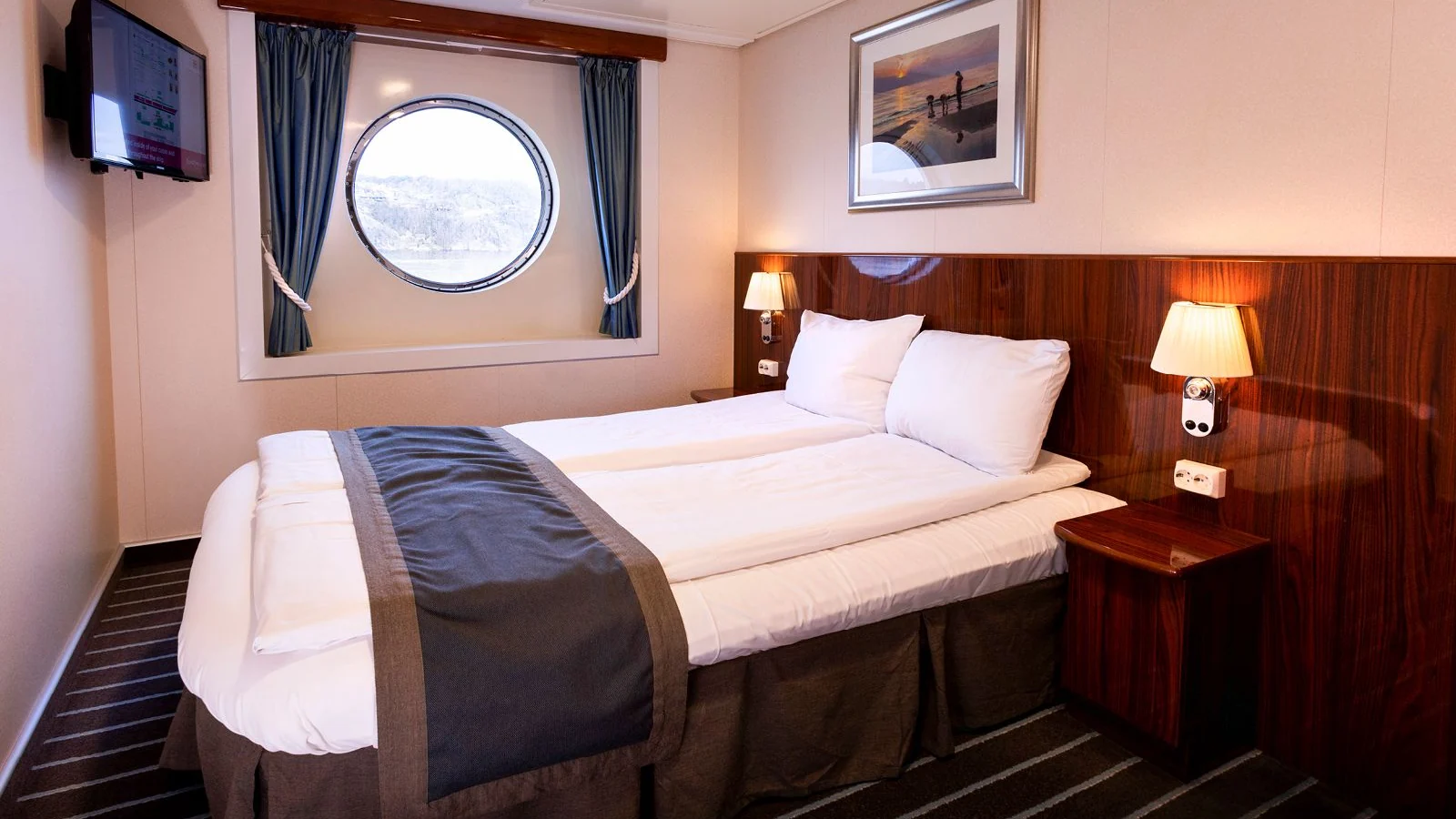
Private cabins are the natural choice for the overnight Stavanger and Bergen journeys. Sea-view, family and premium cabin categories are available on the cruise ferries.
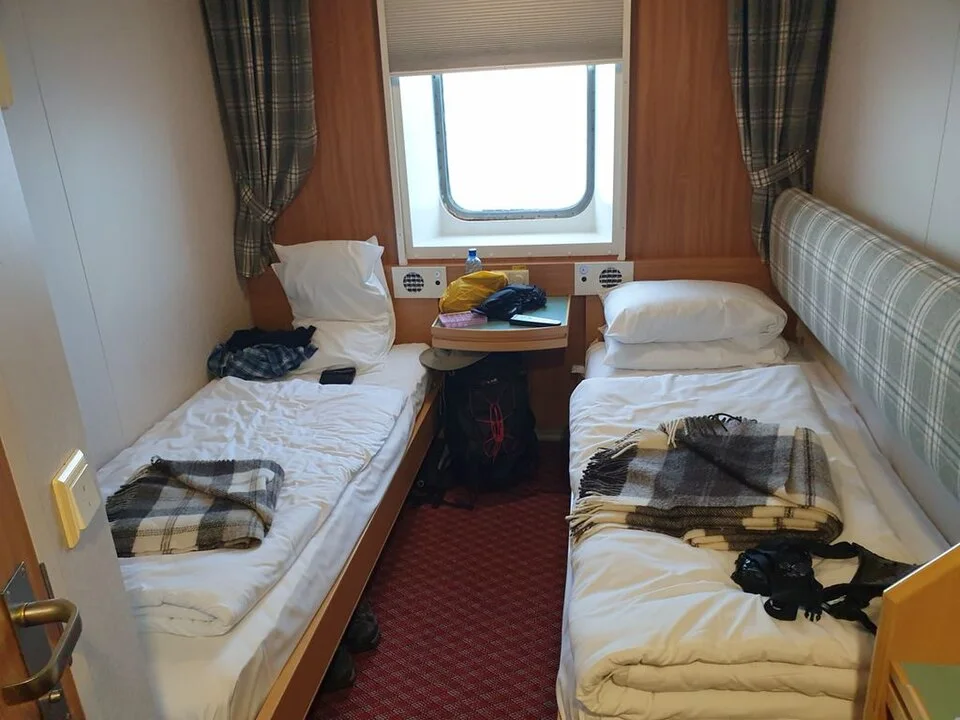
Standard inside cabins
A practical overnight option with beds and a private bathroom. Cabin sizes and berth arrangements
vary by category.
Best considered forValue-focused overnight travel
Sea-view cabins and suites
Outside cabins add natural light, while larger deluxe or suite categories provide more space and
upgraded views on the long west-coast journey.
Best considered forOvernight journeys with extra comfort
Airseat
Airseats are reclining seats in a dedicated area and provide a lower-cost alternative to a cabin on
the overnight route. A cabin or Airseat is required there.
Best considered forBudget-conscious overnight travel
Family Class
Selected family cabins can accommodate larger parties and are positioned as a more practical option
for parents travelling overnight with children.
Best considered forFamilies travelling overnight
Dog-friendly cabins
Selected cabins on MS Stavangerfjord and MS Bergensfjord permit dogs. They are limited and should be
booked well ahead of busy departures.
Best considered forPassengers travelling overnight with dogs
Accessible cabins
The cruise ferries provide wheelchair-accessible cabins with adapted bathrooms. These are limited
and should be arranged directly with Fjord Line in advance.
Best considered forPassengers requiring adapted accommodation
Cabin booking tip
Search early for summer weekends and school-holiday dates. A cabin category can sell out even when
passenger and vehicle space remains available, and a last-minute upgrade should never be assumed.
During the crossing
Restaurants, lounges, shopping and sea views
The cruise ferries provide a fuller overnight passenger experience, while Fjord FSTR concentrates
the essentials into a short high-speed journey.
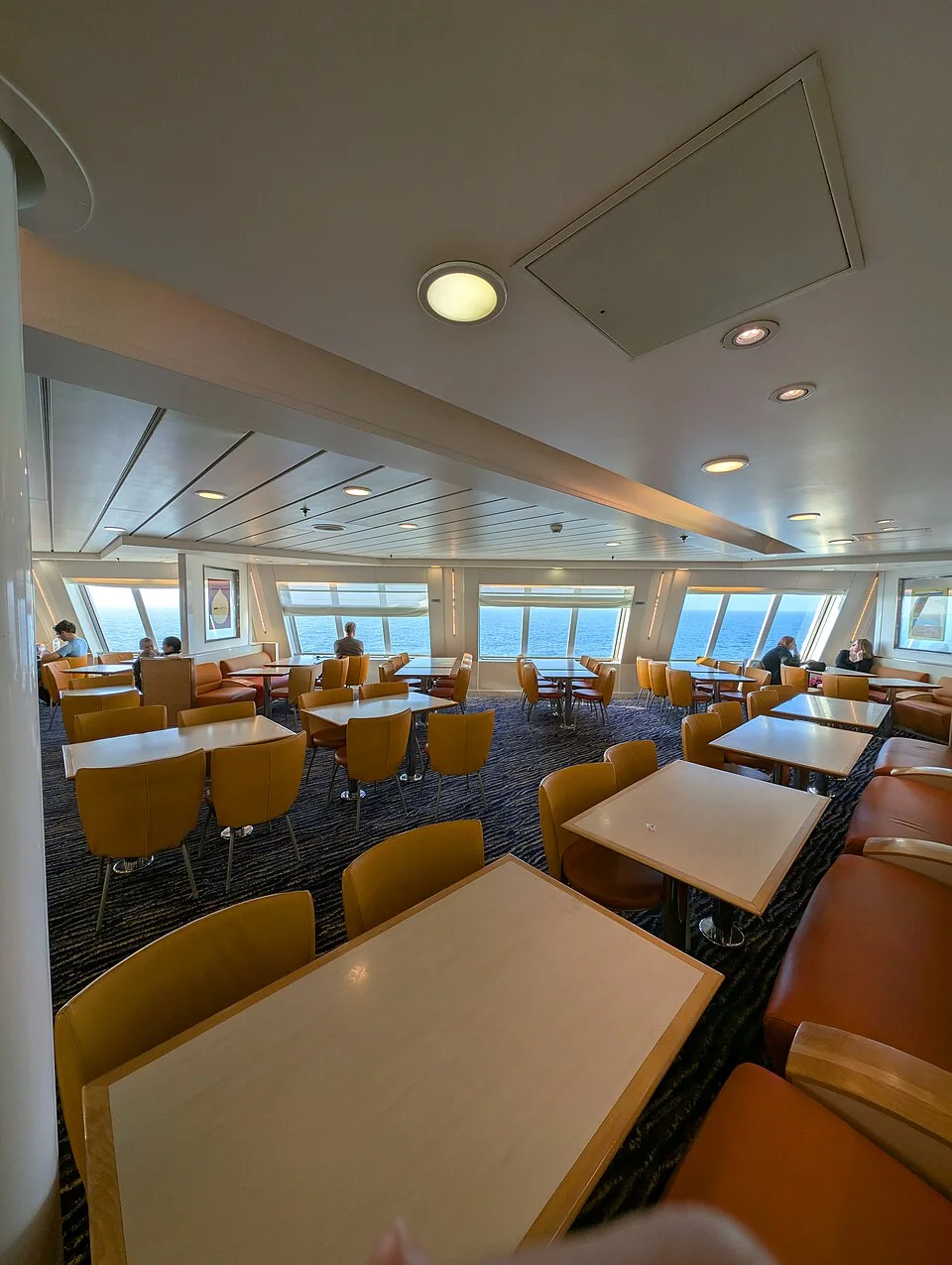
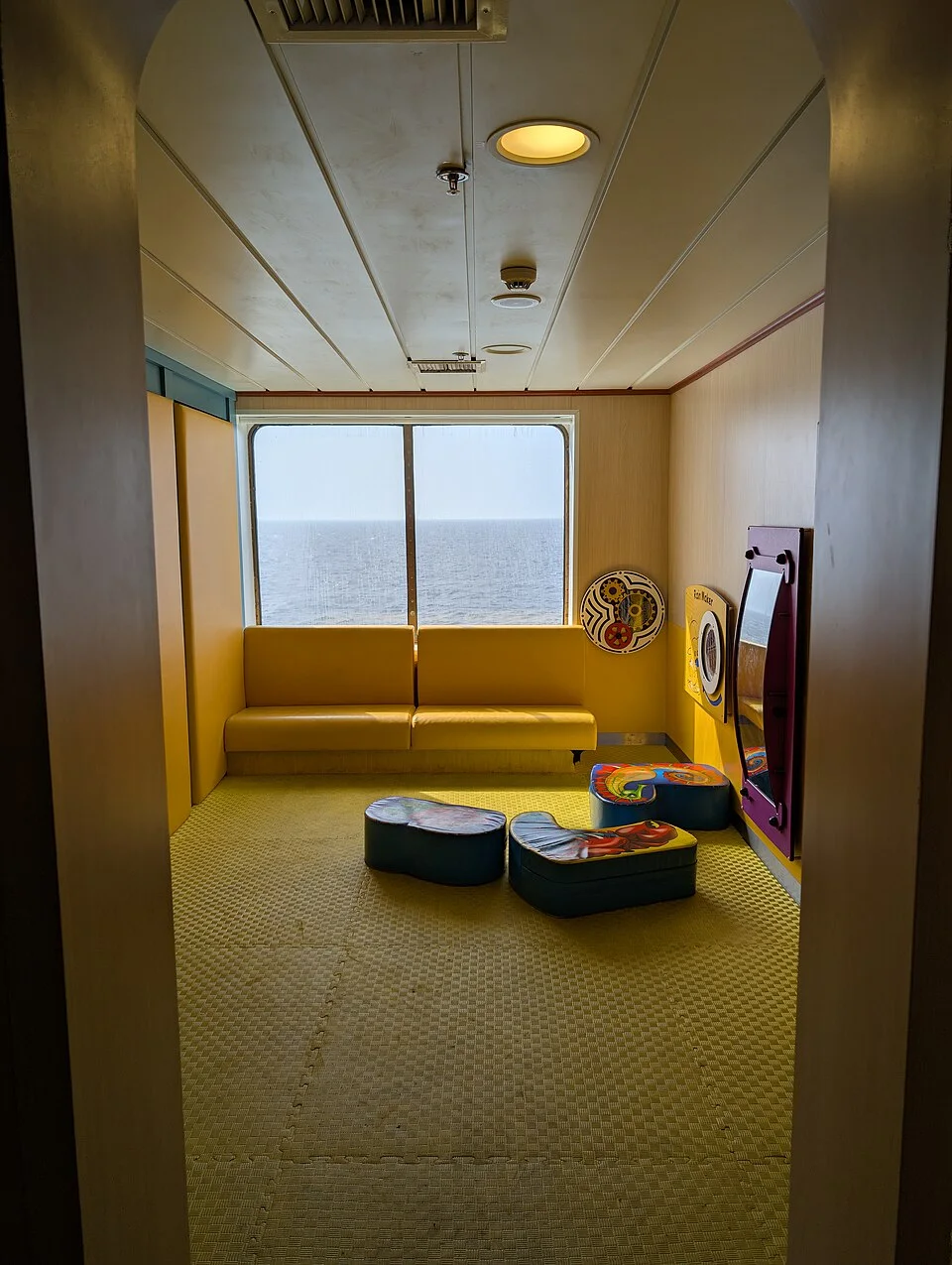
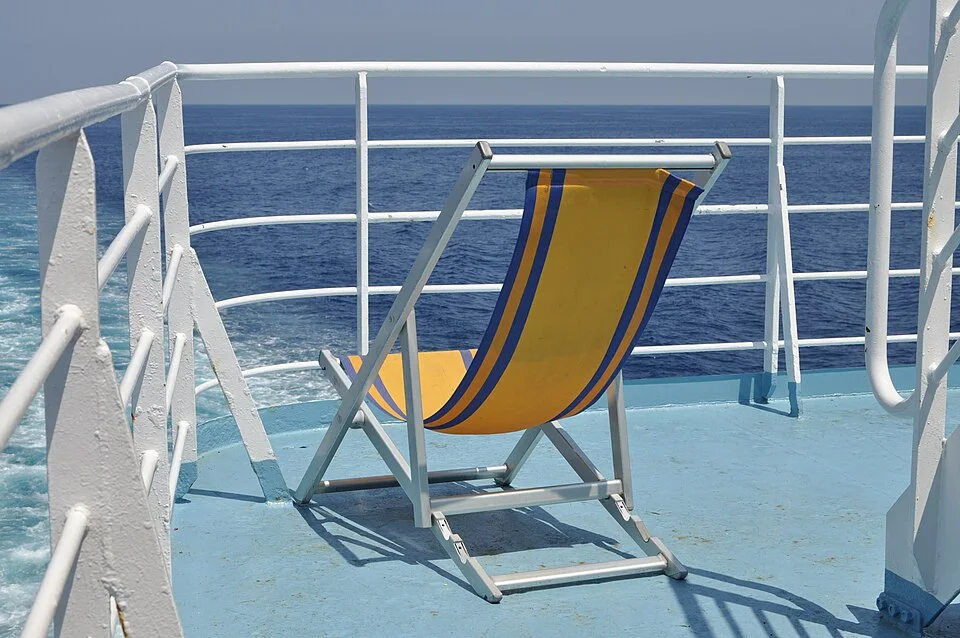
À la carte, buffet and casual dining choices are available on the cruise ferries. Lounges provide space to relax or work during a longer Denmark–Norway crossing. Family facilities help break up a long journey for younger passengers. Outdoor decks add fresh air and coastal views when conditions permit.
Restaurants and buffet
MS Stavangerfjord and MS Bergensfjord offer several food choices, including à la carte dining,
buffet service, cafeteria and café products. Pre-booking meals can be useful in busy periods.
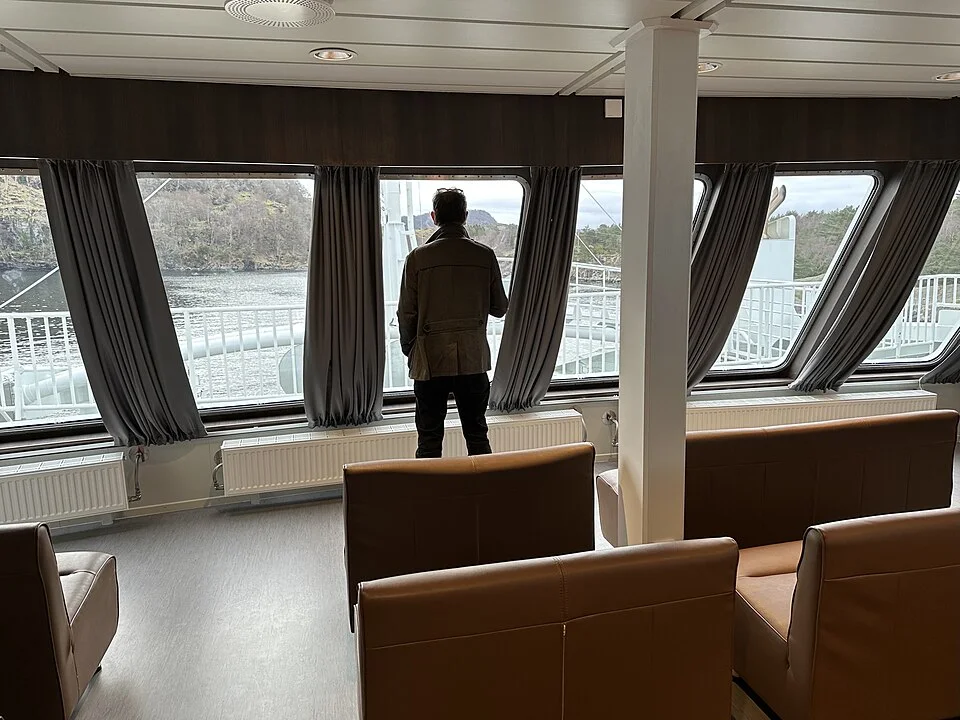
Bars and lounges
Public lounges and bars provide different spaces for a long crossing. Entertainment programmes can
also operate on the cruise ferries.
Tax-free shopping
International Fjord Line routes include tax-free shopping. Selection and opening hours depend on the
vessel and sailing.
Wi-Fi
Wi-Fi is available in supported passenger areas and cabin categories. Like all maritime connections,
performance can vary with location and demand.
Family travel
Family cabins, children’s activities and outdoor areas help make the longer route more practical
with younger travellers. Fjord FSTR also includes a family-oriented rear section.
FSTR vehicle charging
Fjord FSTR has a limited number of Type 2 electric-vehicle chargers that can be added during booking
for an extra charge, subject to availability.
Images in this section are from EUFerry’s general ferry-travel library and illustrate facility
types; they are not presented as photographs of a particular Fjord Line vessel. Confirm the
facilities on the ship assigned to your sailing.
Bring more with you
Vehicles, pets and accessibility
Fjord Line is especially useful for vehicle-based Norway trips. Correct dimensions, pet arrangements
and assistance needs should be settled before reaching the terminal because the fast ferry and
cruise ferries have different facilities.
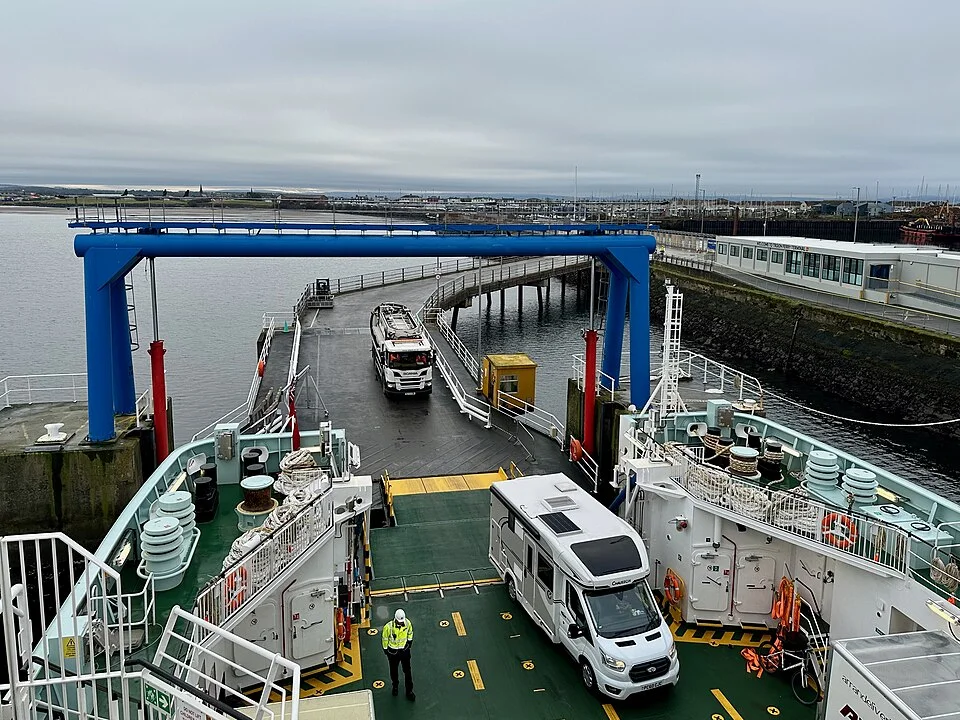
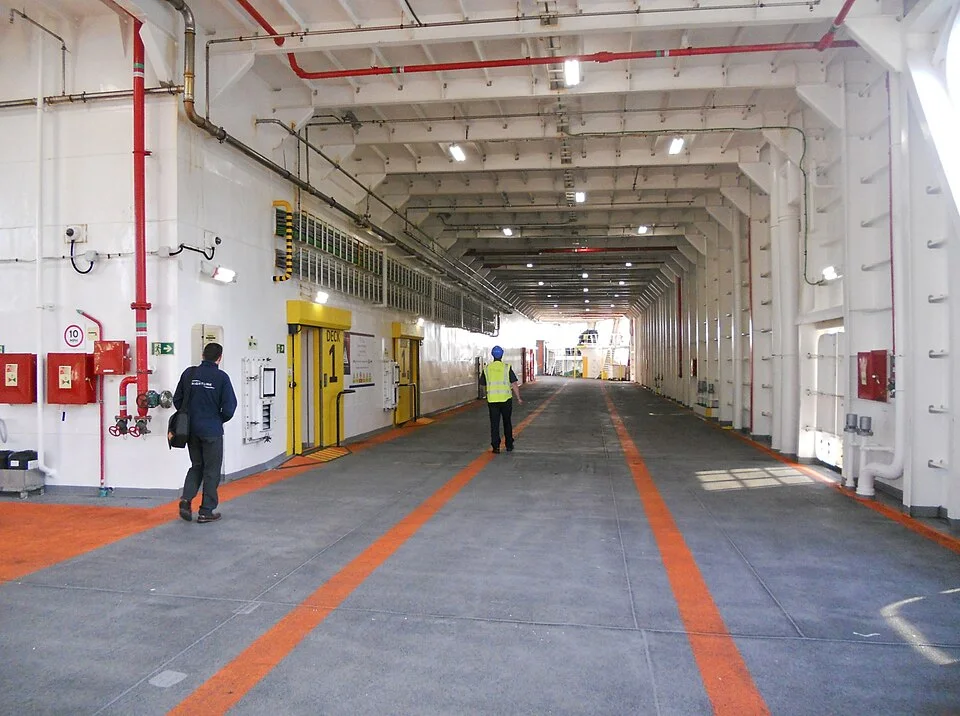
Motorhomes and caravans are a natural fit for Norway road trips but need accurate dimensions. Electric vehicles can travel, and Fjord FSTR offers limited bookable onboard charging. Pet arrangements differ between the cruise ferries and the high-speed Fjord FSTR service.
Cars, motorcycles and touring vehicles
Cars, motorcycles, motorhomes and caravans can be booked on relevant Fjord Line sailings. Enter the
correct total dimensions including roof boxes, racks and trailers.
Follow the correct terminal vehicle lane and staff instructions
Keep medicines and valuables with you after parking
Check whether the chosen vehicle category fits the fast ferry or cruise ferry
Electric vehicles
Electric vehicles are accepted. Fjord FSTR has a limited number of onboard Type 2 chargers that can
be reserved during booking for an additional charge.
Charging spaces are limited and must be selected in advance
Vehicles using booked charging should reach check-in no later than 60 minutes before departure
Always follow crew instructions when connecting or disconnecting
Travelling with pets
MS Stavangerfjord and MS Bergensfjord have kennels and selected dog-friendly cabins. Fjord FSTR has
no kennel; dogs use the permitted rear passenger/deck area or travel according to the vehicle-pet
option booked.
Book the pet and permitted accommodation before travel
Carry the documentation required for the border crossing
Do not assume the same pet rules apply to FSTR and the cruise ferries
Reduced mobility and assistance
The cruise ferries have adapted gangways at key ports, wheelchair-accessible cabins and accessible
public areas. Tell Fjord Line about assistance requirements when booking.
Reserve an accessible cabin where an overnight room is needed
Wheelchair users needing extra vehicle-deck space should arrive at least 90 minutes before departure
Assistance dogs travel under separate accessibility arrangements
Before you reach the ramp
Check-in, documents, luggage and boarding
Fjord Line’s ports are vehicle-oriented and the exact boarding process depends on whether you are
travelling on Fjord FSTR or a cruise ferry. Allow time to find the correct terminal, complete
check-in and reach the assigned lane or foot-passenger waiting area.
International passengers should complete check-in no later than 60 minutes before departure. Follow the terminal lane signs and crew instructions for the vessel assigned to your sailing.
Recommended travel sequence
When booking
Choose the exact route, vessel product and vehicle
Check whether your date uses Fjord FSTR, a cruise ferry or both. Enter the correct vehicle
dimensions and add cabins, Airseats, pets, meals or EV charging where required.
Before travel
Confirm documents and terminal
Carry the identity and travel documents required for Denmark and Norway, plus pet documentation
where relevant. Verify the correct terminal address and departure time.
About 2 hours before
Check-in normally opens
Fjord Line states that check-in generally opens around two hours before boarding. Arriving early is
useful with large vehicles or unfamiliar ports.
No later than 60 minutes before
Complete international check-in
For Denmark–Norway journeys, check-in must normally be completed at least 60 minutes before
departure. Do not plan to arrive at the cut-off itself.
90 minutes before when required
Allow extra time for mobility or special vehicle positioning
Wheelchair users who need additional space by a lift and other passengers with special boarding
requirements should follow the operator’s earlier-arrival guidance.
Is this the right crossing?
When Fjord Line can be a practical choice
Fjord Line is particularly useful for travellers who want to take a vehicle from Denmark directly
into Norway. The Kristiansand route minimises sea time, while Stavanger and Bergen can remove
hundreds of kilometres of driving when the holiday is focused on western Norway.
The key decision is whether speed or onboard comfort matters more. Fjord FSTR can put you in
Kristiansand in about 2 hours 25 minutes, whereas the cruise ferries take longer but add cabins,
restaurant choices, lounges and the possibility of continuing overnight to Stavanger or Bergen.
For a longer road trip, compare the entire itinerary: ferry fare, cabin or Airseat cost, fuel and
tolls avoided, arrival time and the distance from the port to the first night’s accommodation.
Common planning questions
Fjord Line FAQs
Which routes does Fjord Line operate?
Fjord Line operates passenger ferries between Hirtshals in Denmark and Kristiansand, Stavanger and
Bergen in Norway. It also sells domestic travel between Bergen and Stavanger. Live timetables should
be checked because frequencies and vessel patterns vary by season.
How fast is Fjord Line from Hirtshals to Kristiansand?
Fjord FSTR takes about 2 hours 25 minutes and operates seasonally, while MS Stavangerfjord and MS
Bergensfjord take about 3 hours 55 minutes and provide a conventional cruise-ferry alternative.
How long is Hirtshals to Stavanger with Fjord Line?
The direct overnight journey from Hirtshals to Stavanger is about 11 hours on the cruise ferries,
subject to the live timetable.
How long is Hirtshals to Bergen with Fjord Line?
The Hirtshals to Bergen journey via Stavanger is about 17 to 18 hours depending on the sailing and timetable.
Do I need a cabin on the overnight Fjord Line route?
On the Hirtshals–Stavanger–Bergen overnight route, passengers must book either a cabin or an
Airseat. Cabin categories range from standard inside and sea-view cabins to family cabins and
premium suites.
Can I take a car or motorhome on Fjord Line?
Yes. Cars, motorcycles, motorhomes and caravans can be booked on the relevant services. Enter the
correct dimensions and vehicle type, and follow the terminal and vehicle-deck instructions.
Can I charge an electric car on Fjord FSTR?
Fjord FSTR has a limited number of Type 2 charging points that can be selected during booking for an
additional charge, subject to availability.
Can pets travel with Fjord Line?
Yes, but arrangements depend on the vessel. The cruise ferries have kennels and selected
dog-friendly cabins. Fjord FSTR does not have kennels; pet arrangements on that service differ and
should be selected correctly when booking.
How early should I arrive for Fjord Line?
For international Denmark–Norway travel, Fjord Line states that check-in must be completed no later
than 60 minutes before departure. Passengers needing special vehicle positioning or mobility
assistance should allow more time.
Is Fjord Line accessible for wheelchair users?
The cruise ferries provide adapted gangways at key terminals, accessible cabins and accessible
public facilities. Passengers with special requirements should notify Fjord Line when booking;
wheelchair users needing extra vehicle-deck space are advised to arrive at least 90 minutes before
departure.
Facility photographs are examples; the vessels shown are identified below. Facilities vary by ship.
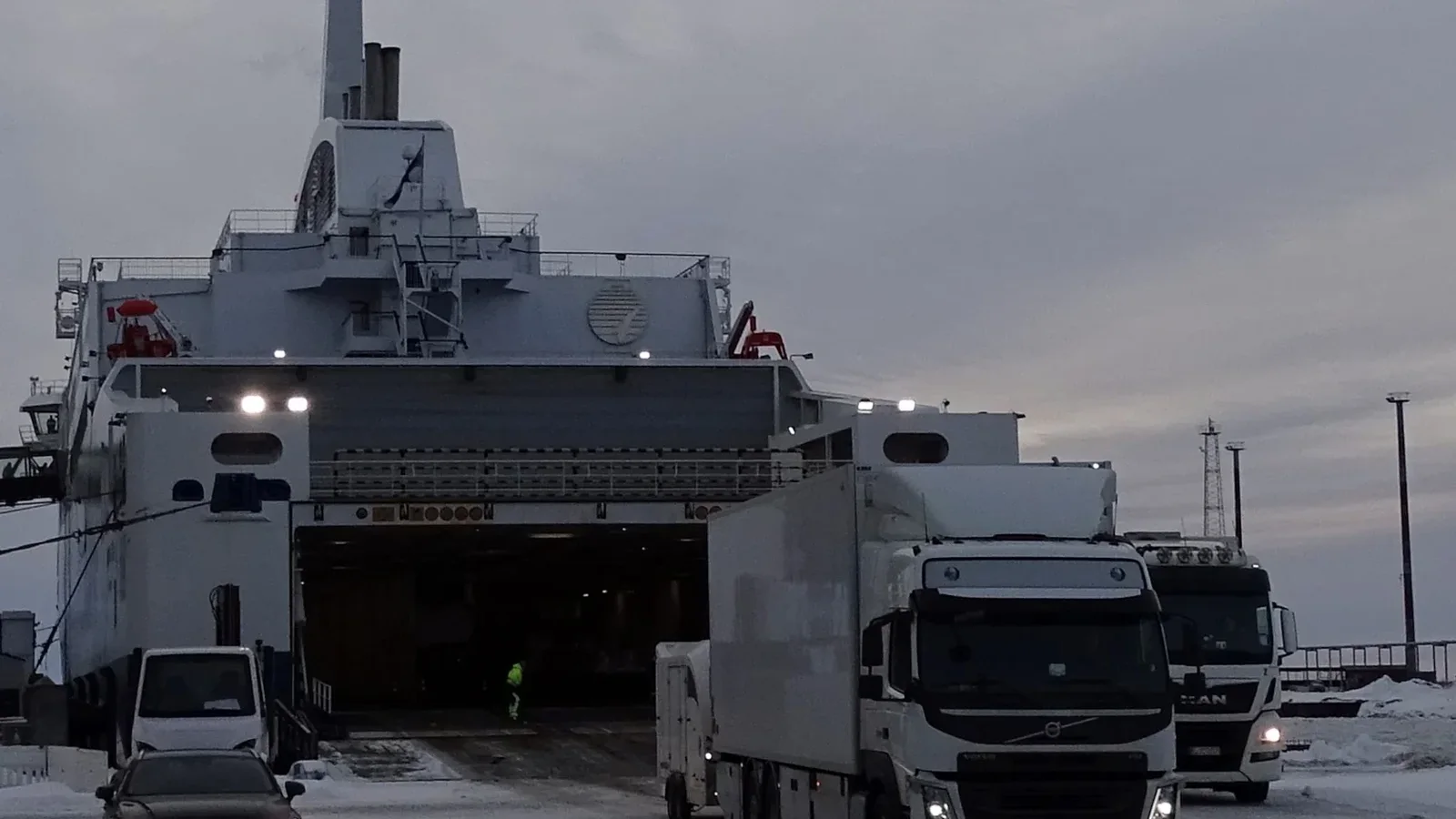
250120 1029 MV Glen Sannox loading, Port of Troon ferry terminal.jpg — Dave souza; CC BY-SA 4.0. Source: https://commons.wikimedia.org/wiki/File:250120_1029_MV_Glen_Sannox_loading,_Port_of_Troon_ferry_terminal.jpg. Licence: https://creativecommons.org/licenses/by-sa/4.0. Resized for display.
Cabin on MV Hrossey - geograph.org.uk - 7254252.jpg — Oliver Dixon; CC BY-SA 2.0. Source: https://commons.wikimedia.org/wiki/File:Cabin_on_MV_Hrossey_-_geograph.org.uk_-_7254252.jpg. Licence: https://creativecommons.org/licenses/by-sa/2.0. Resized for display.
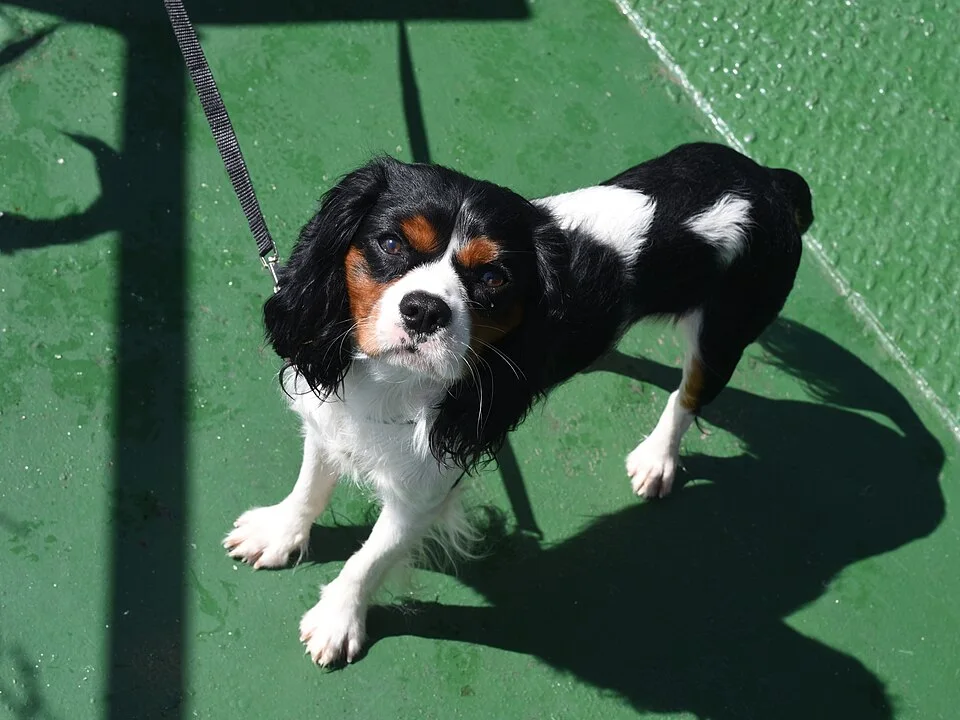
Cavalier King Charles Spaniel (49687542022).jpg — Chris Hunkeler from Carlsbad, California, USA; CC BY-SA 2.0. Source: https://commons.wikimedia.org/wiki/File:Cavalier_King_Charles_Spaniel_(49687542022).jpg. Licence: https://creativecommons.org/licenses/by-sa/2.0. Resized for display.
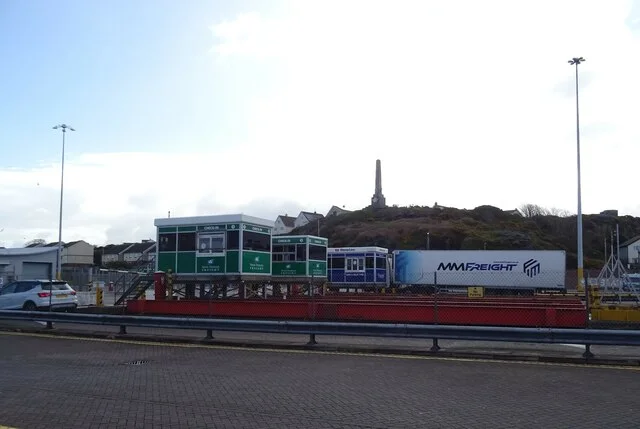
Check-in, Holyhead Ferry Terminal - geograph.org.uk - 7757104.jpg — JThomas; CC BY-SA 2.0. Source: https://commons.wikimedia.org/wiki/File:Check-in,_Holyhead_Ferry_Terminal_-_geograph.org.uk_-_7757104.jpg. Licence: https://creativecommons.org/licenses/by-sa/2.0. Resized for display.
Deckchair on ferry.jpg — User:Amada44; CC BY 3.0. Source: https://commons.wikimedia.org/wiki/File:Deckchair_on_ferry.jpg. Licence: https://creativecommons.org/licenses/by/3.0. Resized for display.
Vehicle deck on the Victoria of Wight (Wightlink ferry).jpg — ITookSomePhotos; CC BY-SA 4.0. Source: https://commons.wikimedia.org/wiki/File:Vehicle_deck_on_the_Victoria_of_Wight_(Wightlink_ferry).jpg. Licence: https://creativecommons.org/licenses/by-sa/4.0. Resized for display.


 Hirtshals
 Fast & overnight crossings
 Western Norway