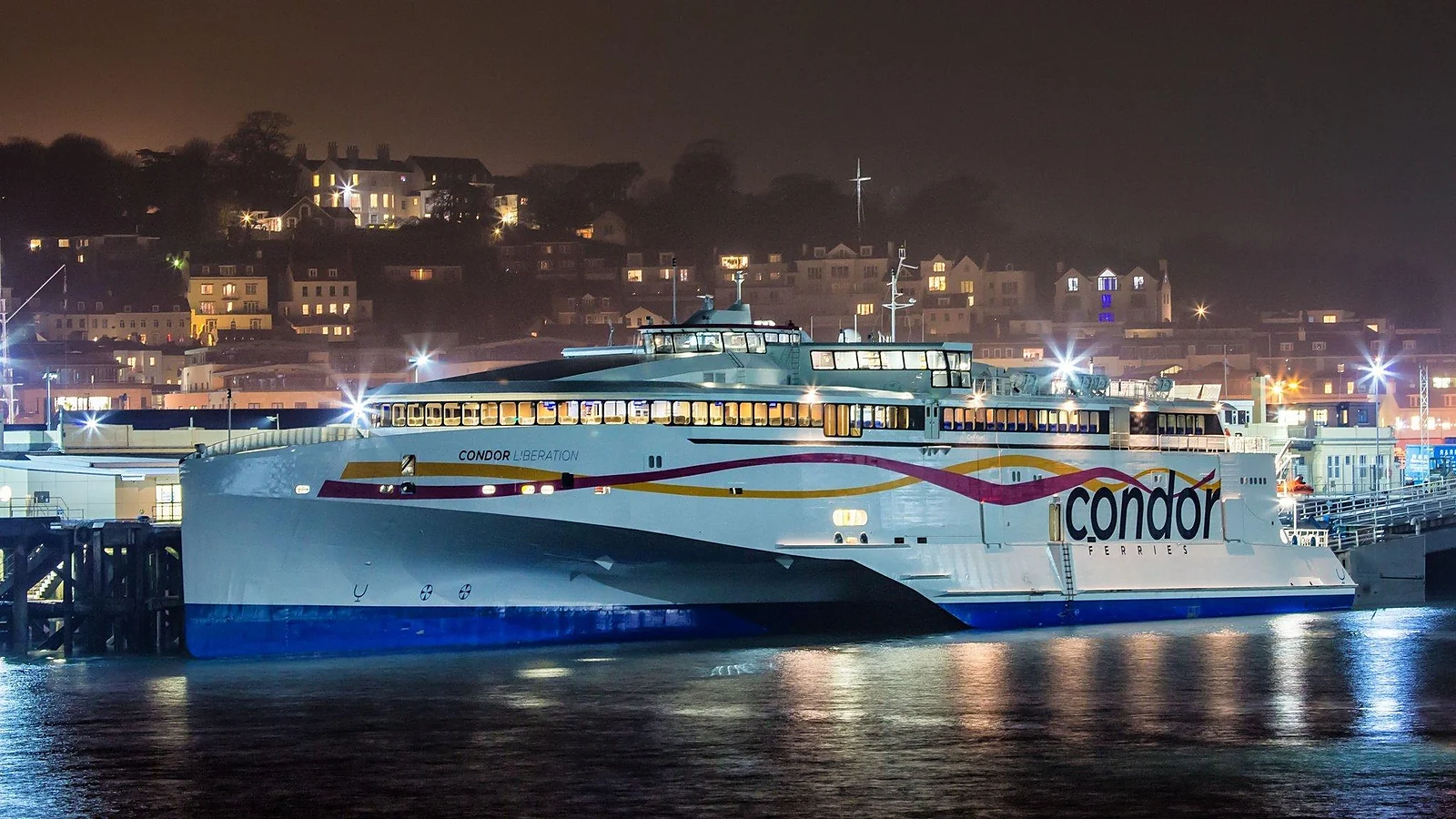
Condor is retained here as a historic ferry brand. Current Guernsey services from Poole, Portsmouth and St Malo are marketed by Brittany Ferries. DFDS operates the main Jersey services from the UK and France; check the selected route and operator.
Channel Islands passenger and vehicle ferry service
Condor is retained here as a historic ferry brand. Current Guernsey services from Poole, Portsmouth and St Malo are marketed by Brittany Ferries. DFDS operates the main Jersey services from the UK and France; check the selected route and operator. Official source 1 · Official source 2
About the operator
A Channel Islands lifeline with fast and conventional ferries
Condor Ferries has linked the Channel Islands with mainland Britain and France for decades. Founded
in 1964, the company grew from a small inter-island and French service into a network carrying
island residents, visitors, cars and freight between Guernsey, Jersey, the south coast of England
and Brittany.
The former Condor network combined fast craft and conventional ferries. Check the current Brittany Ferries or DFDS programme for the route you need; vessel names and operating arrangements can change.
For current Guernsey travel, use Brittany Ferries. Jersey’s main UK and France connections are operated by DFDS. The Condor name is retained for historical reference.
Planning note: Channel Islands timetables are strongly seasonal and can also be influenced by tides and operational changes. Treat published frequency figures as a guide and use the live booking result for your actual date.
UK, islands and Brittany
Condor Ferries routes
These are historic Condor corridors. Follow the linked current route guides for the operating company and service details.
High-speed serviceFrom about 3 hours
Dorset
Poole
Channel Islands
Guernsey
Poole is Condor's fast-ferry gateway to Guernsey. The operator currently promotes a crossing from
around three hours, with the highest frequencies in the peak travel period.
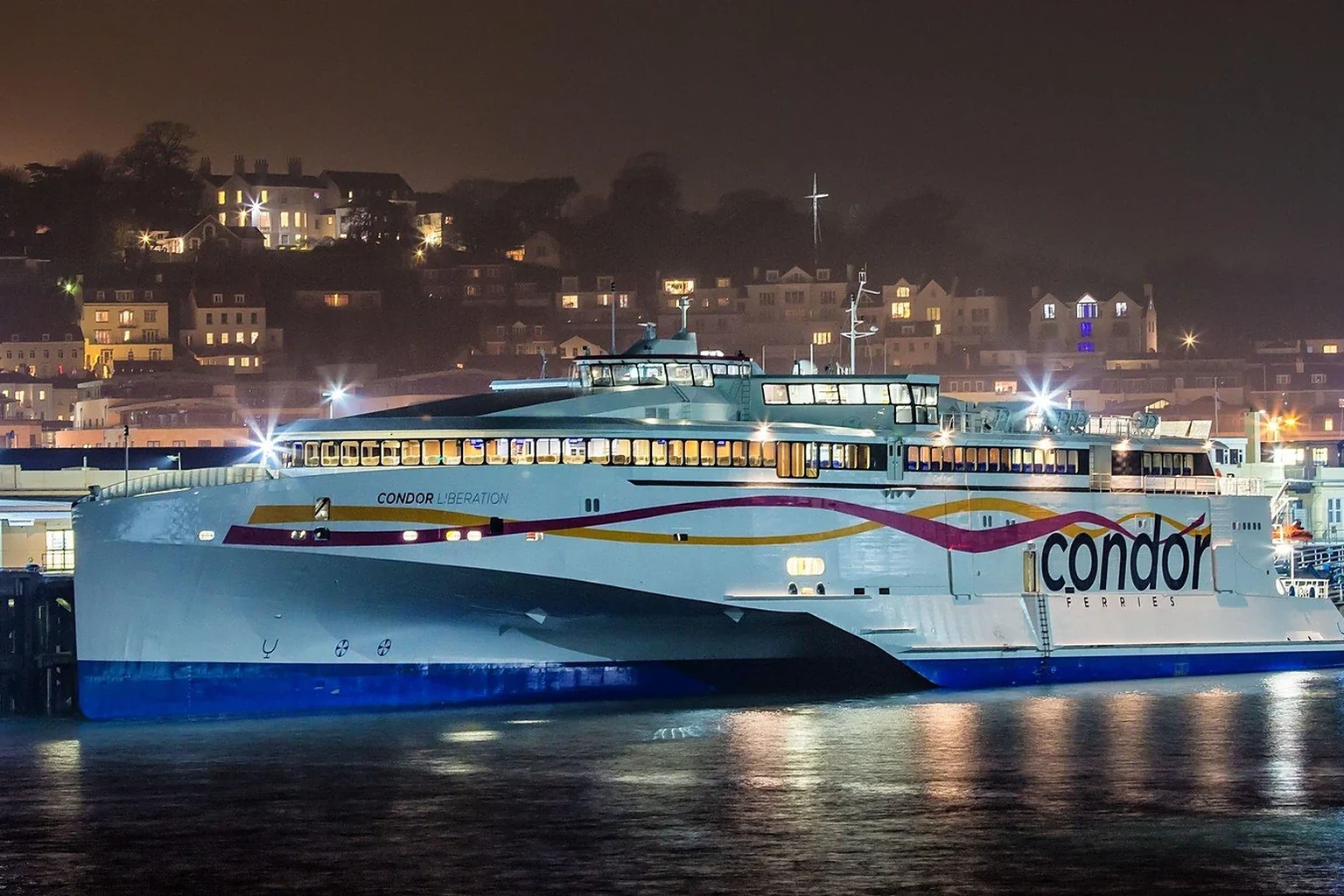
Operated primarily by high-speed Condor Voyager
Useful for short breaks and vehicle-based island holidays
Journey time can vary with route pattern and sea conditions
The conventional Portsmouth service is the longer all-weather alternative, carrying passengers,
vehicles and freight. Overnight timings make cabin choice much more important than on a fast-ferry
crossing.
Condor Islander is central to the current year-round programme
Cabins and upgraded lounges can be available
Particularly relevant for larger vehicles and overnight travel
St Malo gives Guernsey a direct link to Brittany. Published journey information is around two hours
to two hours 35 minutes depending on the sailing and calling pattern.
Strong seasonal frequency in the summer programme
Convenient for French road trips and Brittany holidays
International travel rules apply even though the crossing is short
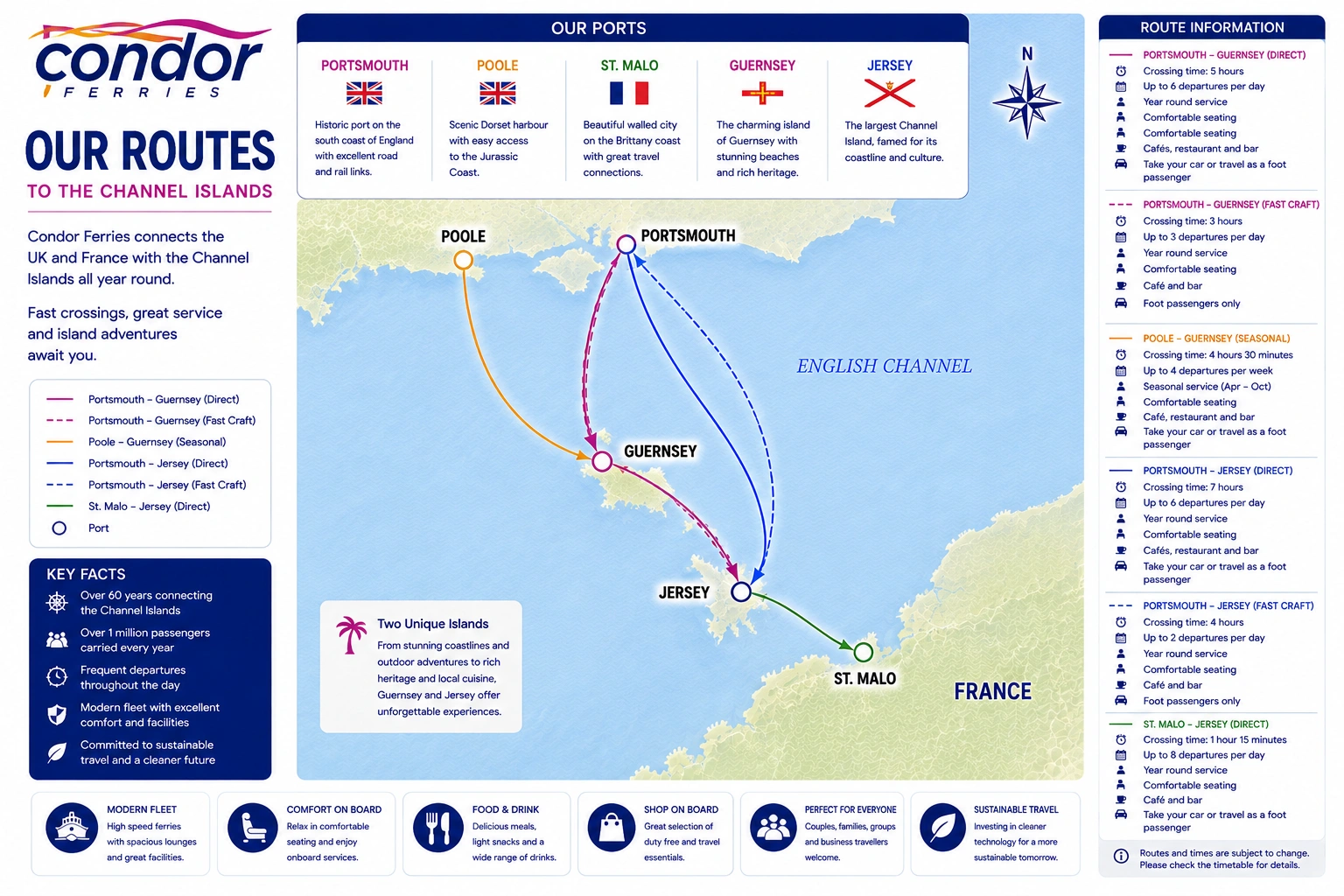
This schematic summarises the three representative current route groups described above. It is not a
complete network map or timetable; the live operator booking result is definitive.
For planning with Condor Ferries, use the map to compare the representative route groups above,
including Poole–Guernsey, Portsmouth–Guernsey, St Malo–Guernsey. It is most useful for judging which
departure or arrival point best fits the rest of the journey rather than as a substitute for the
live timetable.
After choosing the most practical route, compare the current Brittany Ferries sailing for departure time,
calling pattern, passenger requirements and the facilities or accommodation shown for that service.
The complete itinerary and arrival location can matter more than a small difference in the headline
fare.
Tides, seasonal schedules, vessel availability and weather can change departure times or calling
patterns. Verify the exact route shown in the live booking result.
Illustrative Condor Ferries route map. Routes and operating patterns can change; check the live timetable for your date.
Ports and places
Ports worth building a Channel Islands trip around
Condor's mainland ports create very different itineraries. Poole suits Dorset and southwest England,
Portsmouth is the conventional overnight gateway, and St Malo opens the route into Brittany and
western France.
Fast-ferry gateway
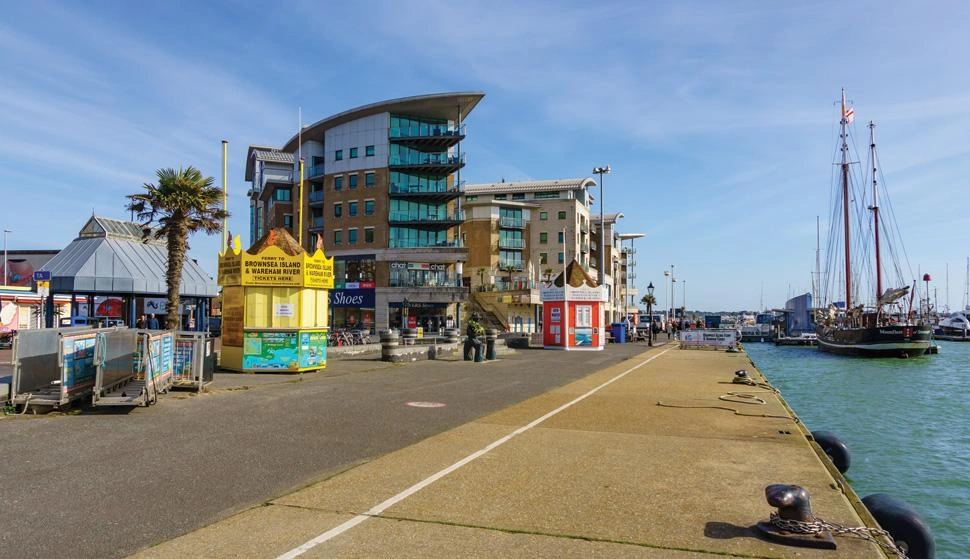
Poole
Poole is the main high-speed UK departure point in Condor's current passenger programme. It is
convenient for Dorset, the Jurassic Coast and road connections across southern England.
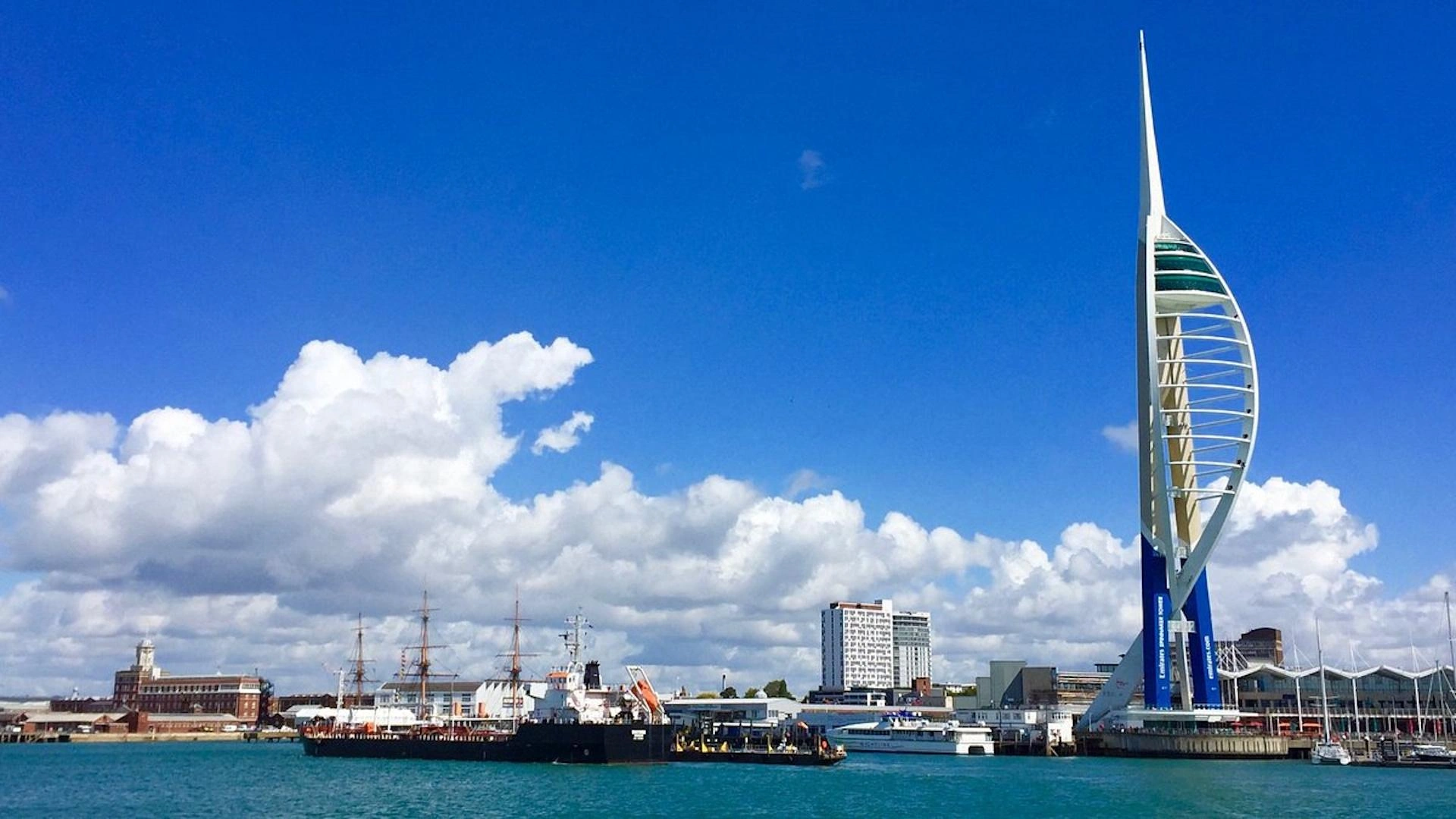
Portsmouth supports the longer year-round Islander service. Its motorway and rail links make it
practical for travellers coming from London, the Midlands and much of southern Britain.
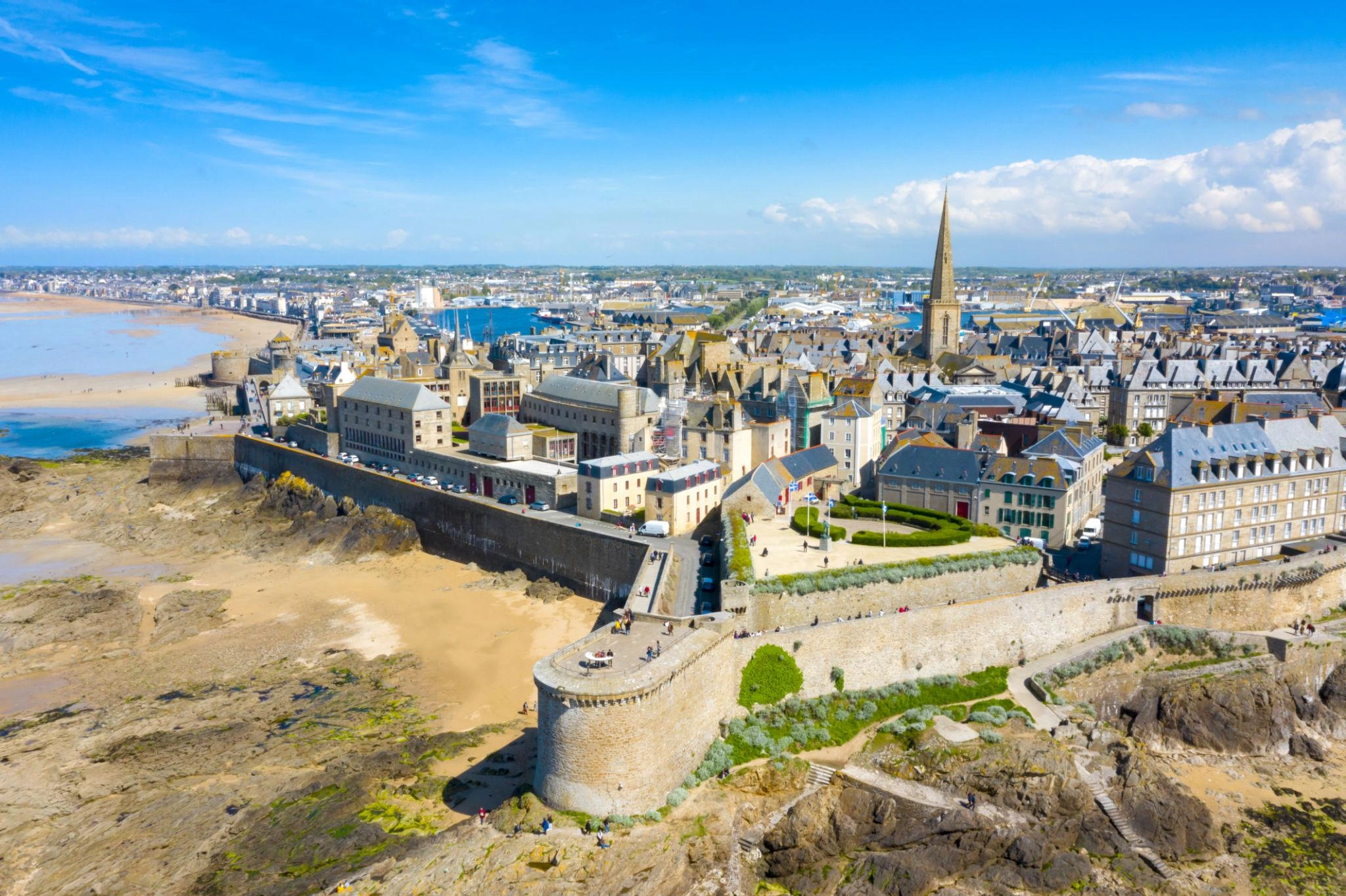
The ferry terminal sits beside one of Brittany's most distinctive walled cities. St Malo is useful
for onward journeys to Rennes, Mont-Saint-Michel, the north Brittany coast and western France.
Poole is faster for many leisure trips, while Portsmouth can suit overnight travel, larger vehicles
and year-round schedules. St Malo can remove a long drive if your holiday continues into Brittany or
western France.
Seat upgrade or private cabin
Seats, lounges and cabins
The right accommodation depends heavily on the vessel. Voyager is a fast-ferry experience built
around seating and lounge upgrades; Islander and Clipper add private cabins for the longer
conventional crossings.
Private cabins are most valuable on overnight and long conventional sailings. Upgraded lounges offer a quieter alternative to standard seating on supported services.
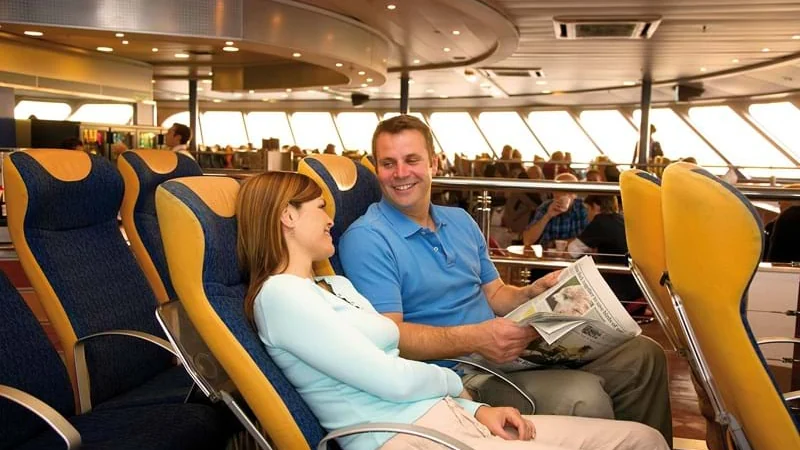
Standard seating
Standard seats are included with the passenger fare on Voyager and are generally unallocated,
allowing travellers to choose an available seat after boarding.
Best considered forShorter high-speed journeys and value-focused travel
Horizon Lounge
Horizon Lounge adds selected reclining seating and a calmer dedicated space. Availability and
pricing depend on the vessel and crossing.
Best considered forPassengers wanting more comfort without a private room
Club Class
Club Class provides an upgraded lounge environment with more exclusive seating and onboard benefits
on relevant passenger vessels.
Best considered forCouples and travellers valuing a quieter premium space
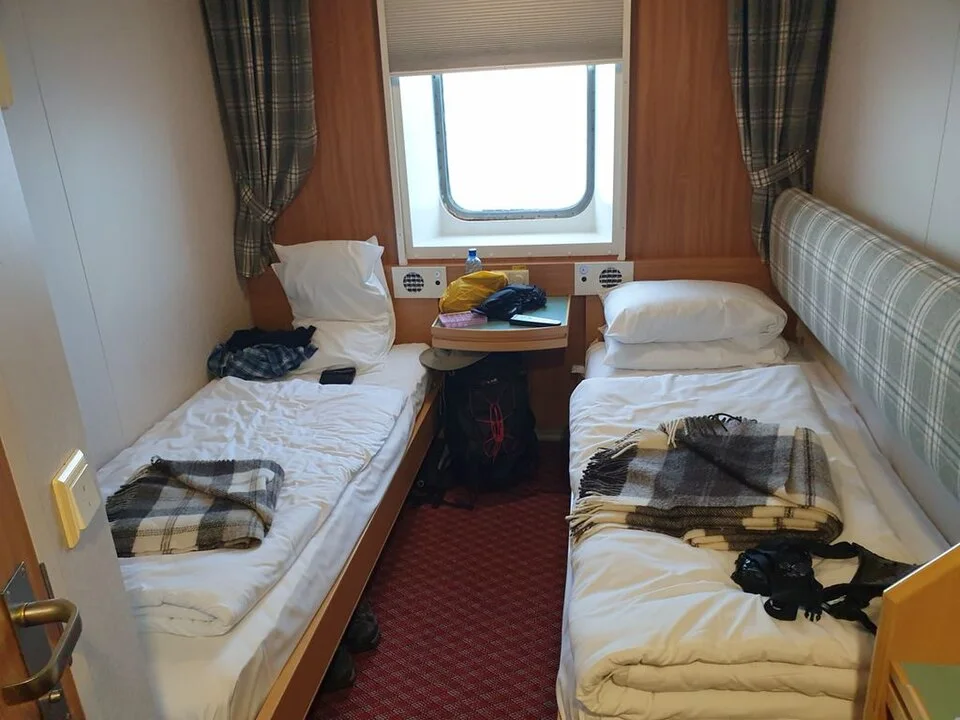
Inside and outside cabins
Conventional ferries can offer two-, three- and four-berth en-suite cabins, with inside, outside and
higher-category options depending on the ship.
Best considered forOvernight Portsmouth crossings and families needing privacy
Pet-friendly cabins
Condor Islander and Commodore Clipper offer designated pet cabins. They must be reserved in advance
and are subject to strict animal-access rules.
Best considered forPassengers travelling with dogs on conventional sailings
Accessible accommodation
Accessible cabins and suitable seating exist on the conventional vessels, but capacity is limited.
Discuss assistance requirements when making the booking.
Best considered forPassengers needing adapted facilities or lift access
Accommodation tip
Do not assume every Condor sailing has cabins. Check the assigned vessel first: a fast-ferry
crossing and an overnight conventional sailing can have completely different accommodation choices.
During the crossing
Food, lounges, Wi-Fi and duty-free shopping
Facilities vary by vessel, but Condor's passenger services are designed for travellers spending
anything from an hour to an overnight journey at sea.
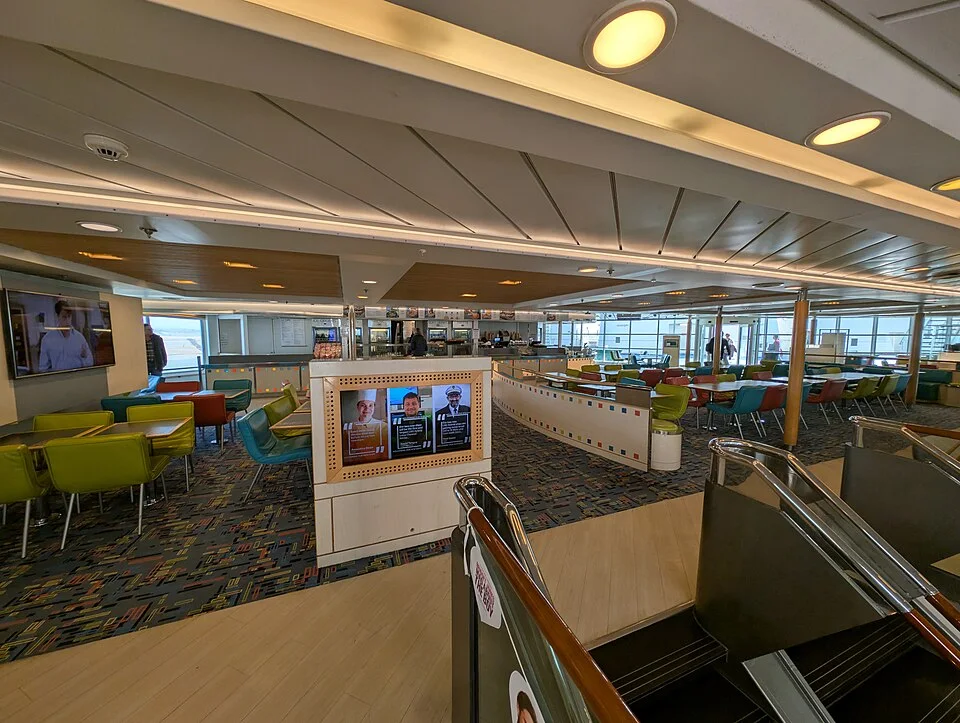
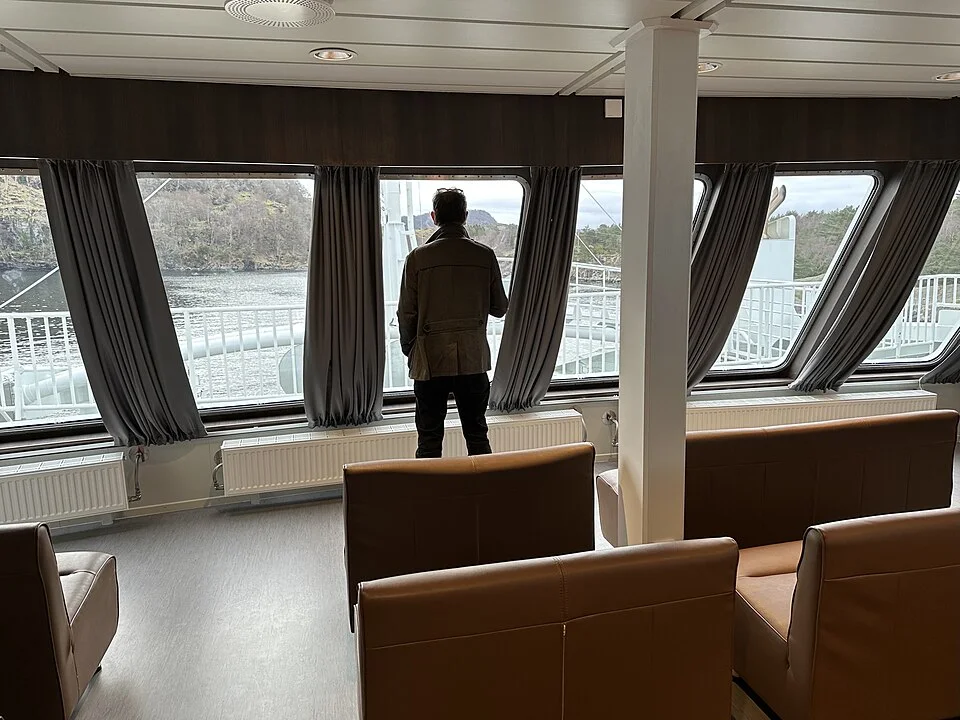
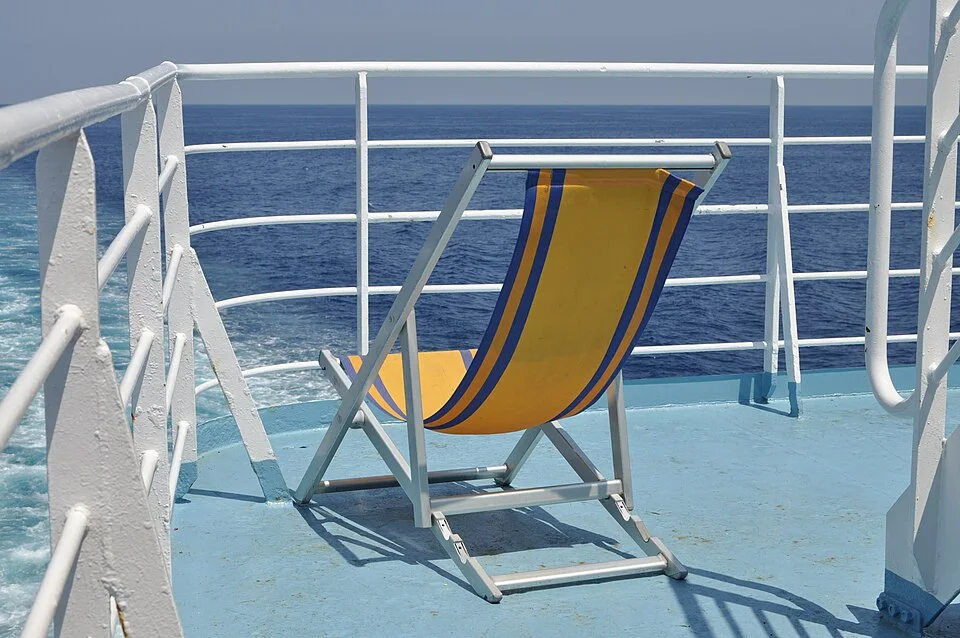
Restaurants, cafés and bars offer hot meals, snacks and drinks on supported sailings. Passenger lounges provide places to relax away from the vehicle deck throughout the crossing. Voyager and Islander offer upgraded lounge choices in addition to standard seating. Outdoor areas offer sea views when weather and operating conditions allow access.
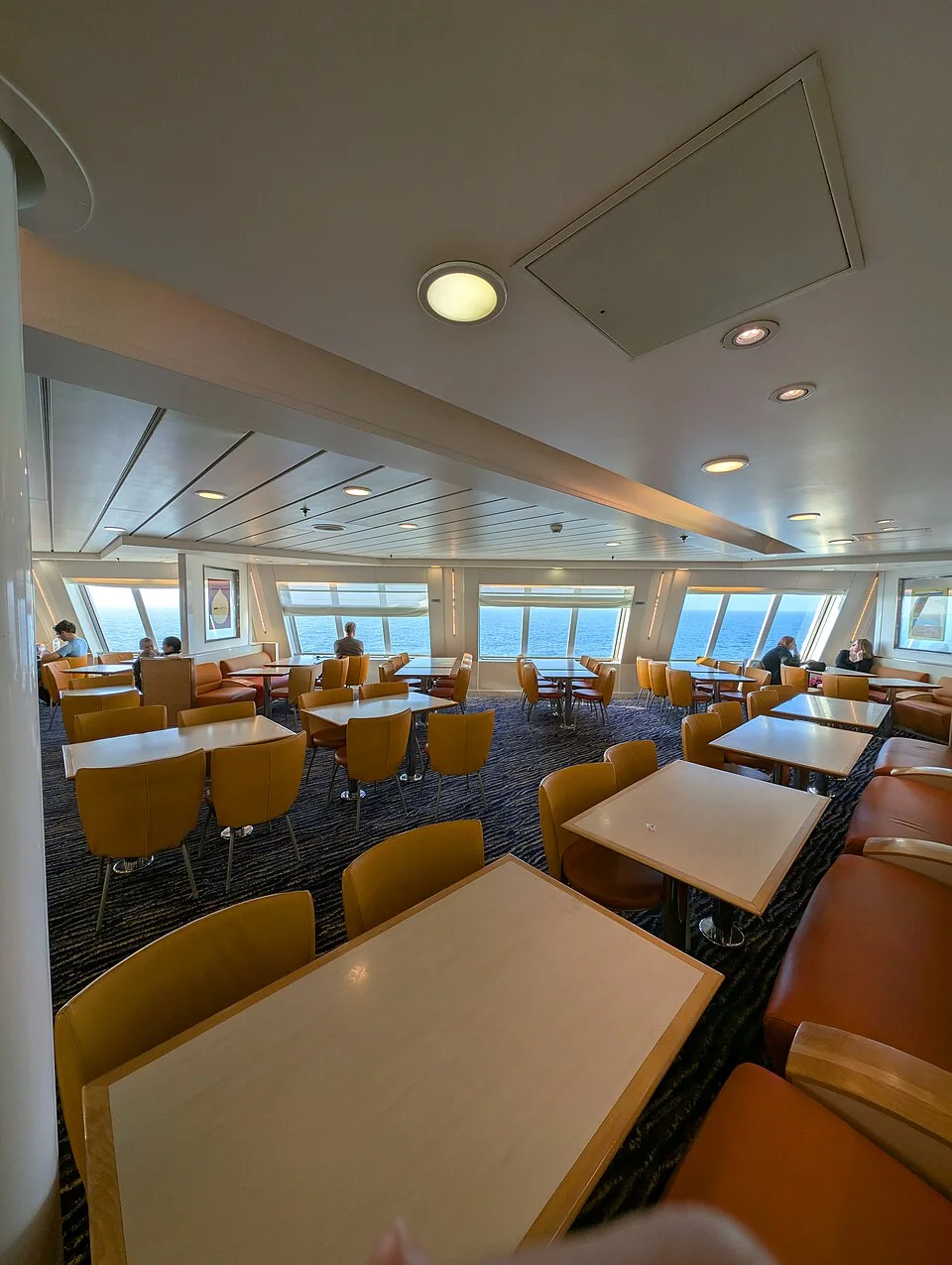
Bars and dining
Voyager offers café and bar service, while Islander and Clipper add more substantial restaurant or
brasserie facilities for longer journeys.
Passenger lounges
Standard seating is supplemented by premium choices such as Horizon Lounge and Club Class on relevant vessels.
Onboard Wi-Fi
Wi-Fi is available across the passenger fleet. Condor currently advertises a limited free allowance
before paid high-speed packages are offered.
Duty-free shopping
Condor promotes duty-free shopping on board, with alcohol, fragrances, tobacco, gifts and other
products. Shipboard payments are cashless.
Family travel
Conventional vessels list children's areas, while flexible seating and food choices can make longer
crossings easier with younger passengers.
Different ships, different experience
Voyager is a high-speed catamaran; Islander and Clipper are conventional ferries. Always check the
assigned vessel before relying on a specific facility.
Images in this section are from EUFerry's general ferry-travel library and illustrate facility
types; they are not presented as photographs of a particular Condor vessel. Confirm the facilities
on the ship assigned to your sailing.
Bring your own transport
Vehicles, bicycles, pets and accessibility
Condor's car-ferry network makes it practical to arrive in the islands with your own vehicle, but
vehicle dimensions, pet rules and assistance arrangements need to be correct before check-in.
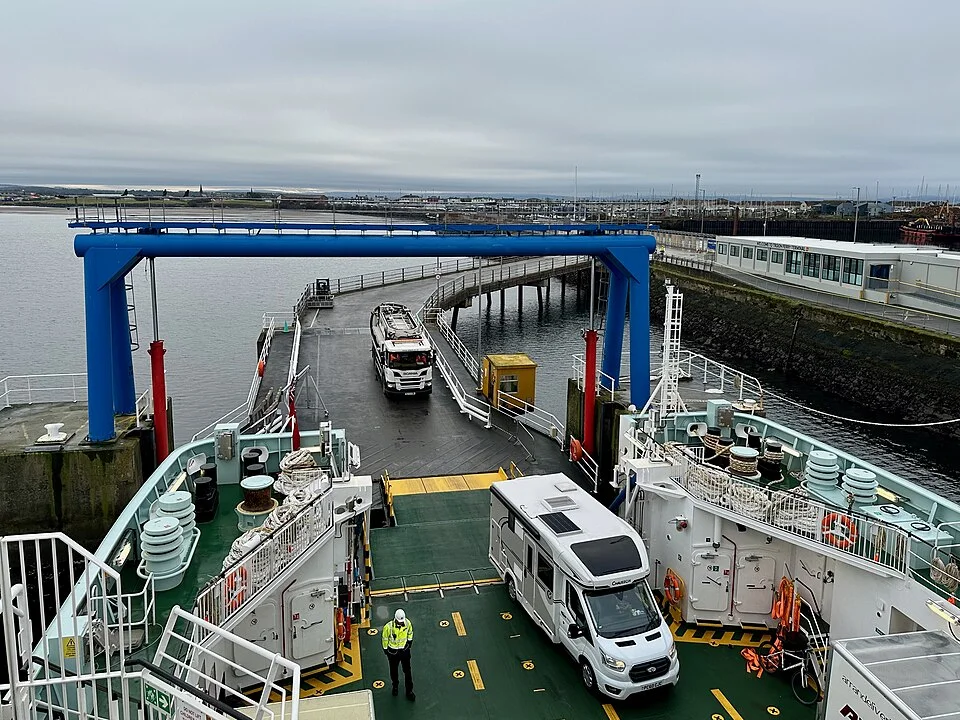
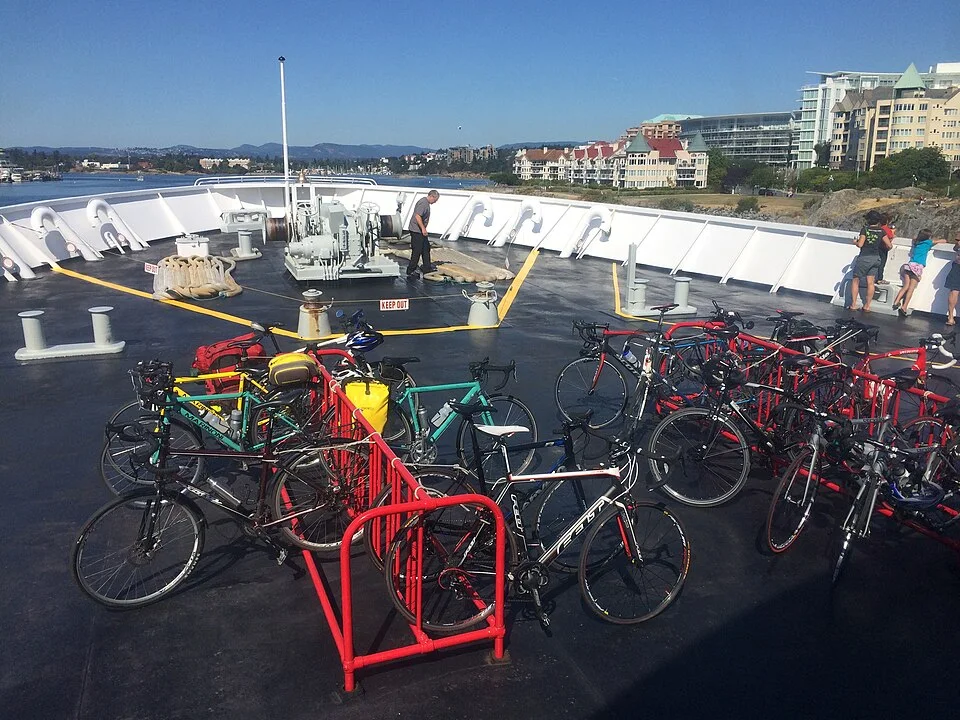
Motorhomes and caravans need accurate height and length details in the booking. Foot passengers can book bicycles in advance, with limited spaces available on each sailing. Pet arrangements differ between domestic Channel Islands travel and international routes to France.
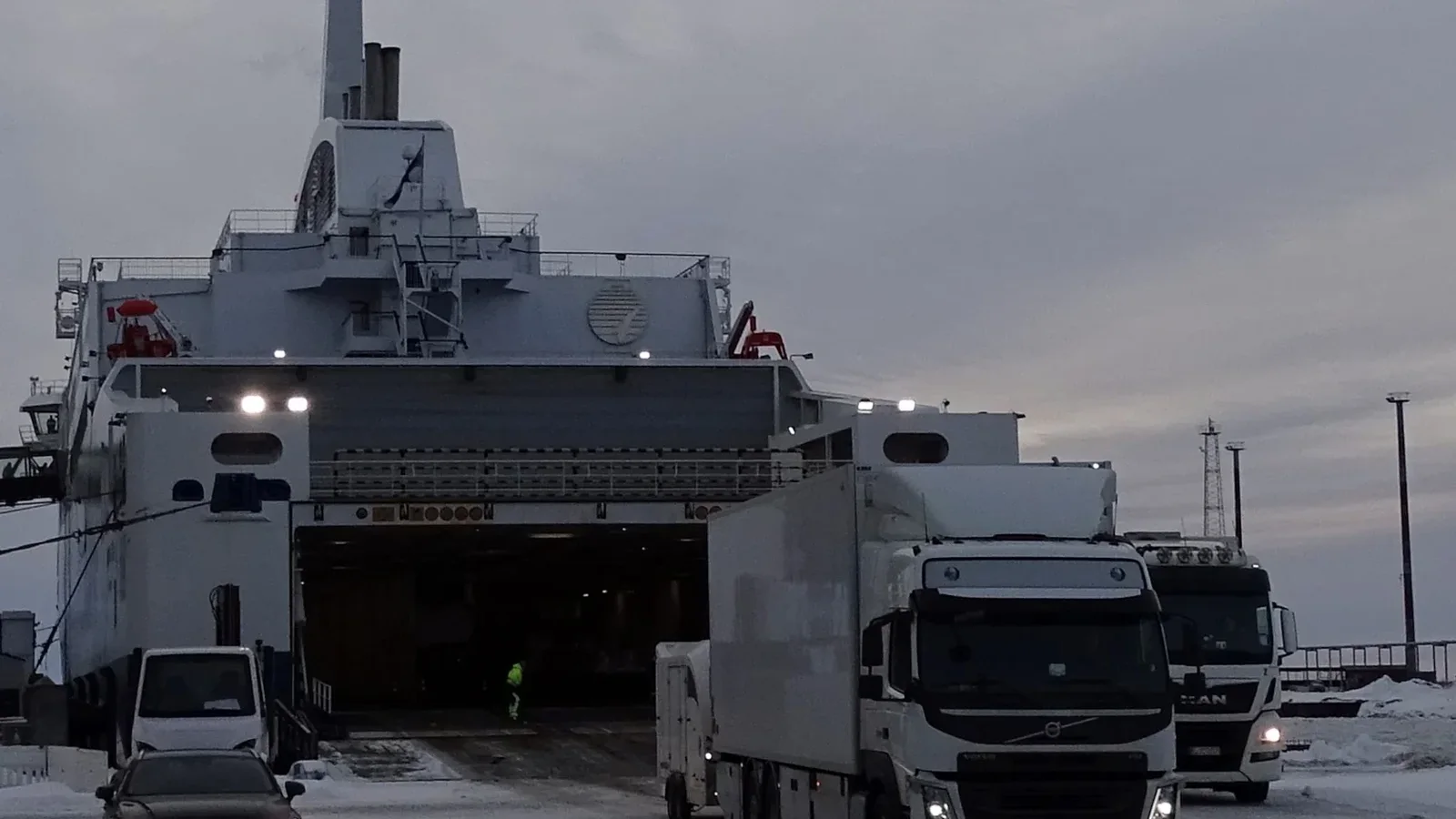
Cars, motorhomes and caravans
Condor accepts leisure vehicles on appropriate car-ferry services. Book the correct height and total
length, including roof loads, rear carriers and anything being towed.
Cars up to 3.1m high can be booked online in the published vehicle guide
Extra-high or unusually long motorhomes may require the contact centre
Commercial vehicles and commercial goods use Condor Freight arrangements
Bicycles and motorcycles
Foot passengers can take a bicycle free of charge when it is booked in advance, subject to limited
space. Motorcycles are carried as vehicles and secured by the crew on the car deck.
Bicycles should be added to the reservation before travel
Bikes are walked onboard and placed in a designated storage area
Some connecting services have different bicycle restrictions
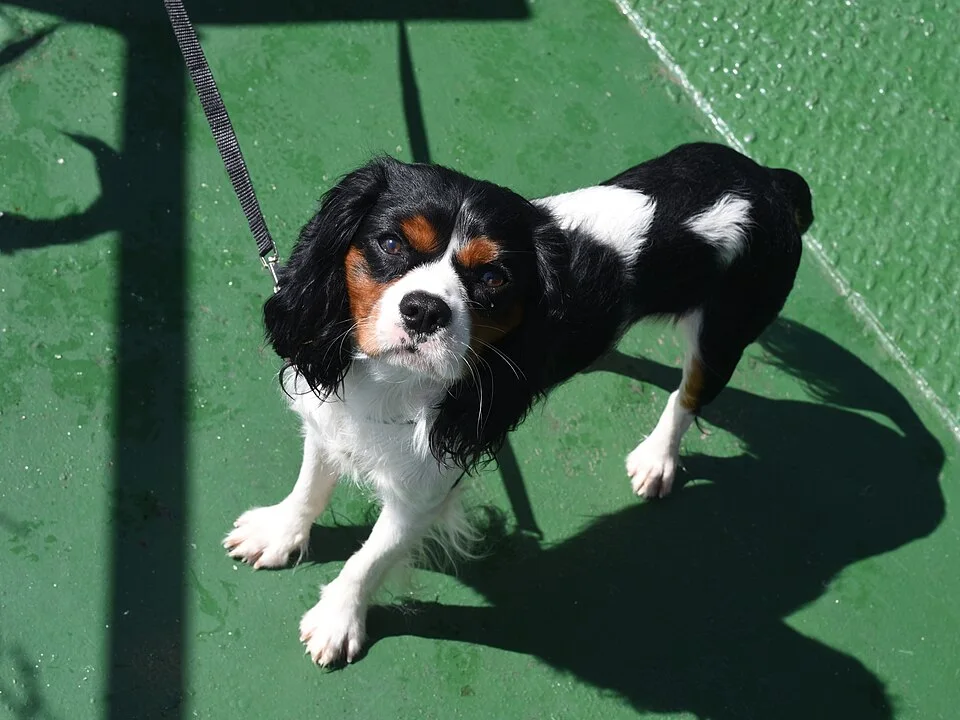
Travelling with pets
Pets must be declared in advance. Domestic travel between the UK and Channel Islands has different
rules from international journeys involving France.
Vehicle passengers can leave pets in the vehicle on suitable services
Pet cabins are available on Islander and Clipper
France travel must comply with the applicable pet travel scheme
Reduced mobility and assistance
Condor asks passengers to explain assistance needs when booking and again at check-in so suitable
boarding, vehicle-deck positioning or seating can be arranged.
Clear check-in at least 90 minutes before departure when boarding assistance is required
Islander and Clipper have lifts from the vehicle deck
Voyager uses ramps between the car deck and passenger area
Before you reach the port
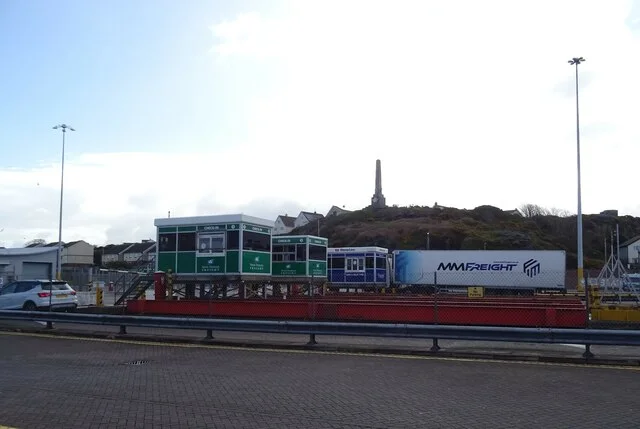
Check-in, documents and boarding
Condor crossings are straightforward when the right information is entered in advance. The main
practical risks are arriving after check-in closes, using the wrong vehicle dimensions, or
overlooking the extra requirements for France and pet travel.
Keep the booking reference, boarding documents and photographic identification easy to reach. Allow more than the minimum check-in time during busy holiday periods or when travelling with a large vehicle.
Recommended travel sequence
When booking
Enter every passenger, vehicle and pet correctly
Use the correct names, vehicle dimensions and pet details. Add any bicycle or assistance requirement
before travel.
At least 24 hours before
Complete required passenger information
Condor asks passengers to complete Advance Passenger Information where required before travel.
Recheck the sailing update and departure port.
90–120 minutes before
Aim to arrive comfortably ahead of closure
Port guidance recommends substantially more time than the bare minimum, especially for vehicles,
first-time travellers and passengers needing assistance.
60 minutes before
Vehicle check-in closes
Car and other vehicle passengers should be through the check-in booths before the published cut-off.
Late arrivals may be refused travel.
40–60 minutes before
Foot-passenger check-in closes
Generic guidance is 40 minutes, while Condor's foot-passenger advice gives a longer cut-off for
departures from France. Follow the time shown for the booked sailing.
Is this the right crossing?
When Condor Ferries can be a practical choice
Condor is especially useful when the Channel Islands are the destination rather than merely a stop
on a wider European journey. Taking your own car can remove the need for airport transfers and
rental vehicles, while a bicycle can be an effective way to explore the compact island road
networks.
The biggest planning decision is often not simply the fare, but which mainland port and vessel type
best fits the trip. Poole and Voyager can provide a much faster journey, while Portsmouth and
Islander offer a more conventional overnight experience with cabins and greater freight resilience.
For France, St Malo is a strong gateway to Brittany. International documentation, pet rules and
check-in requirements are more important than on domestic UK–Channel Islands journeys, so compare
the complete travel conditions as well as the departure time.
Common planning questions
Condor Ferries FAQs
Where does Condor Ferries currently sail?
Condor's passenger network links Poole and Portsmouth with the Channel Islands and connects Guernsey
and Jersey with St Malo in France. Inter-island Guernsey–Jersey sailings also appear, although the
direct Condor schedule is more limited than in some previous years.
How long is the ferry from Poole to Guernsey?
Condor currently promotes Poole–Guernsey from around three hours on the high-speed service during
the peak travel period. The actual duration depends on the date, sea conditions and whether the
sailing has another call.
What is the difference between Poole and Portsmouth services?
Poole is mainly associated with high-speed Voyager, while Portsmouth supports the longer
conventional Islander service. The Portsmouth crossing is much longer but can offer cabins, more
conventional ferry facilities and year-round resilience.
Can I take a car, motorhome or caravan?
Yes, subject to deck availability and the selected service. Enter the vehicle's full height and
length including roof boxes, bicycle carriers and anything being towed. Extra-high or unusually long
motorhomes may require booking through Condor rather than online.
Can I take a bicycle?
Yes. A foot passenger can add a bicycle to the booking without a separate bicycle fare, but spaces
are limited and advance reservation is important. Condor asks cyclists to walk the bicycle onboard
and follow the crew's storage instructions.
Are cabins available on Condor Ferries?
Cabins are available on conventional vessels such as Condor Islander and Commodore Clipper, with
inside, outside, superior, pet-friendly and accessible options depending on the ship. High-speed
Voyager is primarily a seated ferry with lounge upgrades rather than overnight cabins.
How early should I arrive?
Vehicle check-in generally closes 60 minutes before departure. Foot-passenger check-in is generally
40 minutes, although Condor's guidance for France departures can require longer. Arriving 90 minutes
or more ahead is sensible when travelling with a vehicle, needing assistance or using the port for
the first time.
Can I travel with a dog or other pet?
Yes, but pets must be booked in advance. Domestic UK–Channel Islands rules differ from international
travel involving France. Pet-friendly cabins are available on Islander and Clipper, and pets outside
a vehicle or designated cabin are subject to strict access and muzzle requirements.
Is Wi-Fi available onboard?
Yes. Condor advertises Wi-Fi across its passenger ferries, with a limited free allowance and paid
high-speed options. Performance at sea can vary with route, weather and network coverage.
Is Condor Ferries owned by Brittany Ferries?
Brittany Ferries became Condor's majority shareholder in 2024 and took operational responsibility.
Current Condor booking terms still identify Condor Limited as the carrier for ferry travel, so
Condor remains relevant as the operator identity for these Channel Islands services.
Facility photographs are examples; the vessels shown are identified below. Facilities vary by ship.
250120 1029 MV Glen Sannox loading, Port of Troon ferry terminal.jpg — Dave souza; CC BY-SA 4.0. Source: https://commons.wikimedia.org/wiki/File:250120_1029_MV_Glen_Sannox_loading,_Port_of_Troon_ferry_terminal.jpg. Licence: https://creativecommons.org/licenses/by-sa/4.0. Resized for display.
Bikes on MV Coho.jpg — Loneshieling; CC BY-SA 4.0. Source: https://commons.wikimedia.org/wiki/File:Bikes_on_MV_Coho.jpg. Licence: https://creativecommons.org/licenses/by-sa/4.0. Resized for display.
Cabin on MV Hrossey - geograph.org.uk - 7254252.jpg — Oliver Dixon; CC BY-SA 2.0. Source: https://commons.wikimedia.org/wiki/File:Cabin_on_MV_Hrossey_-_geograph.org.uk_-_7254252.jpg. Licence: https://creativecommons.org/licenses/by-sa/2.0. Resized for display.
Cavalier King Charles Spaniel (49687542022).jpg — Chris Hunkeler from Carlsbad, California, USA; CC BY-SA 2.0. Source: https://commons.wikimedia.org/wiki/File:Cavalier_King_Charles_Spaniel_(49687542022).jpg. Licence: https://creativecommons.org/licenses/by-sa/2.0. Resized for display.
Check-in, Holyhead Ferry Terminal - geograph.org.uk - 7757104.jpg — JThomas; CC BY-SA 2.0. Source: https://commons.wikimedia.org/wiki/File:Check-in,_Holyhead_Ferry_Terminal_-_geograph.org.uk_-_7757104.jpg. Licence: https://creativecommons.org/licenses/by-sa/2.0. Resized for display.
Deckchair on ferry.jpg — User:Amada44; CC BY 3.0. Source: https://commons.wikimedia.org/wiki/File:Deckchair_on_ferry.jpg. Licence: https://creativecommons.org/licenses/by/3.0. Resized for display.


 Poole & Portsmouth
 Channel Islands
 St Malo